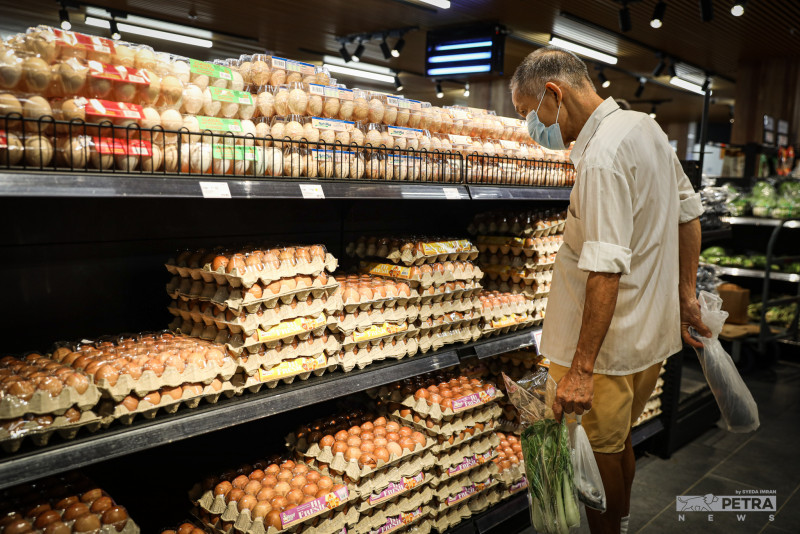
KOTA KINABALU – The Consumers Front of Sabah (CFOS) has proposed that the state government establish a mechanism to standardise the prices of subsidised and non-subsidised essential goods in the state to ensure easy monitoring and to keep the prices under control.
CFOS president Nordin Thani said the mechanism is necessary considering that there is a difference in the prices of basic goods, especially those that are not subsidised, between districts in Sabah and also between rural and urban areas in the state.
“In the current uncertain economic situation, it would be good if the government further expanded the standardisation of prices for non-subsidised products. Discussions also need to be conducted with selected food industry operators so that they will not incur losses in the production of food products,” he said.
Nordin said that in addition to basic items such as canned food products, drinks such as coffee and tea, and food flavourings, the prices of other items such as computer accessories and parts also need to be controlled.
Therefore, he said the 1Price 1Sabah policy needs to be implemented so that the prices of goods, especially the subsidised ones, are standardised in all districts throughout the state of Sabah.
“There are still residents, especially in rural areas, who cannot enjoy the subsidised prices because the cost of transporting the goods from the city or town is expensive.
“I hope that retail shop operators in rural areas are given subsidies so that consumers can buy subsidised goods at the same price as consumers in the city,” he said.
Nordin said some grocery store operators had to pay between RM400 and RM500 for transportation costs to bring goods to rural areas.
Meanwhile, Consumers Affair and Protection Society of Sabah deputy president Datuk A. Nagaraju, who agreed with Nordin, said the standardisation of the price of goods should be done so that consumers can buy goods at the same price in all places in the state.
“For example, the price of one packet of instant noodles in Lahad Datu is about RM6.70, but in Tawau it is RM5. This is because the transportation cost to bring the item to Lahad Datu has to be borne by the consumers.
“Why is there a price difference for the same item? We have to standardise the price at the district level first, so that the whole of Sabah has only one price. All districts need to discuss how to control and standardise prices,” he said.
As a result of price increases, 48-year-old factory worker Sarimah Bana said she had to make a decision to only purchase the food items she really needs.
“When you live in the city, you have to buy everything; it’s quite burdensome, especially when you have school-going children,” said the mother of three. – Bernama, July 17, 2023