
THE Sabah State Legislative Assembly on Tuesday passed a comprehensive bill amending the State Sales Tax Enactment 1998, introducing 37 legal changes to modernise the tax governance.
The move will also pave the establishment of the Sales Tax Appeal Board.
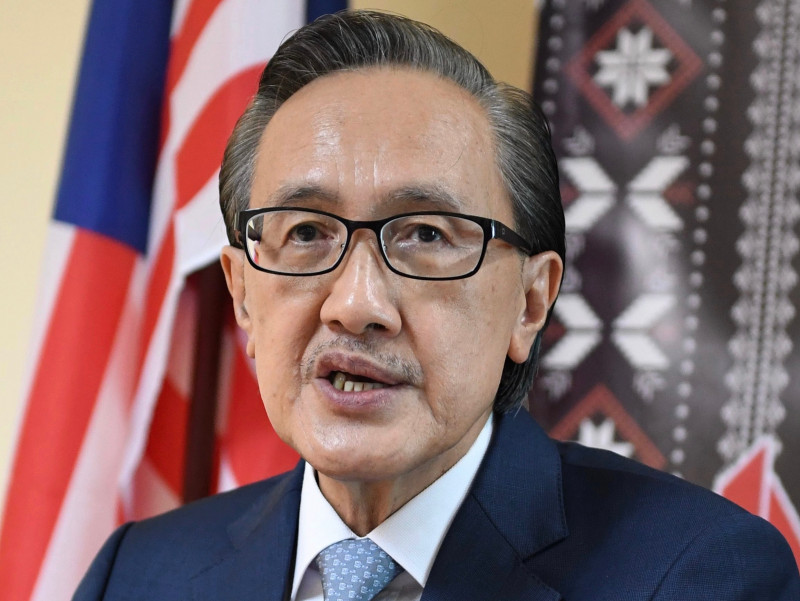
Finance Minister Datuk Seri Masidi Manjun, who tabled and concluded the debate on the State Sales Tax (Amendment) Bill 2025, said the amendments represent a “strategic and holistic” transformation of Sabah’s fiscal framework, not just a technical revision.
“These amendments will pave the way for a more transparent, fair, and efficient tax system — one that is responsive to the complexity of today’s economy while ensuring accountability and fiscal sustainability,” he said when winding up the bill.
Among the 37 amendments are new enforcement provisions, expanded audit powers, and the legal foundation to establish the Lembaga Rayuan Cukai Jualan Negeri, or State Sales Tax Appeal Board.
These will serve as an independent tribunal for resolving disputes between taxpayers and the state tax authority.
Masidi confirmed the board will require additional state spending to its formation, adding that the new entity is essential to uphold procedural fairness in Sabah’s growing tax regime.
The amendments also redefine key terms such as “sale” to include the movement of taxable goods out of Sabah, whether or not a transaction takes place locally.
They empower the Director of State Sales Tax to enter premises, access digital records, and issue composite tax assessments covering multiple periods and sources as part of efforts to close revenue gaps and improve compliance.
Other provisions include penalties for underpayment due to negligence, allowing payment of tax in instalments, and extending the period for government claims on erroneous tax refunds from three to six years.
The bill also introduces a new Part IXA granting anti-avoidance powers, allowing authorities to disregard tax-motivated transactions, override declared prices, and impose surcharges, which is a move Masidi said was necessary to protect the integrity of state revenue.
While the bill received support from both government and opposition benches, Kapayan assemblywoman Datuk Jannie Lasimbang (DAP) raised several concerns about how some of the new powers could affect taxpayer rights.
She criticised Section 17 for denying access to court appeals on disputed assessments, calling it a “Pay first, don’t litigate” rule that limits judicial redress.
“This denies access to justice even if the amount is excessive or clearly wrong,” she said.
She also objected to the inclusion of negligence as a basis for penalties under Section 15, saying it exposes even honest mistakes to punishment.
“Small businesses without tax expertise could be penalised for errors made in good faith,” she added.
On composite assessments, Lasimbang warned that combining multiple tax periods into a single notice could make it “difficult for taxpayers to verify and challenge assessments, increasing the risk of major errors.”
Nominated assemblyman Datuk Yong Teck Lee also supported the bill’s broader goals but raised cautionary concerns based on the public backlash surrounding the federal Sales and Services Tax (SST).
He cited confusion over items like A4 paper and stationery, where inconsistent and sudden tax applications led to unexpected costs for importers.
“Taxation must not be a punishment to business, but a means of revenue,” he said.
Yong stressed that tax systems must meet three essential principles: affordability, clarity, and enforceability.
“If the taxpayer cannot afford it, there’s no point in passing any law,” he added.
Despite the differing views, Masidi defended the reforms as a necessary recalibration of the state’s tax regime.
He said Sabah cannot rely solely on voluntary compliance and must act decisively to prevent leakages while providing clearer, fairer channels for resolution.
“We want a tax system that is not burdensome, but helpful — one that is clear, easy to understand, and transparent,” he said.
Sales Tax has grown into Sabah’s most significant revenue stream.
In 2024, it contributed RM3.03 billion, or 44.5%of the total state revenue.
Since its implementation in 1999, it has brought in over RM32.26 billion, with 386 licensees currently registered under the regime. - July 8, 2025