Videos

[VIDEO] EMCO on Top Glove worker dorms in Jalan Abadi, Klang

EMCO in the area will enable Health Ministry to carry out targeted Covid-19 screenings

Updated 5 years ago · Published on 18 Nov 2020 9:00AM

by Sairien Nafis

AN enhanced movement control order (EMCO) will be imposed on Top Glove Corp Bhd’s worker dormitories in Klang until November 30, after 215 Covid-19 cases were detected there.

This EMCO also affects roads surrounding the dormitories.

It involves the male and female dormitories, and houses along Jalan Abadi 1A/KU8, 1A, and 10A/KU8, placing a total of 13,190 employees and 1,200 residents under lockdown.

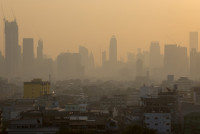
The Vibes photographer SAIRIEN NAFIS captures mood of the area before the barbed wire fence was installed. – The Vibes, November 18, 2020

Related News

Malaysia / 3w

Johor polls should be contest of ideas, not division – Selangor PKR election director

Opinion / 3w

Ronnie Liu: What we should truly rejoice over is not the victory of any single party

Malaysia / 1mth

Selangor still Malaysia’s top economic engine, DOSM data counters political claims

Opinion / 1mth

Selangor must be wise: The people’s rice bowls must not be turned into sacrifices

Malaysia / 1mth

Selangor identifies seven deviant teachings in last five years

Malaysia / 1mth

New PJ hospital site finalised; 500-bed  facility planned - MB

Spotlight

Malaysia

After Johor, the uncomfortable question for Anwar’s critics: Were we too impatient?

By The Vibes Says

Malaysia

Network School's business licences revoked, to cease operations tomorrow

Opinion

Orang Asli in Pahang: Token gestures or genuine recognition?

Malaysia

Tuition teacher sentenced to 105 years in prison and 70 lashes for raping daughter

Malaysia

Azam Baki denies involvement in RM178.29 million contract linked to brother’s company

Malaysia

Aminuddin urges NS voters to weigh manifesto promising benefits for M40 and B40 groups

Malaysia

No need to resign, PM has absolute power if there is doubt – Ahmad Zahid

World

Gaza’s water crisis deepens as families face thirst, disease and collapsing sanitation systems