INDIA’S efforts to strengthen nutritional labelling on packaged foods have come under renewed scrutiny after the country’s food-safety regulator abandoned a push for prominent colour-coded warnings, following opposition from major food and beverage companies.
The decision has prompted public health advocates to question whether India’s regulatory framework is doing enough to protect consumers as consumption of processed and packaged foods grows.
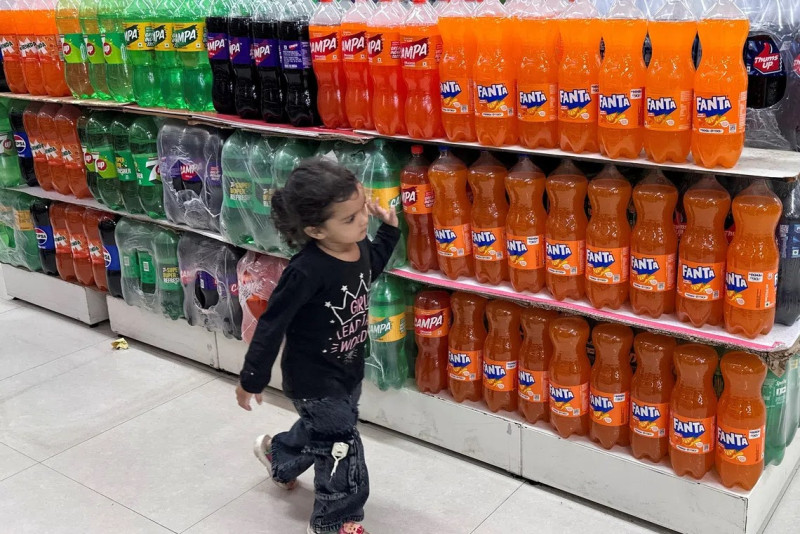
The contrast is particularly striking in products sold by global brands. A can of Fanta sold in London contains 63 calories, while the same brand sold in India contains roughly three times as much sugar and includes an artificial colourant whose presence in European food products requires a prominent health warning.
Reuters reported on Tuesday that in India, the colourant is listed only in small print on the back of the packaging.
The Food Safety and Standards Authority of India (FSSAI) said in August that it had dropped its proposal for colourful front-of-pack warning labels, arguing that such labels did not sufficiently account for the stronger flavours associated with Indian cuisine.
Instead, the regulator has proposed a black-and-white nutritional table displaying levels of sugar, fat and salt.
The decision is now being scrutinised by India’s Supreme Court following a petition by public health activists.
The stakes are significant, with a recent study published in The Lancet estimating that as many as 450 million Indians could be overweight or obese by 2050.
Health experts say clearer front-of-pack information can help consumers make healthier choices, particularly when purchasing products where nutritional information on the back of packaging may be difficult to interpret quickly.
Around 20 countries have adopted interpretive front-of-pack labelling systems, including schemes that use colours to indicate high or low levels of sugar, fat and salt.
Reuters reported that the FSSAI’s decision followed a tense meeting with food industry representatives in March, during which executives argued that warning labels could be confusing and ineffective.
The companies also urged regulators to focus instead on encouraging consumers to control portion sizes.
Coca-Cola India executive Mili Bhattacharya argued during the March 19 meeting that it was “very simplistic” to assume consumers who did not already read ingredient lists would substantially improve their diets simply by seeing a symbol or icon on a package.
She also said warning labels would not stop consumers from consuming sugary or salty products and were unnecessary because Indian doctors had already educated patients about foods to avoid.
However, Coca-Cola and its bottling partners have voluntarily introduced traffic-light-style nutritional labels in around two dozen European markets.
Coca-Cola HBC, a Switzerland-based affiliate, describes such labels as providing “clear and transparent” information to consumers.
Nestle, which is a member of Indian industry groups that opposed earlier proposals, has also voluntarily used interpretive nutritional labels in Britain since 2013.
Both Coca-Cola and Nestle declined to comment on the issue.
For its report, Reuters reviewed audio recordings of the March meeting, hundreds of pages of government and corporate documents, and interviewed 11 industry executives and health experts.
Public health advocates argue that the resistance reflects the commercial implications of clearer warnings.
Simone Pettigrew, head of food policy at the George Institute for Global Health in Australia, said the threat posed by warning labels to company profits creates an incentive for the industry to delay stronger regulation.
She said lobbying by interest groups had “almost paralysed” regulators from introducing tougher standards.
The FSSAI declined to comment, citing ongoing court proceedings over India’s food-labelling policy.
Industry Warns of Red Labels Across Packaged Foods
India’s packaged food and beverage market is worth more than US$100 billion, with industry estimates suggesting that nearly 80 per cent of products could be classified as high in fat, sugar or salt.
Deepak Jolly of the Ind Food and Beverage Association, which represents companies including PepsiCo, argued during the March meeting that colour-coded warnings could result in packaging being covered in red labels.
The association has said it wants greater clarity from regulators, warning that current proposals could result in products such as coconut water being labelled as high in sugar because of naturally occurring sugars.
Indian regulators have considered stronger nutritional labelling measures since 2017, including colour-coded warnings and star ratings indicating the nutritional value of products.
For now, manufacturers are generally required to provide ingredient lists and basic nutritional information on the back of packaging.
The Supreme Court had directed regulators in February to consider introducing warning labels and pointed to Israel’s system of red-and-green nutritional messaging as one possible model.
But following the industry meeting, the FSSAI told the court in August that it was “difficult” to match international standards on food packaging.
The position drew a rebuke from the judges, who said “the world should know that India is very much concerned about the overall health of its citizens”.
Growing Consumer Awareness
The debate comes as Indian consumers become increasingly conscious of the health consequences of processed food.
Monthly sales of weight-loss drugs that suppress appetite have risen 400 per cent since early 2025, according to market research firm Pharmarack.
Social media activists and influencers have also stepped up campaigns against highly processed and packaged foods.
Among the most prominent is Revant Himatsingka, a former McKinsey management consultant who has built an audience of more than five million across YouTube and Instagram under the name Food Pharmer.
Himatsingka has repeatedly compared food products sold in India with versions marketed in Europe and Australia, arguing that Indian consumers are sometimes offered products with different or less favourable ingredients.
In 2023, he criticised the amount of sugar and artificial sweetener in PepsiCo’s Sting caffeine drink, prompting PepsiCo to obtain a Delhi court order requiring the removal of the video.
PepsiCo did not respond to Reuters' questions.
Indian regulators also ordered PepsiCo and other companies in July to remove the “energy drink” label from certain products within 90 days.
Different Recipes For Different Markets
Multinational food companies commonly alter recipes according to local regulations, consumer preferences and purchasing power.
Former Mondelez executive Parul Sharma said pricing and affordability were among the biggest reasons recipes differed significantly between countries.
However, Himatsingka said the differences had fuelled a sense among some Indian consumers that they were receiving inferior products.
He has highlighted differences between Indian and European versions of Fanta and Nestle’s KitKat, among other products.
Indian KitKat contains 4.5 per cent cocoa solids, while the Australian milk chocolate version contains at least 22 per cent cocoa.
Nestle’s Maggi instant noodles sold in India are made with palm oil, while many versions sold in Britain use sunflower oil. Some Maggi products sold in Britain are manufactured in India but carry red front-of-pack warnings indicating high salt content.
“It is the frustration of feeling cheated,” Himatsingka said.
There are signs, however, that changing consumer preferences are beginning to influence product formulations.
Nestle announced in 2024 that it would begin selling sugar-free Cerelac baby food in India, following criticism from activists that the company had sold only the sugar-containing version in the country for decades.
The company has long sold sugar-free Cerelac in other markets.
The continuing dispute over front-of-pack warnings ultimately reflects a wider question facing India’s food industry and regulators: whether consumer choice is genuinely informed when key nutritional risks remain buried in small print, even as global companies adopt more prominent labelling systems in other markets. - August 25, 2026