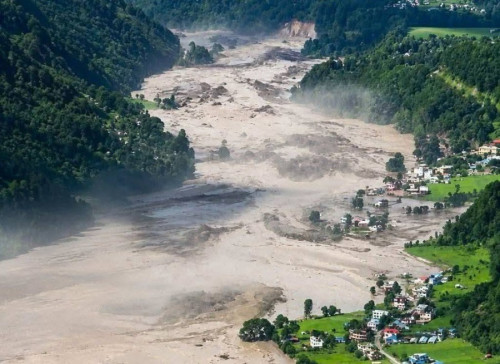
THE fate of hundreds of foreign nationals missing after catastrophic floods swept through Nepal’s Himalayan border region has become a growing international concern, as desperate families search hospitals and morgues for their loved ones while rescue teams continue operations in some of the disaster’s most inaccessible areas.
At least 583 foreign nationals remain unaccounted for following the Aug 26 disaster, according to Nepali authorities, with pilgrims and tourists among those caught in the torrent of ice, rock and mud that tore through communities near the border with China’s Tibet region.
Nepali police said 294 foreigners had been rescued, most of them Chinese and Indian nationals, but hundreds remained missing as search teams battled destroyed roads, bridges, debris and dangerous terrain.
Among those affected are nationals from countries across Asia, Europe, North America and Oceania, including Malaysia, the United States, Ukraine, Britain, Australia, Canada, Singapore, South Korea, Russia, Germany, Japan and New Zealand.
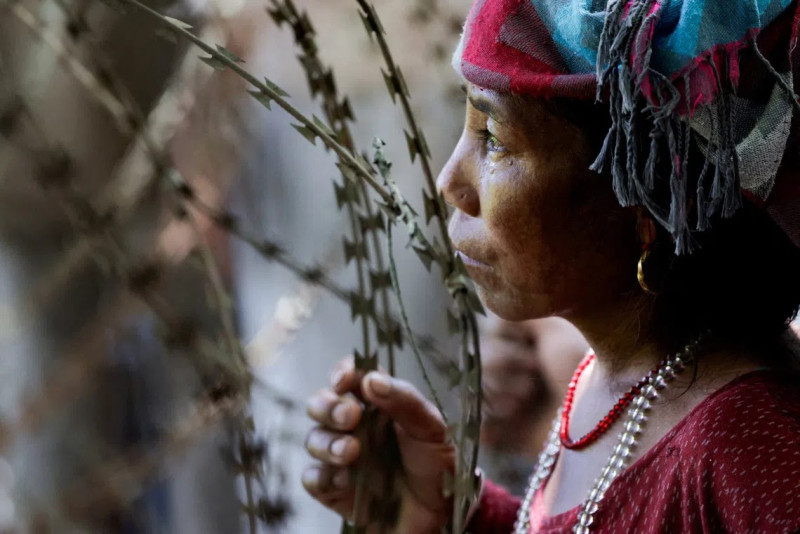
The disaster has left families facing agonising uncertainty, with some travelling to Kathmandu to search for relatives and provide DNA samples for identification.
Sanjeev Rai, a 53-year-old American, travelled to Nepal after learning that his wife, Jiwan Jyoti, was missing while returning from a pilgrimage to Mount Kailash.
"The day I arrived I said, let’s find a helicopter, I’m going to look for her," Rai told AFP.
But Timure village in Rasuwa district, where Jyoti was when the disaster struck, remains difficult and dangerous to reach.
"I feel desperate, it’s been so many days," he said.
Jyoti, an engineer at Intel, had travelled to Mount Kailash as a spiritual journey and adventure to mark her 50th birthday.
Rai said he was now preparing for the possibility that she would not be found alive.
"I’m no longer counting on survivors. I just hope the DNA samples will match. I want to be able to mourn."
Pilgrims among those missing
Many of the missing foreigners were pilgrims travelling around the Mount Kailash region, adding to the complexity of the search across the Nepal-China border area.
Among them are 77 pilgrims from Sadhguru’s Isha Foundation, including Europeans, North Americans and Australians.
Several relatives have travelled to Kathmandu, where volunteers are helping them obtain information from authorities and identify survivors.
"We go to the Nepali police every day to get information on those who have been rescued. We examine photos... published by the police," said volunteer Arun Mehta.
The group, including three Nepali guides, remains missing, he said.
"They had completed their pilgrimage around Mount Kailash and were going through immigration procedures" at the Gyirong border crossing with China when the disaster struck, Mehta said.
The foundation has provided authorities with identifying information, including distinctive snake-shaped rings and pendants worn by some of the pilgrims.
Nepal police have begun collecting DNA samples from relatives to create a database for identifying bodies, while families overseas will be able to submit samples in their own countries.
Malaysia is also among the countries affected, with 55 Malaysians previously reported uncontactable in Nepal.
Rescuers race against time
While families continue searching for missing relatives, rescue teams are focusing on areas where survivors may still be trapped.
Hydropower tunnels have become a particular priority, with workers believed to be trapped underground following the collapse of surrounding infrastructure.
"All the tunnels are being searched with the assistance of experts from India, South Korea and China," an army officer involved in the search told Reuters.
"The search-and-rescue operation will continue as long as there is any hope of finding survivors. Even if there are no survivors, we will recover the dead bodies," he said.
A South Korean rescue team equipped with drones, rescue dogs, acoustic equipment, video and thermal imaging technology has established a base near the Upper Trishuli-1 hydropower plant, where nine South Korean workers are missing.
The wider disaster has killed at least 1,204 people and left more than 4,200 missing, according to Nepali authorities.
Rebuilding will take years
The immediate search and rescue effort is expected to give way to a massive reconstruction programme.
Nepal estimates that around 20,000 homes will have to be rebuilt, including 7,500 that were completely destroyed or buried under debris.
Authorities have warned against rebuilding communities in the same locations, instead seeking safer areas where entire settlements can be relocated.
"There is no point in rebuilding the houses in the same locations, as that would expose people to the same risks," said Dharma Raj Upreti, chief of the National Disaster Risk Reduction and Management Authority.
The government is also planning a new landslide early-warning system along its border with China, incorporating seismic sensors, cameras and satellite communications.
But for the families of hundreds of missing foreigners, the immediate priority remains finding their loved ones — dead or alive — before the search moves fully into recovery and reconstruction. - September 3, 2026