NEPAL’S forensic laboratories are facing an unprecedented workload as DNA analysis becomes the main tool for identifying more than 1,400 victims recovered after last month’s devastating floods, with relatives of thousands of missing people awaiting answers.
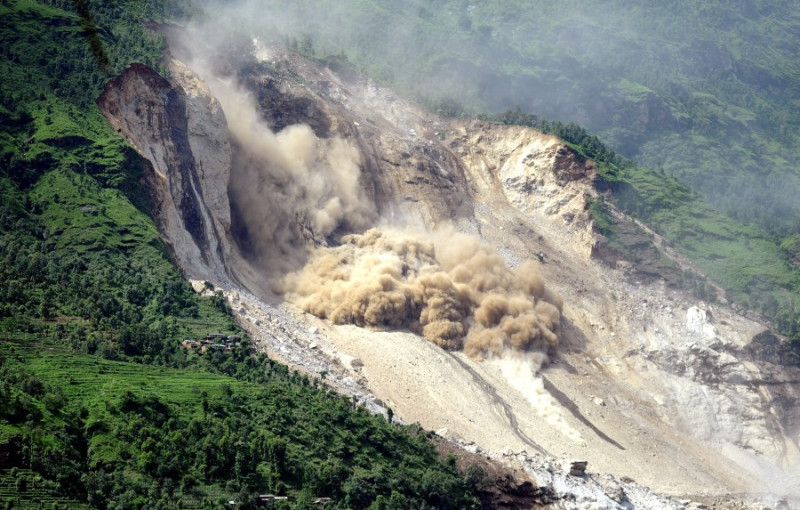
The floods along the Bhotekoshi and Trishuli rivers, triggered by a rock-ice avalanche, devastated villages in northern Nepal and left more than 1,400 bodies recovered and 6,150 people still reported missing, including 589 foreigners from 30 countries.
The missing include 55 Malaysians, 189 Indians, 65 Americans, 54 Ukrainians, 37 Chinese, 33 Australians, 33 Latvians, 32 Britons and 30 Canadians, among others.
Nepal has now adopted international disaster victim identification protocols after decomposition and mutilation caused by floodwaters made visual identification difficult.
Recovered bodies are temporarily buried in marked graves after DNA samples are collected, allowing them to be identified and returned to relatives once matches are established.
As at Sept 13, 1,230 bodies had been buried after DNA samples were collected, while 3,132 samples had been obtained, including 1,286 from deceased people and 1,846 from relatives of missing persons.
The samples are being analysed at two forensic facilities — the National Forensic Science Laboratory (NFSL) and the Nepal Police Central Forensic Science Laboratory.
Together, the laboratories had never analysed more than 1,500 samples in a year before the disaster.
“Most of the DNA analysis we handled were for paternity and maternity litigation, immigration cases, and some crimes. This is quite different from disaster victim identification,” NFSL head of department Nirajan Thapa told The Straits Times.
Thapa said the approximately 1,400 samples from flood victims represented “a very large workload” given Nepal’s limited number of specialised forensic experts, instruments and test kits.
The NFSL has an annual budget of around 90 million Nepalese rupees (about S$750,000), while its last DNA analyser was purchased around 2014, according to Thapa.
Its technicians, who had previously analysed about 100 bone samples, must now process at least 14 times that number.
About a dozen Nepali forensic analysts are working through weekends and holidays to deal with the surge, with the NFSL processing around 60 samples a day.
The police forensic laboratory, which has an annual capacity of about 400 DNA tests, is processing another 25 to 30 samples a day, Central Police spokesman Abi Narayan Kafle told local media.
DNA is being extracted primarily from bones and teeth because they remain more intact than blood and soft tissue, which deteriorate rapidly after death.
However, processing bone and teeth samples can take up to four days, compared with a few hours for blood samples taken from relatives.
The samples are first ground into powder and treated with specialised chemicals for 72 hours before further processing, while degraded or improperly stored samples may need to be tested again.
International assistance has become critical to Nepal’s effort, with forensic teams, equipment and test kits provided by India, China, South Korea, Japan and Singapore.
Two officers from Singapore’s Health Sciences Authority have been assisting with post-mortem examinations at Tribhuvan University Teaching Hospital in Kathmandu, while Singapore police have collected DNA samples from the next-of-kin of nine missing Singaporeans and shared them with Nepali authorities.
India sent a 19-member contingent comprising six forensic teams, along with laboratory equipment, DNA kits and reagents, on Aug 29.
South Korean forensic experts brought Rapid DNA systems capable of generating DNA profiles in about 90 minutes, while China and Japan have also sent forensic teams.
The United States approved an additional US$1 million in funding on Sept 15 to strengthen Nepal’s forensic analysis capacity.
The Nepal Police Central Forensic Science Laboratory is also expected to use Combined DNA Index System software donated by the US Embassy in August 2025 to cross-match DNA profiles from victims and relatives.
“The DNA of the deceased and relatives is extracted and (the profiles) entered into the software, which then carries out the matching,” Kafle told The Kathmandu Post.
Thapa said the scale of the challenge remained uncertain, particularly because many victims may have been fragmented by the force of the floods.
“If there are 5,000 missing people, there should be 20,000 to 25,000 samples, because of (body) fragmentation (in the flood’s force). But we have only 1,400 samples,” he said.
He acknowledged that some victims buried deep beneath flood silt might never be recovered, while their remains could potentially surface years later.
“If we can process 80 to 85 per cent of DNA samples when the international teams are here, we should be able to handle the rest by ourselves,” Thapa said.
He said the ultimate aim was to recover those still missing and identify as many victims as scientifically possible, while providing closure to families around the world. - September 21, 2026