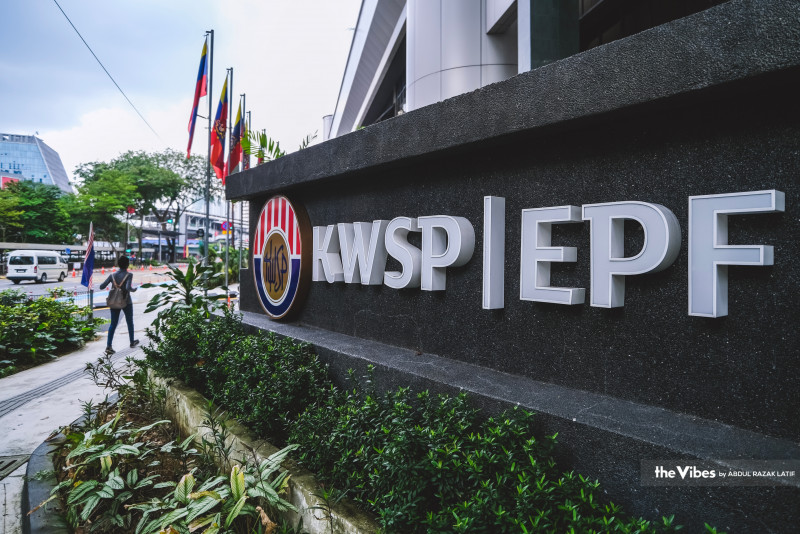
THE Employees Provident Fund (EPF) of Malaysia reported RM18.31 billion in investment income for the first quarter ended 31 March 2025, marking a 13 per cent decline from RM20.99 billion recorded in the corresponding period of 2024.
The fund stated that this figure includes unrealised mark-to-market gains of RM1.02 billion, largely driven by foreign exchange volatility. In line with EPF’s dividend distribution policy, such unrealised gains will not be distributed to members.
“Global markets turned volatile in early 2025 amid a resurgence in trade tensions and heightened policy uncertainty,” said EPF Chief Executive Officer Ahmad Zulqarnain Onn in a statement released on Tuesday.
He noted that uncertainty around US trade policy had begun affecting major equity markets during the quarter, even before the official announcement of tariffs by the US administration on 2 April.
“While inflationary pressures have begun easing in some economies, the pace and timing of monetary easing across regions have varied, impacting overall risk appetite.
“EPF’s globally diversified portfolio helped cushion the impact and kept us on track towards long-term value creation,” Ahmad Zulqarnain added.
During the quarter under review, equities contributed RM10.81 billion in income, down 23 per cent from RM14.02 billion in Q1 2024. The drop was attributed to weaker global equity performance and challenging investment conditions.
Equities remained the largest contributor, accounting for 59 per cent of total investment income. Fixed income instruments contributed RM5.99 billion or 33 per cent, continuing to serve as the fund’s capital preservation anchor.
Fixed income investments, which include Malaysian Government Securities and similarly rated bonds, fulfil two key mandates: delivering stable returns and offsetting equity market volatility.
Real estate and infrastructure generated RM1.08 billion in income for the quarter, while money market instruments brought in RM0.43 billion, aligning with expectations for these asset classes.
Of the total investment income, RM15.87 billion was allocated to conventional savings and RM2.44 billion to shariah savings.
As of March 2025, EPF’s total investment assets stood at RM1.26 trillion, with 38 per cent of assets invested overseas. Foreign investments delivered RM8 billion in income, contributing 44 per cent of the total.
Domestic investments, comprising 62 per cent of the fund’s assets, continued to provide long-term income stability through dividends, interest and sukuk gains. EPF reaffirmed its commitment to supporting Malaysia’s economic growth, with over 70 per cent of its annual allocation invested locally.
Ahmad Zulqarnain also highlighted revised projections of slower global and regional growth, including for Malaysia, amid increasing external risks and shifting trade dynamics.
“In a more challenging and uncertain market environment, EPF maintains a dynamic and diversified portfolio to preserve value and manage downside risk. We remain proactive in exploring regional and international investment opportunities to strengthen the portfolio and support sustainable long-term growth for our members,” he said.
During the review period, EPF registered 140,111 new members, bringing total membership to 16.3 million. Of these, 8.88 million were active contributors, representing 51.3 per cent of Malaysia’s 17.31 million labour force.
The ratio of active to inactive members remained stable at 54:46 in Q1 2025.
New employer registrations reached 19,600 during the quarter, raising the number of active registered employers with EPF to 616,558.
Total contributions rose by 15.1 per cent year-on-year to RM33.54 billion, up from RM29.13 billion in Q1 2024. Voluntary contributions surged by 62 per cent to RM7.02 billion, compared to RM4.33 billion a year earlier.
The number of formal members contributing above the statutory rate grew to 10,990 in Q1 2025, up from 6,771 in the same period last year. - June 3, 2025