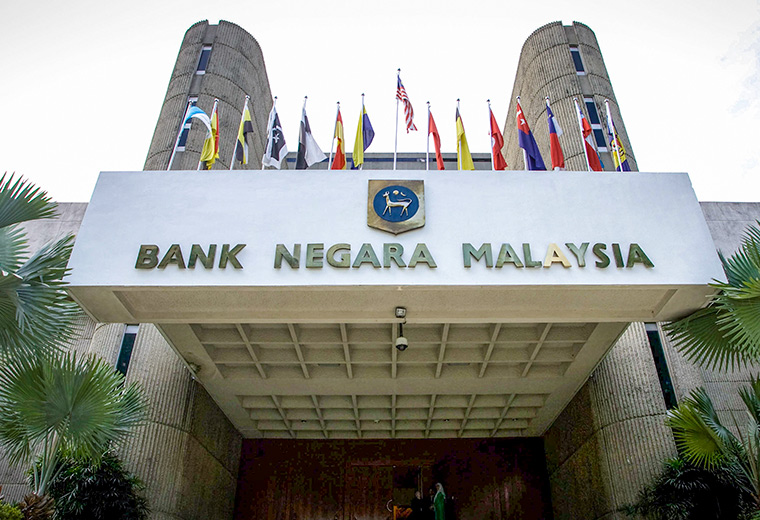
BANK Negara Malaysia (BNM) is anticipated to maintain its Overnight Policy Rate at 2.75 per cent for the entirety of 2026, underpinned by resilient domestic demand and subdued inflationary pressures, according to BMI Research.
In a note analysing the central bank’s recent meetings, BMI said BNM’s November 2025 session reaffirmed its stable growth outlook for 2026, a position unchanged since its September gathering, with the bank emphasising robust domestic consumption as a key driver.
“Our projection aligns with the central bank’s view. Growth is expected to moderate from an estimated 4.6 per cent in 2025 to 4.1 per cent in 2026, which is at the lower end of BNM’s forecast range of 4.0 to 4.5 per cent,” BMI stated.
Inflationary concerns remain minimal, the firm noted, with overall inflation averaging 1.4 per cent between January and November 2025, well within BNM’s target range.
However, BMI revised its 2026 inflation forecast upward to an average of 1.9 per cent from the previous 1.7 per cent, citing the second phase of public sector wage hikes and the RM100 Bantuan SARA assistance for all citizens aged 18 and above, scheduled for February.
“The revised projection sits at the upper end of the government’s forecast of 1.3 to 2.0 per cent, but broadly remains in line with the 2020-2024 average of 1.8 per cent,” BMI said.
The research firm also adjusted its outlook for the Malaysian ringgit, anticipating the currency to reach RM4.00 against the US dollar by the end of 2026. BMI attributed this to divergent global interest rate expectations, with its US-based team now projecting a further 50-basis-point cut in the US federal funds rate to 3.25 per cent, down from the previous 3.50 per cent forecast.
“Given BNM’s steady monetary policy stance, yield differentials are expected to favour the ringgit,” BMI added, suggesting that Malaysia’s currency could benefit from continued stability at home amid easing US rates abroad.
This forecast underscores confidence in Malaysia’s domestic economy, signalling that despite global uncertainties, local consumption and fiscal measures are likely to support steady growth and low inflation throughout the year. - January 15, 2026