MALAYSIA is positioning itself to become a major regional technology player amid the global surge in artificial intelligence (AI), semiconductor manufacturing and high-value industrial development, with the government signalling ambitions for the country to evolve into a “mini-Korea” or “mini-Taiwan”.
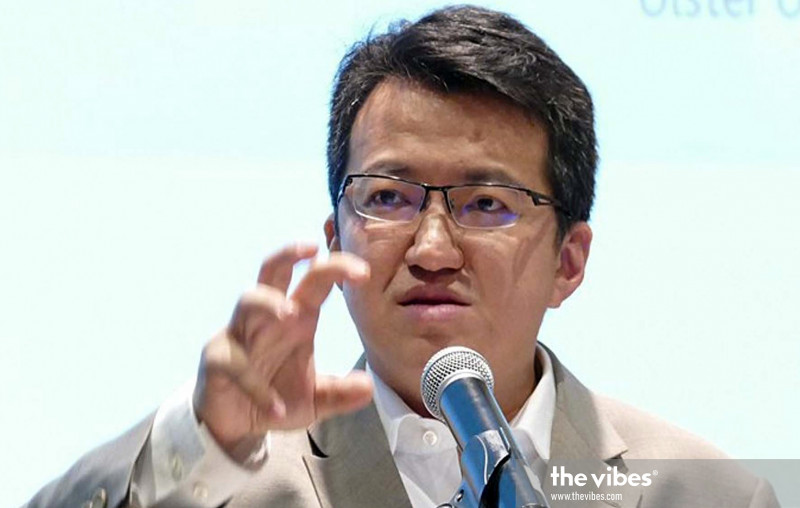
Deputy Finance Minister Liew Chin Tong said Malaysia already possesses a strong industrial base and strategic advantages within the semiconductor supply chain, particularly in automation equipment and industrial support systems servicing global chipmakers.
Speaking at the AFFIN Market Outlook Conference: Propelling Malaysia Forward 2026 organised by AFFIN Group, Liew said the country’s growing visibility among international investors and multinational technology firms reflects increasing confidence in Malaysia’s industrial capabilities.
“Malaysia may not be as large as South Korea or Taiwan in terms of its own industrial and technological value, but the country has a strong industrial foundation to emerge as a significant new player in this wave of technology,” he said.
Also present at the conference were AFFIN Group president and group chief executive officer Datuk Wan Razly Abdullah, Affin Hwang Investment Bank chairman Hasli Hashim and chief executive officer Hanif Ghulam Mohammed.
Liew said Malaysia must now move beyond merely attracting foreign direct investment (FDI) and focus on ensuring that industrial capital, technological expertise and wealth generated from the sector circulate more effectively within the domestic economy.
He noted that one of the country’s longstanding structural weaknesses is that Malaysia’s capital markets have yet to fully reflect the actual strength and growth potential of its technology and semiconductor ecosystem because industrial expansion has historically been heavily dependent on foreign capital inflows.
“Over the years, foreign capital has flowed into Malaysia, but it has not been sufficiently recycled within the domestic economy, and this is one of the important issues that needs to be addressed in order to build a stronger economy,” he said.
As part of efforts to strengthen Malaysia’s technology financing ecosystem, Liew revealed that several agencies, including the Securities Commission Malaysia and Bursa Malaysia, are examining ways to create additional listing pathways for semiconductor-related companies and advanced technology firms.
The move is expected to encourage stronger local participation in the country’s growing high-tech industries while deepening domestic capital market involvement in strategic sectors linked to AI and semiconductor manufacturing.
At the same time, Liew stressed that industrial transformation and economic modernisation must remain closely tied to broader public welfare and economic security.
He said strengthening Malaysia’s resilience amid global uncertainty cannot rely solely on investment and industrial policy, but must also address wages, employment quality, housing affordability and urban management.
“When we talk about supply chain resilience and the new wave of industrialisation, we also need to think about jobs, wages, housing, and how cities are managed so that people feel more confident and economically secure,” he said.
According to Liew, ensuring ordinary Malaysians directly benefit from the country’s next phase of industrial growth will be critical to sustaining long-term economic stability and social confidence.
He described the current AI and semiconductor expansion as a potential “second leap” opportunity for Malaysia’s economy, driven by high-value industries, technological upgrading and strategic positioning within global supply chains increasingly shifting towards Southeast Asia. - May 12, 2026