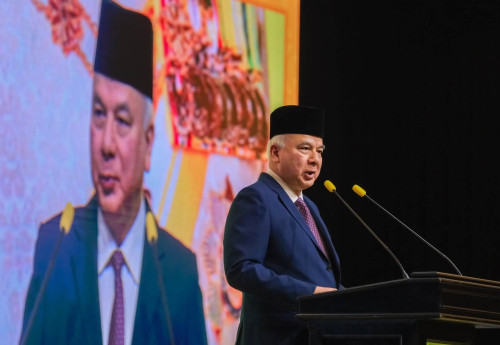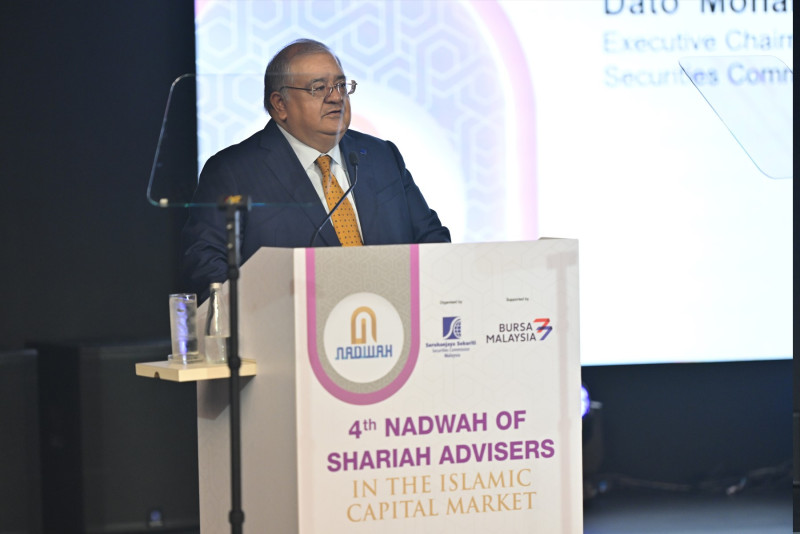
MALAYSIA is raising standards across its Islamic Capital Market with a major push towards ethics-led innovation, stronger governance and global Shariah expertise, as Securities Commission Malaysia (SC) seeks to redefine the future direction of Islamic finance.
SC Chairman Datuk Mohammad Faiz Azmi said the next phase of Islamic capital market development must move beyond a compliance-focused approach, with Shariah advisers playing a more strategic role in designing innovative solutions aligned with the broader objectives of Islamic principles.
Addressing the 4th SC Nadwah of Shariah Advisers on , Faiz said the industry must embrace Maqasid al-Shariah — the higher objectives of Islamic law — by ensuring financial products deliver meaningful economic, social and ethical value rather than merely meeting technical requirements.
"Compliance, while necessary, is no longer sufficient. We need Shariah advisers who go further and actively solve problems by developing solutions, championing ethical innovation and lending their expertise to emerging issues," he said.
He stressed that Islamic finance must continue to be anchored in principles of justice, transparency and trust, cautioning that products which appear technically compliant may still fall short of wider ethical expectations.
Malaysia’s Islamic Capital Market has grown into a key pillar of the country’s financial system, with assets valued at RM2.7 trillion, representing about 64 per cent of the overall capital market. The country also maintains its position as the world’s leading sukuk market, accounting for approximately 36 per cent of global sukuk outstanding.
To strengthen governance standards, the SC has introduced a new framework of guiding considerations for Registered Shariah Advisers, aimed at embedding ethical evaluation and governance principles into Islamic financial product development from the earliest stages.
Faiz warned that Shariah advisers entrusted with safeguarding market integrity would face firm action if they failed to meet their professional obligations.
"The SC's position on this is unequivocal. We will not hesitate to take regulatory action against any Shariah adviser who breaches the duties entrusted to them. And if the facts warrant it, even criminal prosecution. Everyone will be treated the same under the rule of law," he said.
As part of efforts to strengthen Malaysia’s future Shariah talent pipeline, the SC announced the Super Scholar Programme, an initiative designed to produce at least five internationally recognised Shariah experts by 2030.
The programme aims to develop specialists with multidisciplinary capabilities spanning Islamic jurisprudence, finance, sustainability, innovation and emerging technologies, while strengthening Malaysia’s position as a global centre for Shariah expertise.
The initiative forms part of the Capital Market Masterplan 2026-2030 and is being developed in collaboration with Bank Negara Malaysia to enhance leadership and capacity within the country’s Shariah governance ecosystem.
Faiz also highlighted the SC’s newly issued Guidance Note on Sukuk: An Alignment with Maqasid Al-Shariah Guidance for the Islamic Capital Market Malaysia, which requires Shariah advisers to be actively involved throughout the sukuk design and structuring process.
The guidance aims to ensure sukuk issuances achieve broader economic, social and ethical outcomes while maintaining compliance with Shariah requirements.
The regulator is also preparing to expand the Maqasid al-Shariah-based approach across other segments of the Islamic Capital Market, including collective investment schemes, equities and digital assets.
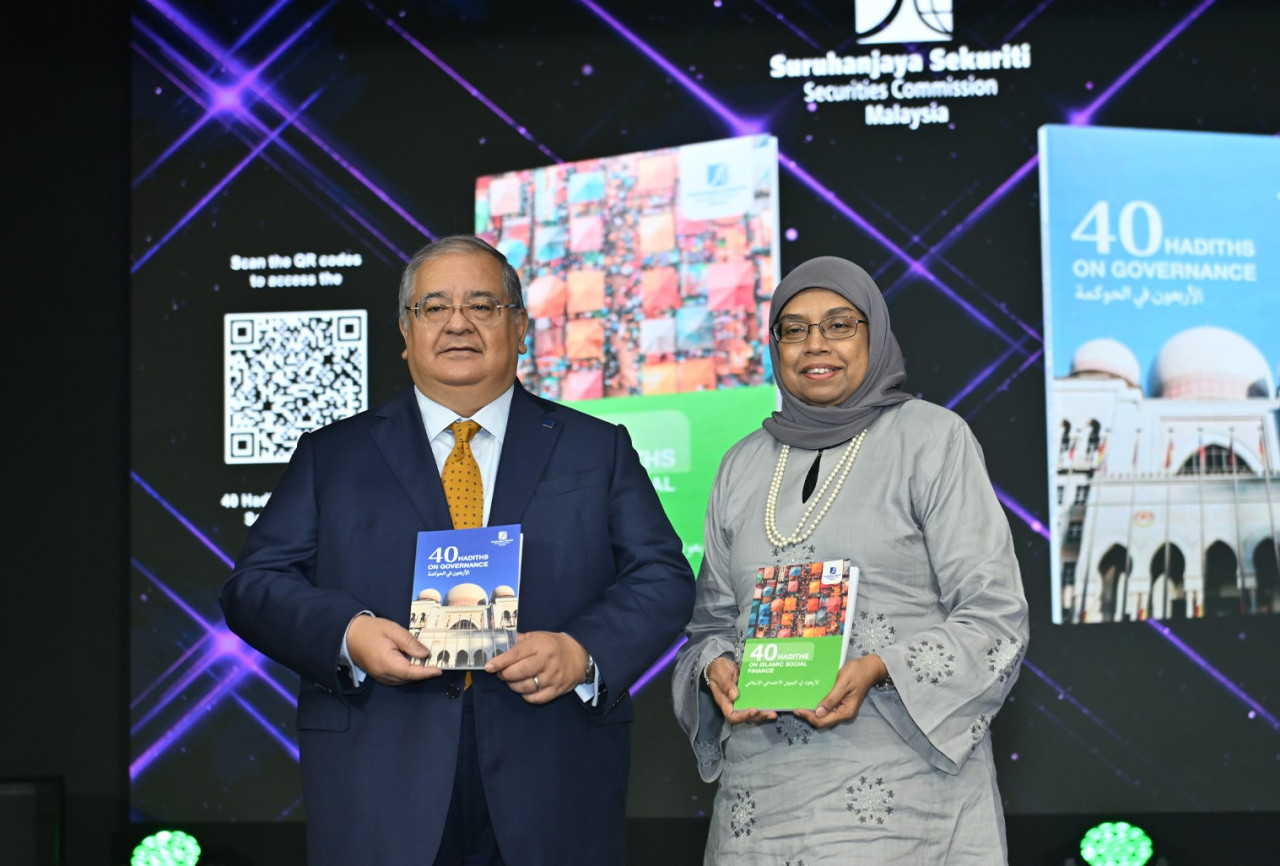
Faiz also launched two new publications under the SC’s 40 Hadiths series focusing on Islamic Social Finance and Governance.
He said the publications form part of wider efforts to embed Maqasid al-Shariah principles throughout Malaysia’s financial ecosystem and strengthen the country’s reputation as a global leader in ethical, value-based Islamic finance. - July 14, 2026