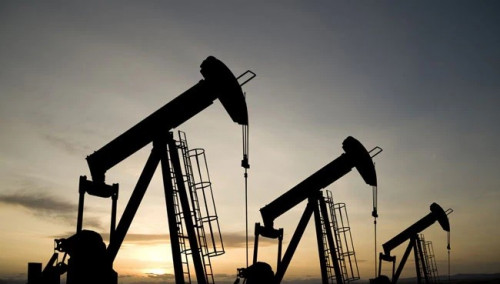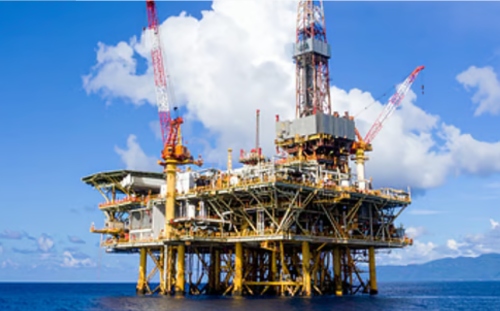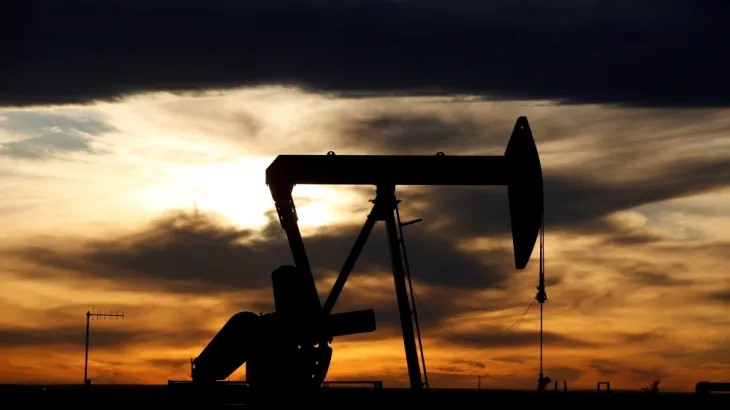
OIL prices held above US$82 a barrel on Tuesday after four consecutive sessions of gains, as uncertainty over a potential US-Iran agreement to end the conflict and reopen the Strait of Hormuz kept markets on edge.
Brent crude remained above US$87 following its fourth straight advance. Futures settled US$4.17, or 4.99%, higher on Monday at US$87.72 a barrel, while US West Texas Intermediate crude gained US$3.95, or 5.05%, to close at US$82.13.
US President Donald Trump has introduced sweeping new demands on Iran, including compensation for people killed in conflicts involving the Islamic Republic, after Tehran reiterated its demand for reparations as part of negotiations to end the war.
The fresh demands have clouded prospects for a near-term agreement and raised concerns that disruptions to oil flows through the strategic waterway could persist.
Trump has also indicated that he would favour intensifying economic pressure on Tehran rather than launching fresh military strikes to force the reopening of the Strait of Hormuz.
Iran and Oman have yet to reach an agreement on reopening the waterway, with Tehran making the move conditional on securing a broader accord with Washington.
Iran said on Sunday that an agreement with Oman covering transit through the Strait of Hormuz was in its final stages, but reiterated that the waterway would only reopen if the United States met additional conditions, including compensation and an end to sanctions and military threats.
The strait is a critical artery for global energy markets, with roughly a fifth of the world’s oil and liquefied natural gas supplies passing through it before the conflict.
The uncertainty has also heightened concerns over inflation and the wider global economic outlook.
Meanwhile, the US dollar gained on Monday as oil prices rose ahead of Wednesday’s closely watched US consumer price inflation report for July, after a much weaker-than-expected jobs report on Friday reduced expectations of a near-term Federal Reserve rate increase.
Fed funds futures traders are now pricing in a 52% probability of a rate hike at the Fed’s September meeting, down from 67% a week ago. Analysts said slowing job growth and easing oil prices had contributed to the decline in expectations.
“September was starting to look highly likely and then not only did we get a bad jobs report, but terrible revisions as well,” Reuters reported Adam Button, chief currency analyst at investingLive, saying.
Wednesday’s Consumer Price Index data could trigger another shift in expectations if it points to renewed price pressures. Producer price data on Thursday and retail sales figures on Friday will provide further clues on the inflation outlook.
“Fresh USD downtrends are starting to form following a series of bearish USD catalysts,” TD Securities analysts said in a report.
However, they added: “we still expect the USD to stay more supported against G10 currencies until soft inflation data allows the market to price out near-term Fed rate hikes.”
The dollar index rose 0.17% to 99.81, while the euro slipped 0.14% to US$1.1542.
The Japanese yen weakened 0.94% to 159.31 per dollar, although investors remained alert to possible intervention.
Bank of Japan policymakers warned of mounting inflation risks that could require a faster-than-expected pace of interest rate increases, according to a summary of opinions from their July meeting, strengthening expectations of a possible rate increase in September.
In commodities, US gold futures rose 0.5% to settle at US$4,419.70 an ounce, while spot gold gained 1.12% to US$4,390.29 after touching a nine-week high.
Meanwhile, Wall Street retreated on Monday as investors weighed developments surrounding the Strait of Hormuz and the outlook for US interest rates.
The Dow Jones Industrial Average fell 0.11% to 53,975.98, while the S&P 500 slipped 0.06% to 7,753.11 and the Nasdaq Composite declined 0.32% to 26,605.36.
US equities had reached record highs on Friday after the weaker-than-expected jobs report prompted traders to scale back expectations of further Federal Reserve rate increases.
Economists polled by Reuters expect the Consumer Price Index to have risen 3.4% year on year in July, compared with 3.5% in June.
“We are keeping our view of no hikes from the Fed for this year,” said Mohit Kumar, a senior European economist at Jefferies.
“If oil prices remain contained and move lower from the current levels, that would prevent the need for the Fed to hike rates,” Kumar said.
Europe’s benchmark stock index was little changed near a record high as investors paused ahead of a week packed with economic data, while the MSCI index of global stocks edged up 0.04%.
Asian shares advanced, with MSCI’s broadest index of Asia-Pacific shares outside Japan closing 0.61% higher at 1,628.74. Emerging-market stocks gained 0.69% to 1,669.27, Reuters reported.
Global equities have reached record highs in recent weeks, supported by strong corporate earnings.
Bank of America analysts said that, with nearly 90% of S&P 500 companies having reported results, earnings per share were up 30% year on year after excluding investment gains at Alphabet and Amazon. The 76% EPS beat rate matched the strongest level since 2021.
JPMorgan strategists raised their 2026 earnings-per-share estimate to US$365, representing annual growth of 35%, and lifted their S&P 500 price target to 8,000 from 7,800. The index was trading at around 7,758.
Corporate earnings are lighter this week but include results from semiconductor maker Applied Materials, networking equipment company Cisco and cloud infrastructure provider CoreWeave.
In fixed-income markets, the yield on benchmark US 10-year Treasury notes rose 4.25 basis points to 4.701%, from 4.658%, as investors prepared for US$125 billion in new issuance this week. - August 11, 2026