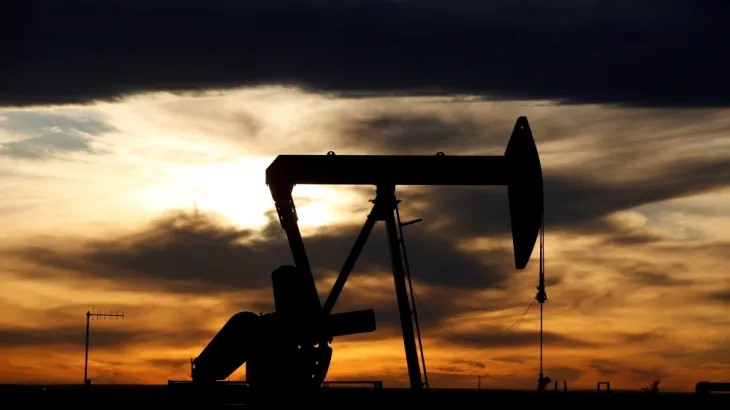
OIL prices fell on Friday and recorded sharp weekly declines as traders assessed signs of a possible reopening of the Strait of Hormuz, changing expectations over US interest rates and geopolitical developments affecting global crude supplies.
Brent crude futures settled 39 cents, or 0.43 per cent, lower at US$89.31 a barrel, while West Texas Intermediate (WTI) crude futures fell 13 cents, or 0.16 per cent, to US$83.40.
For the week, Brent fell more than five per cent, while WTI declined more than four per cent.
Oil prices came under further pressure after comments from Federal Reserve chairman Kevin Warsh pointed to a possible rate hike later this year to contain inflation, according to Phil Flynn, senior analyst at Price Futures Group.
“The (global) products markets are looking strong on further Ukraine strikes on Russian refineries,” Reuters quoted Flynn saying. “But there is a lot of rumbling, rumours we might see a deal to reopen the Strait of Hormuz over the weekend.”
The US-Israeli war with Iran entered its sixth month on Friday, keeping geopolitical risks elevated even as crude flows through the strategic waterway showed signs of a tentative recovery.
About 20 per cent of global oil supplies passed through the Strait of Hormuz before the war, making the waterway one of the world’s most important energy chokepoints.
“The market has been surprised by the additional flow, Iran-Oman shipping corridor and the US mine clearance claims,” said Rystad analyst Janiv Shah.
“The weekly decline would likely be due to the available volume that is able to exit the Strait and the pace of ramp-up in flows. That would allow Asian refiners to pull and consume,” he said.
The United States this week announced what it described as the “toughest sanctions in history” against Iran, while Tehran called the measures an “inhumane and hostile act” that had lost their effectiveness.
Mediators are meanwhile intensifying efforts to reopen the Strait of Hormuz, with Tehran agreeing to draw up conditions for restoring normal shipping after a Qatari envoy pressed Iran to respect freedom of navigation.
Hormuz Flows Remain Erratic
The tentative recovery in oil shipments through the Strait of Hormuz remained uneven.
Preliminary shipping data showed that only seven commodity vessels transited the waterway on Thursday, down from 17 the previous day and below the 10-day average of 15.
The Bab el-Mandeb, another major maritime chokepoint, recorded 17 commodity vessels, with six entering and 11 leaving.
Goldman Sachs estimated recent total Gulf oil exports at between 15 million and 16 million barrels per day, around seven million to eight million bpd below pre-war levels but five million to six million bpd above the lowest point recorded in March.
“The ramifications on who will be in or out of OPEC, how China’s demand is affected, whether the refinery issues of the globe can now be solved are hitched firmly to this bumpy wagon of war,” said PVM Oil Futures analyst John Evans.
Trump Administration Eyes Venezuela Oil Deal
Officials in US President Donald Trump’s administration are working on a deal to secure long-term access to part of Venezuela’s crude reserves, according to sources familiar with the negotiations.
The arrangement could ultimately reduce the cost of US oil imports, while Venezuela is also considering leaving the OPEC oil producers’ group, Bloomberg reported.
Meanwhile, geopolitical tensions widened after Moscow warned that it could strike British military targets inside and outside Ukraine in response to Ukrainian attacks on Russian territory using British-supplied long-range cruise missiles.
Trump said Russian President Vladimir Putin would not attack a NATO member and played down reports that CIA Director John Ratcliffe had warned Russian officials against such an attack.
Britain is a founding member of NATO.
Ukraine’s military also struck a Russian oil refinery in the Yaroslavl region overnight, according to Ukraine’s General Staff, adding another layer of uncertainty to global refined-product supplies. - August 29, 2026