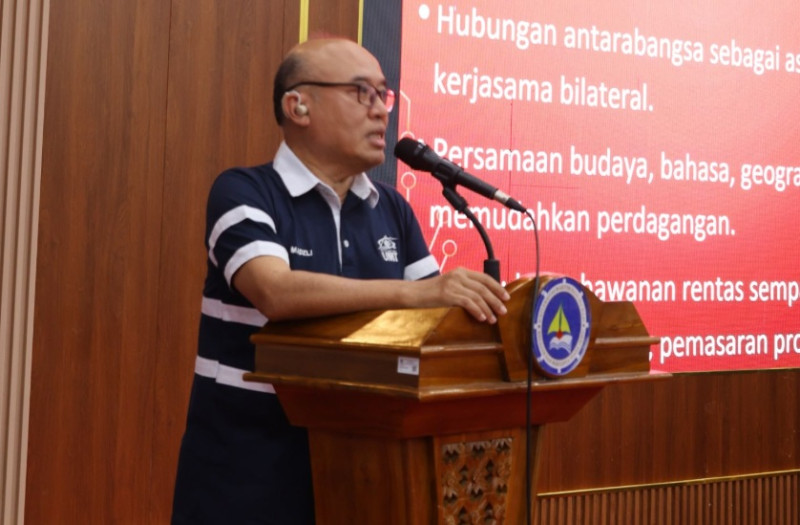
ACCURATE declarations of origin for palm oil blended in Malaysia are crucial, as any inaccuracies could undermine the integrity and reputation of Malaysian products in international markets, maritime expert Dr Madzli Harun said.
The Senior Lecturer at Universiti Malaysia Terengganu’s (UMT) Faculty of Maritime Studies said that while the industry permits palm oil blending, the process does not automatically make the finished product Malaysian in origin.
He said the applicable Rules of Origin (RoO) determine a product's country of origin and take into account processing methods, raw material content, and criteria stipulated under relevant trade regulations.
“If the original Bill of Lading (B/L) states that the Refined, Bleached and Deodorised (RBD) Palm Olein originates from Indonesia, subsequently blending the product in Malaysia does not automatically make it a Malaysian-origin product.
“The B/L may be amended after a vessel leaves the port of loading and while it is sailing to the port of destination, but such amendments must be supported by reasonable grounds and valid documentation,” he said.
Madzli said blending alone might not satisfy the RoO requirements or change a product’s country of origin.
Operators must therefore demonstrate that the processing carried out meets the relevant criteria before the finished product can be declared as originating from Malaysia.
“In the ASEAN context, the ASEAN Trade in Goods Agreement (ATIGA) sets out rules of origin that include criteria such as Regional Value Content (RVC), change in tariff classification and cumulation.
“The use of raw materials from ASEAN member states may be taken into account when determining the origin of a finished product under certain circumstances, subject to the requirements of the agreement,” he said.
“Operators cannot simply blend oil from Indonesia with Malaysian oil and then label it ‘Made in Malaysia’. The finished product must meet the prescribed requirements before it can qualify for recognition as Malaysian-origin,” he said.
He said the Royal Malaysian Customs Department (RMCD), Malaysian Palm Oil Board (MPOB) and Ministry of Investment, Trade and Industry (MITI) should examine the relevant documentation within their respective jurisdictions to ensure that blending activities and origin declarations complied with the applicable regulations.
“The documents that need to be examined include import and export records, certificates of origin, the quantity of imported oil, the volume of Malaysian oil used and records of the blending process.
“Traceability is also important to ensure that the origin of raw materials can be identified even after products from different countries have been blended.
“Even if the finished product qualifies for Malaysian-origin status under the applicable rules, records of raw materials imported from Indonesia must still be retained. Information on the origin of those materials must not simply be erased after blending,” he said.
He also warned that if a blended product was found to be contaminated, Malaysia could suffer reputational damage, face cargo rejections by buyers and potentially encounter legal action, depending on the circumstances and the parties responsible.
Madzli said false declarations could also result in action under relevant laws, including Section 133 of the Customs Act 1967, if the elements of an offence under the provision were established.
Meanwhile, maritime Prof Nazery Khalid said documentation for blended cargoes should accurately reflect the composition and characteristics of the resulting product to avoid doubts about its contents.
He said this was important because if a blended cargo was found to be contaminated and posed a health risk to consumers after export, Malaysia could suffer reputational damage if the product was perceived to have originated from the country.
“The recent food poisoning incident in Taiwan involving contaminated cooking oil should serve as a lesson.
“As one of the world’s major palm oil producers, Malaysia must ensure that its exported oil meets quality and integrity standards, while ensuring that its processing, documentation and shipment are carried out properly,” he said. – October 25, 2026