Business

Japan's Toshiba retreats from coal-fired power stations

Announcement comes after Prime Minister Yoshihide Suga sets  2050 deadline for the world’s third-largest economy to become carbon-neutral

Updated 5 years ago · Published on 11 Nov 2020 1:20PM

Japan's Toshiba retreats from coal-fired power stations
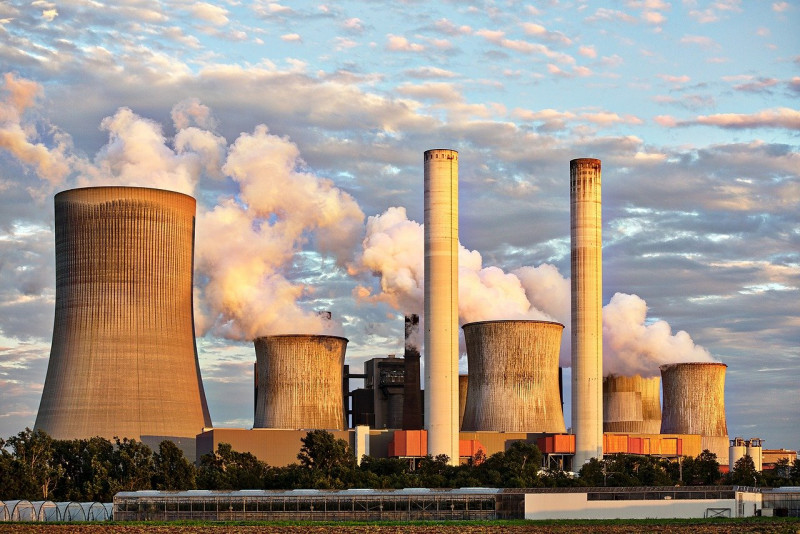
The company, which currently has around 10 coal-fired station projects underway worldwide, will instead increase investment in renewable energy – Pixabay pic, November 11, 2020

TOKYO – Japanese engineering giant Toshiba will stop constructing new coal-fired power plants and shift to renewable energy in a bid to reduce greenhouse gas emissions, a spokeswoman said on Wednesday.

“We still have ongoing projects, but we have decided to withdraw from building new coal-powered plants,” company spokeswoman Yoko Takagi said.

Toshiba, which currently has around 10 coal-fired station projects underway worldwide, is a major global player in the power sector.

The company will instead increase investment in renewable energy, including parts for offshore wind-power facilities and research and development for next-generation solar batteries, the spokeswoman said.

The announcement comes after Japan’s Prime Minister Yoshihide Suga set a 2050 deadline for the world’s third-largest economy to become carbon-neutral.

His announcement two weeks ago firmed up the country's previous climate change commitments as it plays catch-up with pledges made by other major economies.

“Society is moving towards carbon-neutral power,” the Toshiba spokeswoman said, noting the firm has also set its own goal of slashing greenhouse gas emissions by 80% by 2050.

Germany’s Siemens Energy and General Electric of the US have both made similar commitments to withdraw from coal-fired power stations.

Japan, which is a signatory to the Paris climate change agreement, was the sixth-biggest contributor to global greenhouse emissions in 2017, according to the International Energy Agency.

It has struggled to cut carbon emissions after shutting down reactors after the 2011 meltdown at the Fukushima nuclear power plant.

Reliance on fossil fuels like coal increased after that, as public anger over the accident pushed all of the country's reactors offline temporarily.

Japan’s 140 coal-fired power plants provide nearly a third of its total electricity generation.

Coal is the second-biggest power-generation method behind LNG-fired plants, which provide 38% of the nation’s energy needs. – AFP, November 11, 2020
Related News

Malaysia / 5mth

King drives over 45km to inspect environment in Mersing

Heritage / 7mth

Unesco World Heritage Site in George Town to undergo facelift to become pedestrian-friendly

Malaysia / 7mth

Do not turn a blind eye to environmental issues, cautions former minister

Our Planet / 9mth

Green activist urges hotels to adopt Asean Green Ratings

Malaysia / 1y

Sabah passes carbon law with safeguards for native land, warnings over marine rights

Malaysia / 1y

Sabah native activist slams Tongod cement plant as ‘economically and environmentally unsound’

Spotlight

Malaysia

Elderly man admits to hitting neighbour with iron rod

Malaysia

Body found at KLIA2 in tyre storage compartment of aircraft from Japan

Malaysia

Factory operator faces rape, unnatural sex charges involving polytechnic student

Malaysia

Ismail Sabri granted RM300k bail after pleading not guilty to asset declaration charge

By Alfian Z.M. Tahir

Malaysia

Sunway Lagoon ride halted as safety probe seeks to protect public - DOSH

Malaysia

Malaysia ready to deploy military expertise for Nepal flood relief, says Defence Minister

Malaysia

Violence in Thailand: Visitors drop by almost 50 per cent

By Ian McIntyre

You may be interested

Business

Robo.ai Inc announces appointment of new independent director

By Alfian Z.M. Tahir

Business

Oil falls for fourth day as Hormuz supply fears ease

Business

Moves in major US stock indices could spill into currency and gold markets

By Alfian Z.M. Tahir

Business

Oil slides as Iran-Oman Hormuz talks raise hopes of easing tensions

Business

Asia-Pacific growth set to slow as tariffs, geopolitical risks raise economic pressure

Business

K8 Cargo: Company still in limbo, claims CEO