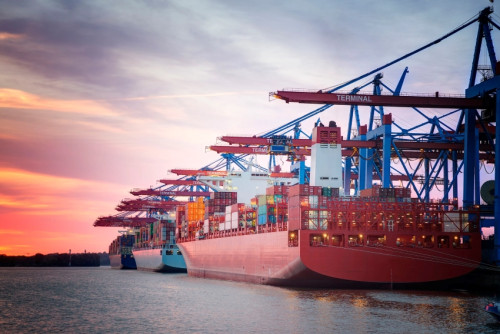

KOTA KINABALU – Amid a worrying trend that sees international shipping agencies refrain from visiting ports in Sabah and Sarawak, there are increasing calls for the cabotage policy to be brought back to help overcome problems related to the import and export of marine cargo in these states.
However, Sabah Deputy Chief Minister Datuk Joachim Gunsalam has emphasised that reinstating the cabotage policy is not the way to solve the rising prices of imported goods following increased logistical costs.
The state industrial development minister said that the increase in logistical costs is mainly because international shipping firms do not want to come to Sabah as there is “nothing for them to carry” from the state.
“We don’t have much produce to export to other countries. That is why, to me, we should have more industries in Sabah that are export-oriented,” he told The Vibes in an interview.
Gunsalam was responding to a question on international shipping firms that prefer to unload their goods at Port Klang on the peninsula – domestic liners would then ship them to Sabah and Sarawak, supposedly due to the inefficiency of the ports in East Malaysia.
The Vibes has reported that local shipping firms think that the lifting of the cabotage policy had not only failed to reduce the rates of imported goods but had, in fact, increased them. This is because international liners refuse to call at Sabah’s ports despite the removal of the cabotage.
Foreign shipments supposedly bound for East Malaysia are being dropped off in bulk at Port Klang on the peninsula by international liners, causing a chokehold at the port while raising costs of imported goods in the two Borneo states.
Gunsalam said that the government liberalised the cabotage policy in 2017 because it was what the public and the logistics players wanted.
The policy, when instituted in 1980, had originally imposed restrictions on international liners against directly shipping cargo to the Borneo states. They, therefore, had to unload goods meant for Sabah and Sarawak at international ports like Port Klang in Peninsular Malaysia.
“No, I don’t think (cabotage policy should be reinstated) to solve the problem. We should study why this is happening and tackle the root cause.
“We don’t have products to export from Sabah. That’s why the ships don’t want to come. This is a supply-and-demand kind of thing,” he said.
He also said that a lot of shipping companies have been cutting down on their operations since they have been impacted by the pandemic – so much so that some of them have stopped operating.
As such, he said the way to solve the problem is to have more investors come to Sabah to increase the volume of imports and exports.
He also opined that Sabah should look into how to reduce the cost of business in the state in order to attract more investors to Sabah.
As for the poor port efficiency in Sabah as reported by The Vibes, Gunsalam said that instead of pointing fingers and blaming a certain port, industry players should sit down and discuss the problem.
“We can always discuss (these matters). We should find out the root cause of the problem there.
“But for me, the biggest issue is, if we want to ask the shipping lines to come here, what will they bring? We can’t ask them to come if there is nothing for them to carry,” he stressed. –The Vibes, June 8, 2022