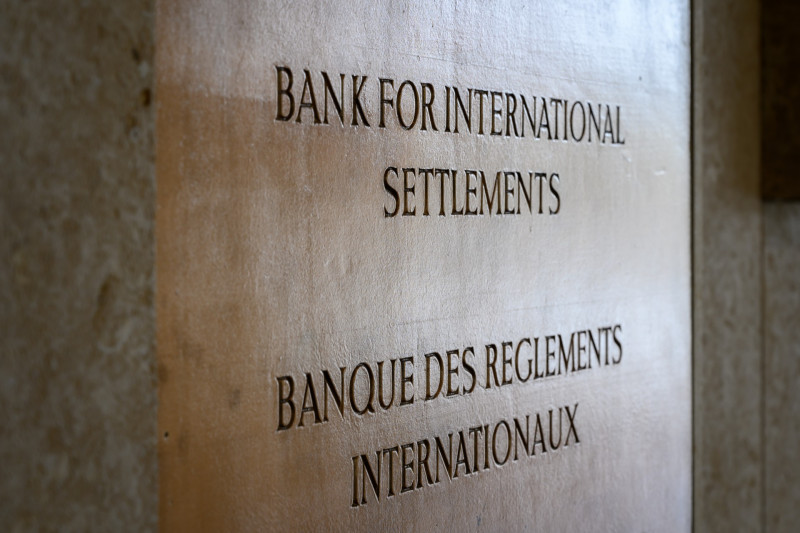
ZURICH – Central banks must not let inflation become entrenched, with the threat of stagflation looming over the global economy, the Bank for International Settlements (BIS) warned today in its annual economic report.
BIS, considered the central bank of central banks, said institutions will have to move swiftly to ensure a return to low and stable inflation, while limiting the impact on growth.
“The key for central banks is to act quickly and decisively before inflation becomes entrenched,” said BIS general manager Agustin Carstens.
“If it does, the costs of bringing it back under control will be higher. The longer-term benefits of preserving stability for households and businesses outweigh any short-term costs.”
BIS’s flagship report said that in restoring low, stable inflation, central banks should seek to minimise the hit to economic activity, in turn safeguarding financial stability.
BIS said engineering a so-called soft landing had historically been difficult, and the starting conditions now are making the task all the more challenging.
“It would be more desirable if we could have a soft landing because that would mean that the tightening of monetary policy could be more subdued,” Carstens told a press conference.
“But even if this is not the case, definitely the priority should be to combat inflation, to prevent the world economy from slumping.”
Stagflation dangers
After the shock of the Covid-19 pandemic, central banks initially saw the return of inflation as temporary as the economy picked up again.
But the rise in prices has sharply accelerated since Russia’s invasion of Ukraine in February.
BIS said the global economy risked entering a new era of high inflation.
The dangers of stagflation – stagnant growth coupled with rising prices – loom large, as a combination of lingering disruptions from the pandemic, the war in Ukraine, soaring commodity prices and financial vulnerabilities cloud the outlook, it added.
Policymakers must press ahead with reforms to support long-term growth and lay the groundwork for more normal fiscal and monetary policy settings, BIS said.
While the European Central Bank plans to raise interest rates in July and then again in September, the US Federal Reserve on Wednesday carried out its largest rate hike since 1994.
The Fed announced a 0.75-percentage-point rise and said it is prepared to do so again next month in an all-out battle to drive down surging inflation.
1970s comparison
Established in Basel in 1930, the BIS is owned by 62 central banks, representing countries that account for about 95% of global gross domestic product.
In its annual report, the BIS looked at the stagflation of the 1970s, when the oil shocks of 1973 and 1979 caused inflation to jump.
In 1973, oil prices had more than doubled in the space of a month. Oil occupied a much more central place in the economy, it said.
Moreover, inflation was already rising before the oil shock, while the global economy is now emerging from a long phase of low inflation.
But the BIS also highlighted other points of vulnerability, including the current high level of private and public debt.
And with Russia’s war in Ukraine, inflation this time is not only based around oil, but also other sources of energy, agricultural raw materials, fertilisers and metals.
The most pressing challenge for central banks is therefore to bring inflation down to low levels, according to the BIS.
High inflation situations tend to be self-reinforcing, warned the BIS, especially when wages spiral into an attempt to offset rising prices. – AFP, June 26, 2022