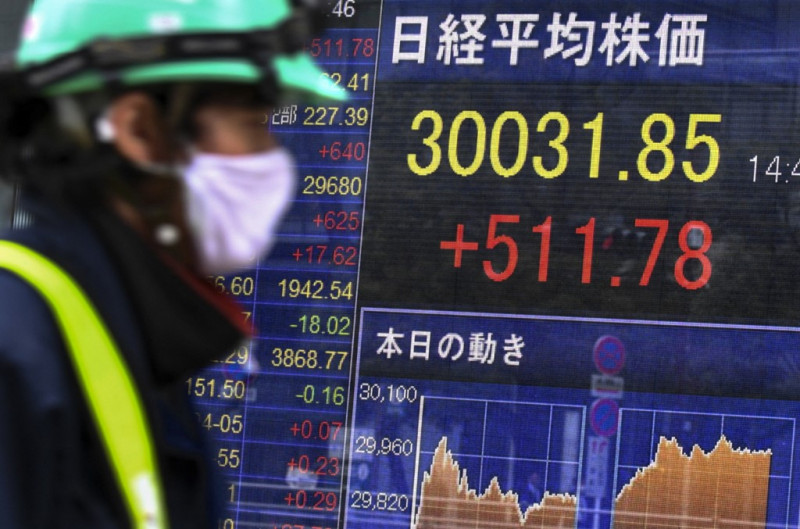
HONG KONG – Asian markets mostly rose today and oil fell as investors brushed off both weak data from China and comments indicating the Federal Reserve is wedded to its anti-inflation rate hike campaign.
Strong earnings from Wall Street titans Amazon and Apple had helped US markets end last week with healthy gains and eased concerns about the impact on consumers of surging inflation and rising borrowing costs.
That came after investors took Fed chief Jerome Powell’s comments Wednesday after a policy meeting to indicate the central bank could start slowing down monetary tightening, providing a much-needed boost to stocks.
However, analysts warned that inflation would take time to come down from its four-decade highs and that there were undoubtedly more rate hikes to come.
Officials backed that up at the weekend, with Minneapolis Fed chief Neel Kashkari telling The New York Times that he was “surprised by markets’ interpretation” of the latest Fed meeting statement.
“I think we’re going to continue to do what we need to do until we are convinced that inflation is well on its way back down to 2%,” he said. “We are a long way away from that.”
And Atlanta Fed president Raphael Bostic said he did not think the economy was in recession owing to ongoing jobs growth but that inflation remained too high and he was “convinced” more must be done.
Still, Treasuries continued to fall, with the 10-year yield at 2.67%, well down from June’s peak near 3.50%, suggesting expectations for future rates are easing.
Inflation pressure could get some relief following news that the first shipment of Ukrainian grain left the port of Odessa today under a deal aimed at relieving a global food crisis following the Russian invasion.
Weak China data
Asian markets opened the day cautiously as investors struggled to extend Wall Street’s lead, but they picked up in the afternoon.
Hong Kong and Shanghai recovered after sinking in reaction to another disappointing reading on the Chinese economy.
The closely watched Purchasing Managers’ Index of manufacturing activity shrank in July on the back of weak demand and the strict zero-Covid-19 measures imposed in parts of the country.
While sweeping curbs have eased in major hubs such as Shanghai and Beijing, sporadic lockdowns in other cities and towns have kept businesses and consumers worried with few signs of the policy easing.
Oanda’s Craig Erlam said there was a positive to be taken from “the improvement in supply chain conditions, which should aid the inflation fight around the world”.
“Of course, it is more than just a supply chain problem at this point but every little helps.”
Hong Kong tech was weighed, however, by news that US authorities had put market heavyweight Alibaba on a list of firms threatened with a New York delisting if they did not comply with disclosure rules.
Tokyo, Sydney, Seoul, Mumbai, Singapore, Bangkok, Jakarta and Wellington edged up, though Taipei and Manila edged slightly lower.
London opened slightly higher but Paris and Frankfurt dipped.
The data out of China revived demand concerns on oil markets, sending both main contracts down today, following a bounce last week.
Brent and WTI both lost more than 1%, and investors are now eyeing a meeting of Opec and other major producers this week where they will discuss their deal to raise output slowly.
US President Joe Biden had called on Saudi Arabia to open the taps further when he visited last month as he tried to address a crucial driver of inflation around the world.
But the kingdom does not appear to have made any such moves so far, with oil having lost almost all the gains made since Russia’s Ukraine invasion.
“The US has expressed optimism about the potential for an Opec+ supply response,” said SPI Asset Management’s Stephen Innes.
“However, it seems highly unlikely there will be much appetite for a significant increase in production.” – AFP, August 1, 2022