Business

Budget 2023 must encourage exports, FDI to boost ringgit: economist

Government should take advantage of existing trade agreements, he says

Updated 3 years ago · Published on 07 Oct 2022 12:18PM

Budget 2023 must encourage exports, FDI to boost ringgit: economist
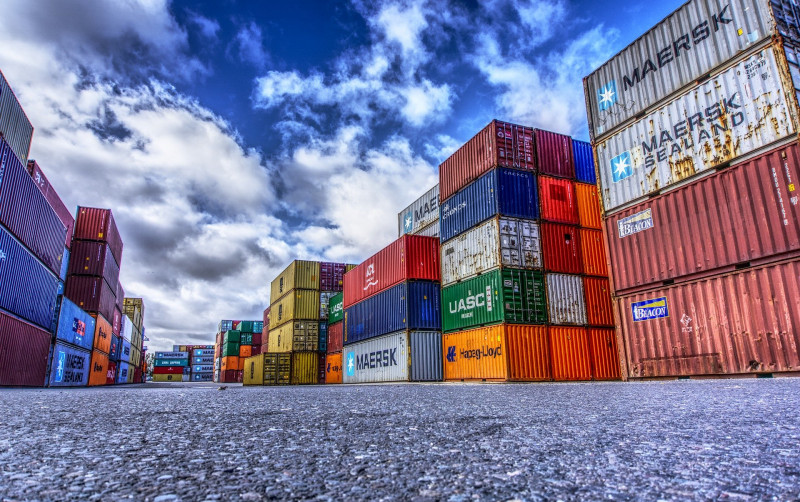
Putra Business School associate professor Ahmed Razman Abdul Latiff says the government must encourage more FDI into the country and reduce reliance on imported products in order to boost confidence in the ringgit. – Pixabay pic, October 7, 2022

KUALA LUMPUR – Budget 2023, which is expected to be tabled later today, is being awaited with great anticipation by Malaysians from all walks of life as it will chart the nation’s vision in the coming year.

The rising cost of living, ringgit valuation, food security, job security and foreign direct investment (FDI) are among the key topics that are expected to be addressed as the country exits the pandemic era.

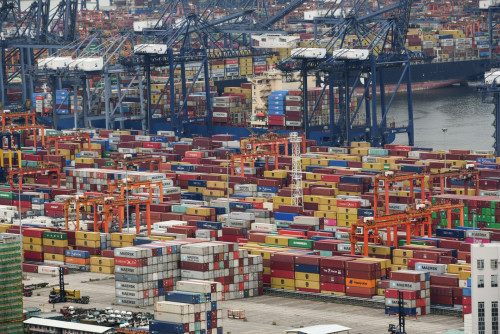
Putra Business School associate professor Ahmed Razman Abdul Latiff said in order to boost confidence in the ringgit, the government needs to encourage more FDI into the country and reduce reliance on imported products, especially agro-food.

“The government needs to encourage more exports, not just of products but services as well, by taking advantage of the Comprehensive and Progressive Agreement for Trans-Pacific Partnership (CPTPP) and the Regional Comprehensive Economic Partnership (RCEP) to make the ringgit more attractive,” he said.

“I’m hoping for a budget that is responsive to the current needs of the people, businesses, and industries, while maintaining focus towards sustainability and resilience,” he said.

He emphasised that Budget 2023 needs to be expansive but, at the same time, able to generate a new source of income to reduce the country’s already-high debt level. 

Razman also argued that the ringgit’s performance would still be heavily affected by the economic situation in the United States, especially with the current strong demand for the US dollar, rather than the budget presented today.

He said the budget should ensure the current focus of keeping the inflation rate low is maintained.

He cautioned that another round of unchecked fiscal stimulus might pressure the inflation rate to rise further.

Razman added that with rumours of the 15th general election being around the corner, political conditions would also probably affect the ringgit’s performance. – Bernama, October 7, 2022


Related News

Malaysia / 1w

Anwar Ibrahim and Malaysia – the politics of hope and fear

Opinion / 1w

Can Malaysians trust PAS?

Events / 1mth

Penang records another major healthcare-related FDI

Malaysia / 4mth

Malaysia’s Green Party calls for ban on export of critical rare earths to US

Malaysia / 8mth

Selangor Ruler orders end to pig farming in Tanjung Sepat

Malaysia / 8mth

Perlis to reduce waiting period to approve FDIs, says new MB

Spotlight

Malaysia

'H1' hits RM10.7 million in H-series registration number bidding

Malaysia

Anwar’s China visit puts Malaysia’s technology, skills and connectivity plans in focus

Malaysia

Ten former Bar Council presidents affirm Tuanku Muhriz as rightful Yang di-Pertuan Besar of Negeri

Malaysia

Ismail Lasim’s continuous shifting stances leave Negeri administration in deeper bind

Malaysia

Loke’s resignation will be huge loss to the people, says Guan Eng

By Ian McIntyre

Malaysia

Attorney-General: Najib house arrest still pending RM50m fine payment

Malaysia

Rosmah Mansor: Overseas friends offer donations to help Najib pay RM50m fine

World

Thai woman found strangled in suitcase in Taiwan office freezer

You may be interested

Business

Malaysia’s exports surge 31.2% to RM1.36 trillion in first eight months

Business

CMH Specialist Hospital records revenue of RM40.22 million

Business

RM220m K8 cargo: Maritime Network seeks clarity, not left to verbal interpretations

Business

Oil prices extend four-session slide as Middle East supply risks ease

Business

DOSM: Median pay rises 5.3% but most Malaysian wage earners average RM2,714

Business

Oil prices extend slide as West Asia supply risks ease