Business

Abang Jo tables surplus 2023 budget for Sarawak

It will continue to be expansionary, invest heavily in infrastructure

Updated 3 years ago · Published on 21 Nov 2022 1:09PM

Abang Jo tables surplus 2023 budget for Sarawak
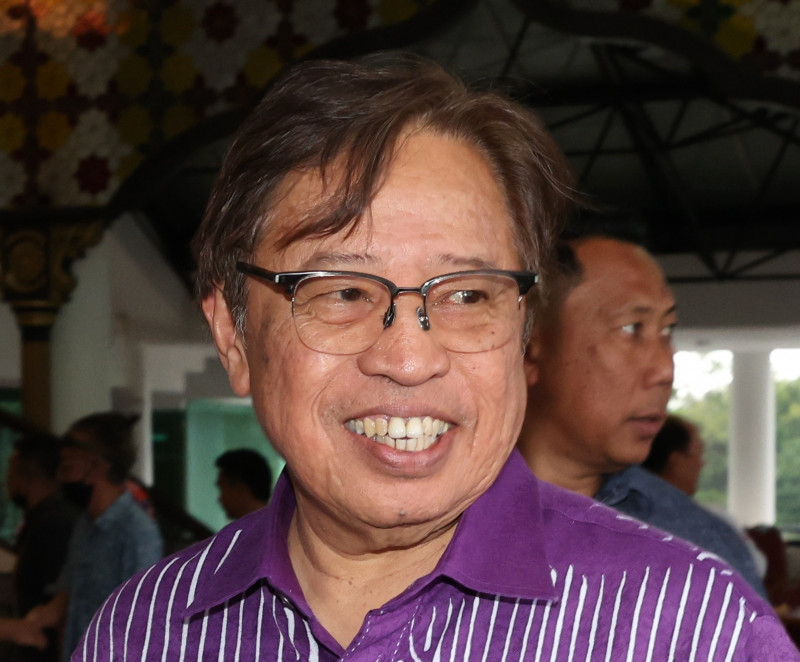
Tan Sri Abang Johari Openg says 48%, or RM5.246 billion, of the projected revenue next year will be derived from taxes, royalties, premiums, tariffs, land rentals, and others, while non-tax revenue will make up another RM5.498 billion. – Bernama pic, November 21, 2022

KUCHING – Sarawak’s Budget 2023 is expected to generate a surplus of RM238 million with a projected revenue of RM11.035 billion and a total ordinary expenditure of RM10.797 billion.

When tabling the budget at the state assembly here, Sarawak Premier Tan Sri Abang Johari Tun Openg said the budget would continue to be expansionary and invest heavily in infrastructure with the well-being of the people as its centrepiece.

“In a nutshell, Sarawak Budget 2023 is a strategic, comprehensive, and integrated roadmap to position Sarawak for the future.  While the way forward may not be easy, I am confident we can overcome them,” he said.

The proposed budget, themed “Sarawak First: Towards an Inclusive, Prosperous and Harmonious Society,” is anchored on five principles, which include developing a more robust, competitive, and equitable economy;

Abang Johari said 48%, or RM5.246 billion, of the projected revenue next year will be derived from taxes, royalties, premiums, tariffs, land rentals, and others, while non-tax revenue will make up another RM5.498 billion.  

“Non-revenue receipts are expected to be RM26 million, mainly from unclaimed deposits, overpayment recovered, liquidated ascertained damages and penalties, forest liquidated damages, other compounds, and disposal of vehicles. Federal grants and reimbursements are expected to be at RM265 million,” he added. 

For the ordinary expenditure next year, he said RM3.997 billion would be for operations, while RM6.8 billion would finance the implementation of various development programmes and projects.

Abang Johari said Sarawak’s economy for this year is expected to grow between 5.5% to 6.5% through the support of strong external demand and improvement in domestic economic activities. 

He added that Sarawak’s manufacturing and services sectors are expected to be the main drivers for 2022 with a growth of 6.8% and 7% respectively, while the construction sector is projected to grow at 5%. – Bernama, November 21, 2022


Related News

Malaysia / 1w

Sarawak seeks China collaboration to fix growing doctor shortage

Malaysia / 2w

What matters: Policies that truly understand the rakyat

Malaysia / 1mth

Sarawak wants to take over several more strategic entities from the Federal Government

Malaysia / 1mth

Author warns against taking Sabah, Sarawak harmony for granted

Malaysia / 1mth

No disruptions to healthcare services despite budget cuts, assures minister

Events / 1mth

Double your efforts to lure more quality tourists – MOTAC tells tour operators

Spotlight

Malaysia

Anwar congratulates Modi on becoming India's longest-serving elected PM

Malaysia

Missing jewellery: Rosmah ordered to pay RM67.5 million

People

Malay kampongs in Bangkok: Echoes of southern heritage in Thailand’s capital

Opinion

Johor MB’s exclusionary rhetoric betrays the people, exposes UMNO’s political hypocrisy

Malaysia

Johor and NS polls first major test of post PAS-Bersatu political order

Malaysia

Claimed installation of 12th N. Sembilan ruler invalid - Pengelola Bijaya Diraja

Malaysia

4WD driver who drove backwards on highway nabbed, positive for drugs (video)

By Ian McIntyre

Malaysia

Seven in ten Malaysian workers earn RM5k or less - economist

You may be interested

Business

Ringgit holds firm against major currencies as markets await key US inflation data

Business

BNM's OPR to stay at 2.75 pcent in 2026 amid strong domestic demand - Kenanga IB

Business

Open fibre sues Bank Pembangunan, six others in RM2b claim over Aries telecoms liquidation

Business

Ringgit strengthens as easing Middle East tensions weigh on US dollar