WITH a billion users, TikTok has rapidly become one of the most important players in the music industry, and now has its sights set on revolutionising the way artists are discovered and get paid.
Success stories such as Lil Nas X – whose Old Town Road became effectively the biggest-selling US single of all time after going viral on TikTok – have demonstrated the power of the short-form video app.
Major labels, which initially freaked out over TikTokers using their music without a licence, quickly realised they needed to get on board.
"When a disruptive tech platform appears, understandably the rights-holders get uncomfortable," TikTok's head of music Ole Obermann told AFP.
He was brought in from Warner Music in December 2019 to thrash out deals with the labels.
"Obviously we had to pay out substantial amounts of money. The good news is we're totally licenced now and we're talking to them every day about new things that haven't been done before."
'Changing everything'
Meanwhile, TikTok has continued to create viral sensations that are reshaping the musical landscape.
Sometimes, it's old songs given a new lease of life, such as recent crazes for Fleetwood Mac's Dreams or Boney M's Rasputin.
But often it's new or independent artists, who no longer need the backing of record labels to find a massive audience.
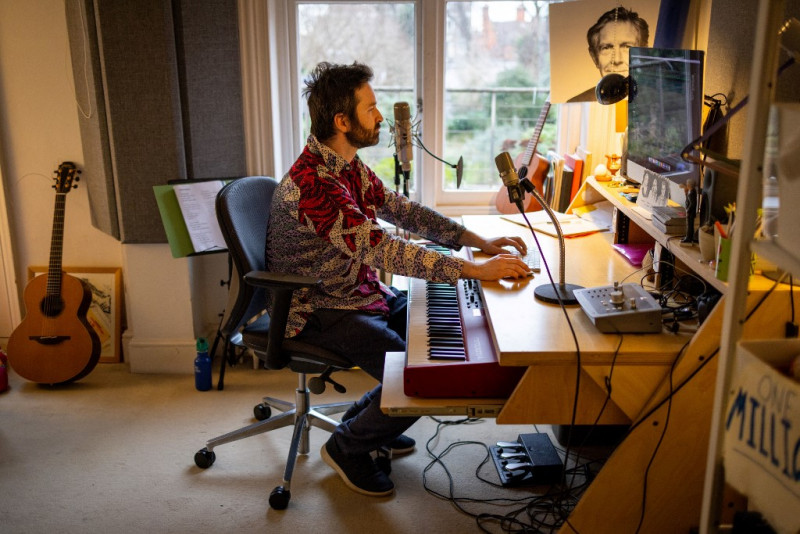
"It's hard to overstate how much this is changing everything," said Tom Rosenthal, a London-based musician whose songs have been used on 1.6 million TikTok videos.
"Major labels are kinda crapping their pants because the traditional systems of marketing no longer apply. (TikTok) is a great leveller. You can do it on your own," he said.
Some artists are becoming huge without even knowing about the app.
That was the case with Nigerian popstar CKay. His 2019 single Love Nwantiti was a decent-sized hit in his home country, but then TikTok users got hold of it, and by November 2021 it had surpassed 15 billion streams and topped charts from Asia to Europe to North America.
'On to something'
TikTok is already thinking about next steps.
Its latest service, SoundOn, offers unsigned artists a simpler way to upload songs, get paid and find distribution.
Obermann hints this could see TikTok become more like a record label.
"We think we're on to something," he said, highlighting recent viral hits by unsigned acts Muni Lang and Games We Play.
"It's early days in deciding exactly how we work with these artists on building their careers. But we see we can play a much bigger role in the artist discovery process in a very hands-on way."
Pent-up demand
Obermann also hopes to revolutionise the way that songs are used for adverts – a part of the business that is currently worth around US$500 million (RM2 billion) globally per year but could be worth much more.
"Traditionally, it meant something like a big car brand licencing Celine Dion's I Drove All Night for their TV ads," he said.
"But we have about one million small and medium businesses who want to make TikTok ads using music. And it's an absolute nightmare because our licences don't include commercial usage."
Currently, each commercial use requires TikTok to get special permission from the label and all the songwriters, which can take months.
"It's extremely inefficient. If we can redesign the way that works, (the global licencing business) would go from US$500 million to several billion within a few years. There's that much pent-up demand. We're really working on that."
Other ideas include live-streaming concerts and direct sales, with some artists already flogging vinyls and merch through the platform.
But will TikTok disappear as quickly as it arrived? The ghost of MySpace, a previous revolutionary force in music, haunts its successors.
"That's something we think about every day when we wake up," said Obermann.
"We're confident TikTok has tipped into the cultural zeitgeist to a tremendous extent at this point. But it's always day one and you have to keep reinventing yourself to stay relevant." – AFP, February 12, 2022