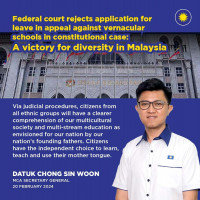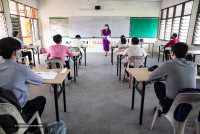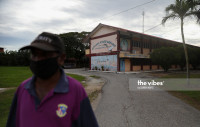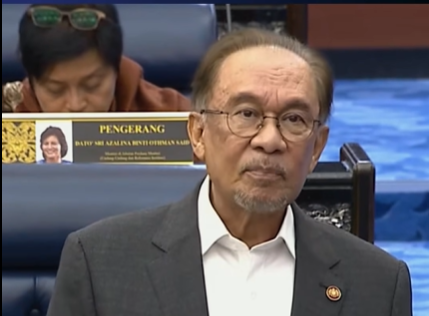

THE Court of Appeal in Putrajaya today dismissed an appeal by four non-governmental organisations (NGOs) and ruled that vernacular schools in the country are constitutional.
The NGOs had earlier sought to declare that the use of Tamil and Chinese as the medium of instruction in vernacular schools was against the Federal Constitution.
The four NGOs are the Islamic Education Development Council (Mappim), the Confederation of Malaysian Writers Association (Gapena), Ikatan Muslimin Malaysia (Isma) and Ikatan Guru-Guru Muslim Malaysia (I-Guru).
A three-member bench chaired by Justice Supang Lian, along with M. Gunalan and Azizul Azmi Adnan handed down the decision.
Azizul in reading out the ruling on behalf of the bench, said it was intended from the very beginning as stated in the Federal Constitution that vernacular schools be allowed to operate even after independence in 1957.
This is stated in Article 152(1)(b) of the Federal Constitution.
“Otherwise, at that time, such schools would have been abolished following the establishment of the Federal Constitution,” added Azizul
On December 29, 2021, the Kuala Lumpur High Court ruled that the existence of vernacular schools, as well as the use of Tamil and Chinese languages in those institutions, are in line with the provisions of the constitution.
On May 29, last year, the Kota Baru High Court judicial commissioner Abazafree Mohd Abbas (now high court judge) also ruled that the existence of vernacular schools is constitutional and he dismissed the suit filed by I-Guru.
In the suit filed in December 2019, GPMS, Mappim, Gapena and Isma sued several parties including the government. Among them were Chinese educationist groups Dong Zong and Jiao Zong, Persatuan Thamizhar Malaysia, and Persatuan Tamilar Thurunal (Perak).
As for I-Guru, the organisation sued the education minister and the government of Malaysia, seeking a declaration that section 28 and section 17 of the Education Act 1996 were inconsistent with Article 152 of the federal constitution and it is void and of no effect.
The Malaysia Chinese Language Council, the Malaysia Tamil Neri Kalagam Association, the Confederation of Former Tamil School Pupils, the United Chinese School Committees Association of Malaysia (Dong Zong) and political parties MIC, MCA, Gerakan and Parti Bumiputera Perkasa Malaysia were allowed to become interveners in the suit filed by I-Guru. – The Vibes, November 23, 2023