THE RECENT comments by former Malaysian prime minister Tun Dr Mahathir Mohamad on loyalty and identity among the diverse population of the country has once again brought the issue to the centre stage.
His assertion that one should identify as Malay to truly call Malaysia home has sparked a necessary conversation about the importance of fostering unity and understanding among the nation's varied ethnic groups.
Dr Mahathir's perspective, rooted in historical context, highlights the challenges Malaysia faces in navigating the balance between cultural diversity and national identity. While his views have been influential, particularly in shaping Malaysia's trajectory during his tenure, a critical examination reveals the need for a more progressive and inclusive approach to nation-building in the 21st century.
The emphasis on assimilation, as suggested by the former premier, may not be the most effective way to cultivate a united Malaysia. The idea that one must shed their cultural roots to be accepted as a true Malaysian neglects the richness that diversity brings to the nation.
In contrast to this perspective, a fresh and forward-thinking approach is essential – one that promotes inclusivity, celebrates cultural differences, and fosters a sense of shared national identity.
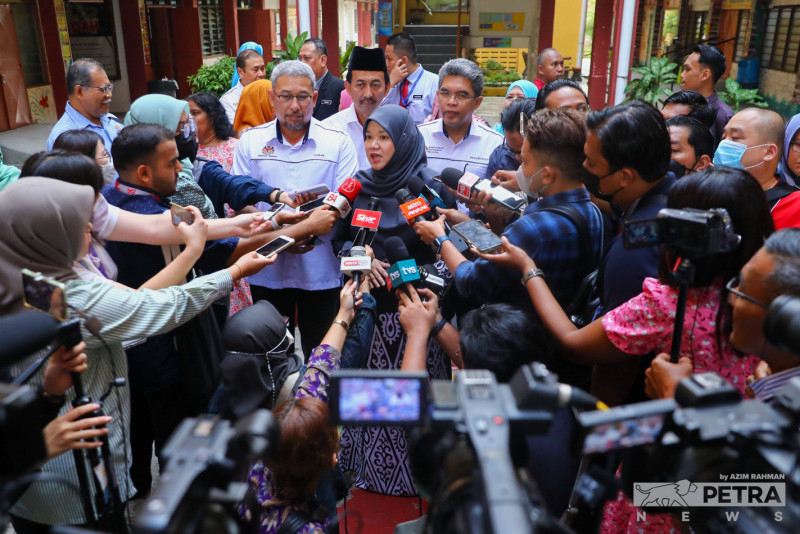
Enter Fadhlina Sidek, Malaysia's current Education Minister, who has emerged as one of the progressive leaders in the Unity Government. Despite her relatively young age and recent entry into politics, she represents a departure from the traditional views espoused by some leaders.
This demonstrates a better understanding of the complexities surrounding race, unity, and policymaking.
Fadhlina's stance on issues of race and unity reflects a maturity beyond her years. Instead of advocating for strict assimilation, she is seen as someone who envisions a Malaysia where individuals are encouraged to celebrate their cultural heritage while also embracing the common values that bind the nation together.
In recognising the importance of linguistic and cultural diversity, Fadhlina sees Malaysians, including those who speak Tamil, as someone who can contribute significantly to the nation without sacrificing their unique heritage.
She even apologised to the Indian community recently when some Tamil songs were not allowed to be sung at an event in Penang. It had riled up the Indian community and her prompt apology cooled things down fast.
Furthermore, Fadhlina's commitment to meritocracy and fairness stands out in her policies. She actively acknowledges the valuable contributions of non-Malays to Malaysia's nation-building and economic growth, debunking the notion that certain communities need to "assimilate" to be appreciated.
She had previously emphasised that racism had no place in the country’s educational institutions and this underscores that her perspective is not only inclusive but also emphasises the need for a better distribution of opportunities and recognition.
Fadhlina’s rapid rise to prominence within Malaysian politics serves as a testament to the nation's potential for progressive leadership that transcends ethnic boundaries. Her ability to navigate the complexities of a multicultural society reflects a deep understanding of the importance of unity for Malaysia's continued growth and success.
In a time where divisive rhetoric threatens to undermine the fabric of nations globally, Fadhlina's leadership style stands as a counterpoint – a call for unity, understanding, and cooperation.
As we move forward, it is crucial for Malaysia to embrace leaders like Fadhlina who prioritise inclusivity, understanding, and cooperation. A nation that thrives on diversity, where individuals can proudly retain their cultural identities while contributing to the collective good, is better positioned to face the challenges of the modern world.
Fadhlina's commitment to forging a path that respects diversity while fostering national unity aligns with the aspirations of a forward-looking Malaysia.
Malaysia now stands at a crossroads where it must decide whether to adhere to outdated notions of assimilation or embrace a more progressive and inclusive vision for its future.
It is time for the nation to rally behind leaders who champion these values and work towards building a truly united Malaysia – a Malaysia that not only acknowledges its diversity but also harnesses it as a source of strength in a rapidly changing global landscape. – The Vibes, January 18, 2024

.jpeg)