By Murray Hunter
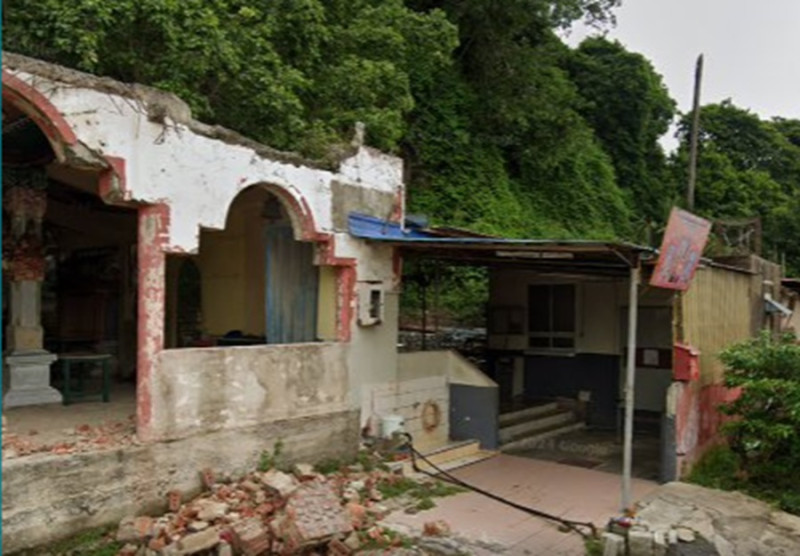
THE recent demolition of the Sri Maha Veera Kaliamman Temple in Bukit Lagi, Kangar, is not an isolated bureaucratic act.
It is another deliberate strike against Malaysia’s layered cultural heritage, one that long predates the modern nation-state and its rigid land titles.
Authorities insist the temple stood on state land without a permit. Engagements were held, alternatives suggested, and the law applied.
Yet this legalistic defence rings hollow when applied to spiritual sites that have served communities for generations.
Arguments over ownership of places that existed long before Malaysia’s borders were drawn are lame excuses for cultural erasure.
The same logic has threatened the century-old Sakyamuni Caves Monastery at Gunung Kanthan in Perak, where quarrying interests and eviction orders hang over a living Buddhist sanctuary nestled in limestone caves of immense geological and spiritual value.
Across the peninsula, ancient sites linked to the Srivijaya era, once part of a vast maritime cultural sphere, have been neglected, damaged, or lost to development and indifference over the decades.
All governments since federation have deeply neglected this aspect of the nation’s heritage.
Malaysia’s soul was never monocultural. It was forged through Hindu-Buddhist kingdoms, Arab and Chinese traders, Indian labourers, indigenous communities, and Islamic sultanates.
Temples, cave monasteries, and archaeological remnants are not mere “illegal structures.”
They are tangible threads of continuity in a multi-civilisational land.
When they are reduced to rubble under the banner of land compliance, what remains is a thinner, more brittle national identity.
The pattern is very clear. The selective enforcement that prioritises administrative convenience and majoritarian sensitivities over historical depth.
Each demolition chips away at the shared memory that could bind a diverse society.
It is sad to watch a nation, in the name of order, culturally dismantle itself.
Heritage is not an inconvenience to be cleared. It is the very foundation of belonging.
Once gone, no new permit can restore it. Malaysia risks destroying its own cultural heritage, which is its soul. – August 23, 2026