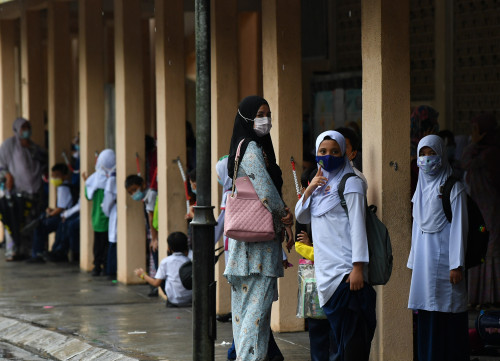
THE Ministry of Education's (MOE) Education Plan 2026-2035 has been designed as a strategic transformation of the national education system rather than merely a continuation of the Malaysia Education Blueprint (PPPM) 2013-2025, Deputy Education Minister Wong Kah Woh told the Dewan Rakyat today.
Carrying the theme, "Bridging Gaps, Raising Quality, Achieving Success Together", the 10-year roadmap seeks to ensure the country's education system remains relevant, resilient and responsive to changing educational needs, technological advancements and future workforce demand.
Wong said the new blueprint introduces five strategic focus areas, including two entirely new pillars — flexibility and sustainability — to strengthen the long-term effectiveness of Malaysia's education system.
"Flexibility refers to educators' ability to adapt teaching methods according to students' needs and technological developments, supported by greater flexibility in education governance to improve efficiency and accountability.
"Sustainability, meanwhile, is the effort to preserve the education system through the adoption of sustainable practices encompassing environmental, social and economic dimensions, in line with the Sustainable Development Goals (SDGs)," he said.
He was responding to Kamal Ashaari (PN-Kuala Krau), who sought details on the policy reforms introduced under the RPM 2026-2035 compared with the PPPM 2013-2025, as well as the key performance indicators that will be used to assess the success of the national education transformation throughout its implementation.
Wong said the plan also places significant emphasis on education reform through the introduction of the 2027 School Curriculum, which is scheduled to take effect in January next year.
Under the new blueprint, the Ministry of Education has established five major outcome targets covering academic achievement, language and digital proficiency, student wellbeing, educational equity and school management.
In terms of academic performance, students are expected to achieve at least a Grade C in the four core subjects — Bahasa Melayu, English, Mathematics and History — while attaining literacy and numeracy proficiency by the end of Primary Level One. The plan also targets performance benchmarks comparable to international standards and aims to strengthen students' critical and creative thinking skills.
The ministry is also targeting universal bilingual proficiency, with every student expected to acquire competency in at least two languages alongside stronger digital skills.
Student wellbeing forms another key pillar of the blueprint, with goals to ensure learners achieve healthy socio-emotional development, demonstrate good character and values, and improve physical fitness. At least 90 per cent of students from Upper Primary to Form Five are expected to attain a satisfactory level of physical fitness through the National Physical Fitness Standard Test (SEGAK).
To promote greater equity, the ministry aims to achieve universal enrolment from preschool through upper secondary education while reducing the academic achievement gap between urban and rural students by 50 per cent. The blueprint also targets a 70 per cent reduction in learning disparities based on gender and socio-economic background.
School governance and infrastructure improvements also feature prominently in the roadmap. By 2035, the ministry aims for one-third of schools to attain excellent quality status, while every educational institution is expected to receive guided autonomy in at least one area of management.
The plan further commits to ensuring all schools are equipped with essential infrastructure, including the upgrading of dilapidated buildings, access to high-speed internet connectivity and adequate digital devices to support teaching and learning. - July 15, 2026




.jpeg)