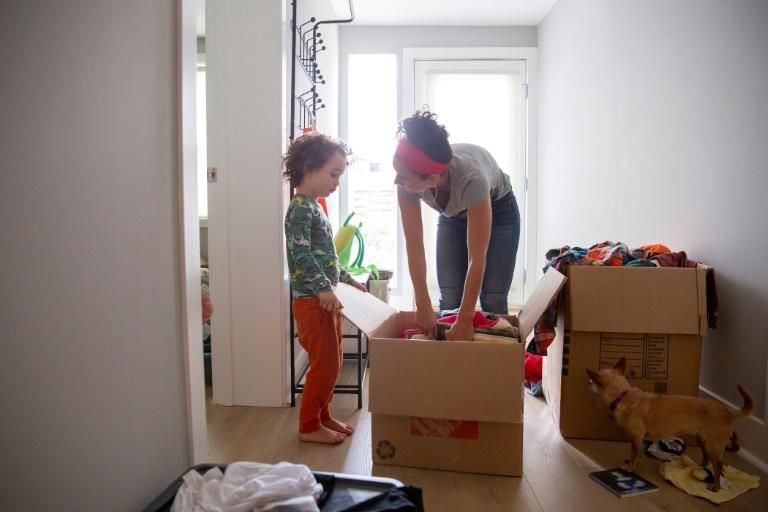
SAN FRANCISCO – Real estate agent Kilby Stenkamp sees moving vans on the city's streets where she used to see building cranes and tech company hipsters.
A work-from-home trend kicked into overdrive by the pandemic is disrupting a city long a mecca for tech talent.
“People are leaving San Francisco, and they're taking their jobs with them," said Stenkamp.
"There used to be cranes in the landscape. Now, it's U-Haul trucks."
Tech workers who flocked to San Francisco to be near Google, Facebook, Pinterest, Twitter and other internet firms are moving to parts of the US where life is slower and the cost of living, cheaper.
Tech titans are encouraging the trend.
Facebook is changing its hiring practices to recruit talent far and wide instead of needing workers to live near campuses.
The social networking giant said it might even save money since it adjusts the pay for positions based on the local cost of living.
Back in March, San Francisco became one of the first US cities to implement restrictions on moving around for work, school and other activities.
Nearly six months later, life shows little sign of returning to the way it was before Covid-19, causing some residents to question whether to stay.
"Once upon a time, a reason why we wouldn't have wanted to move was because we had friends who had kids the same age as ours, and we saw them all the time," said consultant Kyla Brown, who left the city for a town about 25km away.
"Practicality right now is the No. 1 priority. Social life has all gone down the drain thanks to Covid-19."
The family moved closer to Brown's parents for babysitting needs, and work is done by telecommute.
Move bytes, not atoms
Twitter and online work collaboration tech firm Slack have announced that employees can work from home indefinitely.
Online bulletin board Pinterest recently announced that it spent US$90 million (RM371.7 million) to cancel a lease for more Silicon Valley office space, saying it will stick with its current San Francisco offices.
"As we analyse how our workplace will change in a post-Covid-19 world, we are specifically rethinking where future employees could be based," said head of business operations Todd Morgenfeld.
"A more distributed workforce will give us the opportunity to hire people from a wider range of backgrounds and experiences."
Google and Facebook are not expecting workers to return to their campuses until the middle of next year at the earliest.
Facebook chief executive Mark Zuckerberg said he expects that half of the company's employees will be able to permanently do their jobs from home within five to 10 years.
"It is a lot easier to move bytes around than to move atoms around," Zuckerberg quipped at one point.
"So, I'd much rather have us teleport by using virtual reality or video chat than sit in traffic."
Many workers are delighted to reclaim hours wasted in Silicon Valley commute traffic, even if in the comfort of chartered buses complete with wireless internet.
French financial analyst Romain Daubec and his American wife, a Facebook employee, are leaving the Mission district despite a cut in rent due to the pandemic.
Reasons include the overall high cost of living, the social scene has withered, and many of their friends have already left.
Tech world shuffle
The couple have set their sights on Denver, some 2,000km away but in a close time zone to Silicon Valley.
They get the beauty of mountains and the joy of paying about 30% less in rent.
While Facebook and other tech firms ultimately adjust pay to the local cost of living, states like Colorado and Texas tax pay at much lower rates than San Francisco.
The exodus has left some downtown skyscrapers deserted, shops doubting reopening, and streets haunts of the homeless.
Rents here have fallen by an average of 10%, while home prices in communities across the Golden Gate Bridge are climbing, according to real estate agents.
Even the wildfires currently ravaging California and much of the west coast do not seem to deter those intent on leaving the city for more remote communities in the region.
Home prices here, however, have not dropped by much, and merchants are not panicking about the city's long-term prospects.
"There's kind of a reshuffling of the deck," said Stenkamp.
"Every time – after earthquakes, the dot-com bomb – people come back. Now is the time to invest." – AFP, September 19, 2020