
THE time has come for the United States, and indeed all global powers, to confront an uncomfortable but necessary truth: America’s economic strength and industrial dominance did not emerge in isolation, nor can it be sustained without the nourishment and contribution of the rest of the world—especially nations like Malaysia.
It is our raw materials, our manufacturing capabilities, our youthful, educated, and affordable workforce, and our demand for finished products that collectively power the industrial arteries of the United States.
Countries across Asia, Africa, Latin America, and the Middle East form the circulatory system of the global economy—feeding innovation hubs in Silicon Valley, driving manufacturing lines in Detroit, and enabling financial growth on Wall Street.
This is not charity. This is interdependence. This is a global economic ecosystem where trade, when practiced fairly and holistically, leads to prosperity for all parties involved.
Let’s be clear: the globalisation of supply chains, the outsourcing of production, and the expansion of market access were not altruistic endeavours.
They were strategic decisions—mutually beneficial contracts that allowed developed countries to reduce costs, increase margins, and maintain consumer satisfaction, while developing nations gained access to markets, technology, and investment. It’s a dance of give-and-take.
What happens when one dancer decides the rhythm must follow only their steps?
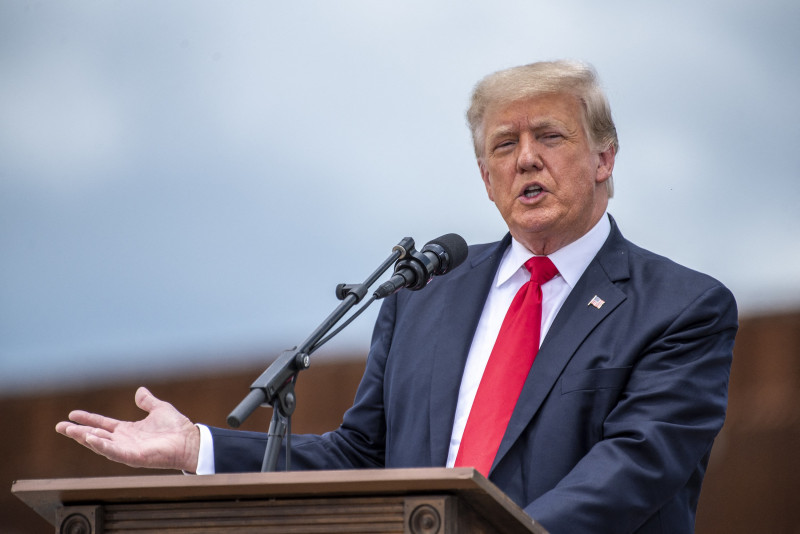
Unfortunately, we are seeing exactly that. Protectionist policies, weaponised tariffs, sanctions masked as moral crusades, and unilateral decisions on trade that disregard the sovereign rights of other nations have become all too common.
The message is clear: “Follow us or suffer.” That mindset is a dangerous illusion—rooted in outdated imperial thinking and a denial of the multipolar world we now live in.
Let us consider the semiconductor supply chain. Malaysia plays a vital role, contributing over 7% of the global semiconductor trade and serving as a key hub for testing and packaging.
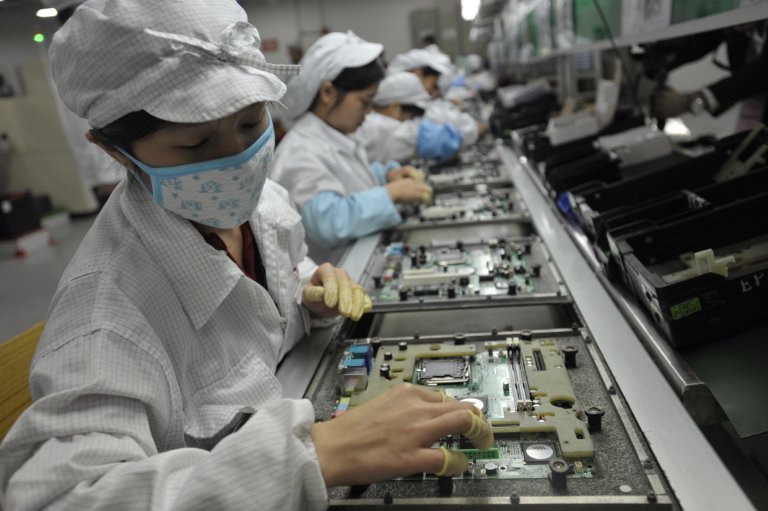
Without Malaysia and its regional partners, the chip that powers an American EV or the iPhone in your hand cannot be completed.
Yet, even in this crucial role, nations like ours are often overlooked or treated as dispensable. That’s not just unjust—it’s economically foolish.
Similarly, global agriculture depends on palm oil, rubber, and other commodities—much of which come from Southeast Asia.
Yet, international narratives around these products often paint us as villains, with little recognition of our efforts in sustainability or the importance of these industries to global food and industrial supply chains.
This imbalance of narrative, power, and influence must change.
We have entered a phase of global instability—not just economic, but geopolitical. Currency fluctuations, inflation spikes, and disruptions to the supply chain due to conflicts in Europe and the Middle East are all symptoms of a broken system.
Sanctions on Russia have backfired on energy prices. Shipping routes through the Red Sea have been compromised, leading to a sharp rise in freight costs.
And let us not forget the devastating consequences of COVID-19, which exposed just how fragile and dependent the West is on the so-called “Global South.”
So what do we do now?
We must not simply hope for balance to return—we must work towards it with intention. We must begin designing solutions now, so that when the inevitable correction comes—as it always does—we are ready.
This means:
1. Redesigning trade policy to be more equitable, with mechanisms that protect developing economies from being crushed by the lobbying power of multinational conglomerates.
2. Building resilient regional alliances, like the Regional Comprehensive Economic Partnership (RCEP), that allow countries like Malaysia to insulate themselves from the volatility of US-China tensions.
3. Investing in sustainable innovation that doesn’t just serve the industrial complex, but lifts up local communities. For instance, green rubber technologies pioneered in Malaysia can reduce environmental damage while preserving critical export industries.
4. Encouraging technology transfer and knowledge sharing, not as charity but as a long-term investment in global stability. Imagine a world where clean energy breakthroughs are not patented for profit but shared for planetary survival.
I believe deeply in the model of social capitalism—where profit and purpose can co-exist. The private sector, governments, and civil society must unite behind this philosophy. It is no longer enough to win; we must lift others as we rise.
The imbalance we see today cannot last. History tells us that such disequilibrium always corrects itself—whether through innovation, disruption, or conflict. The question is: how much damage will we allow in the meantime?
Let us not wait for sanity to return. Let us prepare for it—intelligently, collaboratively, and with empathy. Because when the tide turns, and it will, those who were ready will be the architects of the new global order.
And this time we have the opportunity to make it a fairer one.
Datuk Dr Vinod Sekhar is the publisher of the Vibes and Chairman of the Petra Group