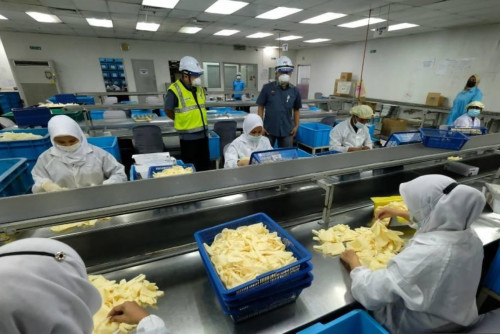
FOR generations, the northern border regions of Malaysia have been a place of quiet intermingling between Thai and Malaysian communities.
Intermarriage, shared kinship ties, and everyday economic exchange have defined life in these border towns for more than a century.
Thais from southern provinces have long crossed into Malaysia to work in small restaurants, particularly those specialising in tom yum kung and other Thai cuisine, seeing the neighbouring country as a reliable source of income when opportunities at home were limited.
Under the framework of ASEAN cooperation and especially the Indonesia-Malaysia-Thailand Growth Triangle (IMT-GT), this informal integration was largely tolerated for years, allowing people and goods to move with relative ease.
That era is ending. Malaysia has grown increasingly intent on strengthening its once-lax border security and cracking down on undocumented workers.
The shift has accelerated as Malaysia’s economy has performed relatively well in recent years, making it an even more attractive destination, prompting authorities to assert tighter control.
What was once an accepted pattern of cross-border livelihood is now treated as a security and regulatory issue.
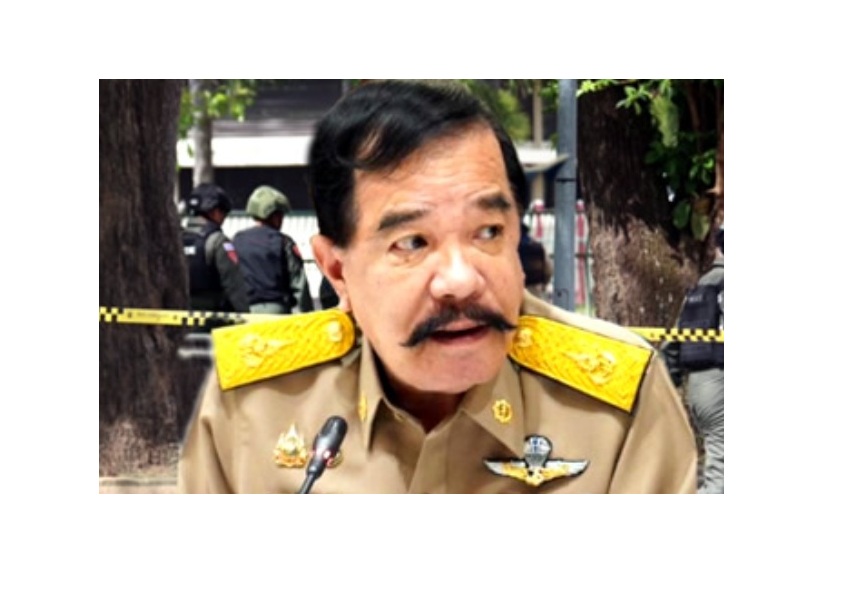
Thailand’s Senator Chaiyong Maneerungsakul has sounded a clear warning about the human and economic costs.
Speaking in Songkhla on 12 October, the senator representing the media profession said more than 200,000 people from southern Thailand had previously found work across the border, generating at least 200 billion baht in annual earnings that supported families in the border provinces.
Many held valid permits, while many more worked without documentation.
Malaysian official figures, however, paint a far smaller picture: only 12,629 Thai nationals currently hold valid employment passes in restaurant-related occupations. The gap between these numbers underscores the scale of informal employment that is now under threat.
Immigration enforcement has been intensive.
Malaysian authorities arrested 37,313 undocumented migrants in the first nine months of 2026.
Home Minister Datuk Seri Saifuddin Nasution Ismail confirmed that the Immigration Department detained 25,124 foreign nationals in 12,343 operations targeting illegal business activities between 2024 and 30 September 2026.
Officials have identified 224 migrant hotspots under continuous surveillance.
Restaurants and food preparation businesses have borne the brunt through Operation Selera.
That campaign alone resulted in 19,301 undocumented migrants and 1,341 employers detained across 6,603 operations.
Parallel drives, including Operation Belanja against retail premises and Operation Jaja against hawker activities, added thousands more arrests.
Enforcement is expanding beyond eateries. Recent sweeps have targeted construction quarters, squatter housing, and tourist areas. On 12 October 2026, a joint operation in Johor’s Tebrau industrial zone raided an electronics plant and arrested 492 undocumented workers.

Earlier, on 7 October, raids in Selangor inspected 307 people and detained 174 foreign nationals, including 11 Thais. Intensified checks are also under way in the Janda Baik tourism zone in Pahang.
The impact falls heavily on southern Thai communities that have long depended on these jobs.
Limited local employment opportunities make Malaysian wages a vital lifeline. Senator Chaiyong has called for urgent negotiations with Kuala Lumpur to secure special work permits that would protect legitimate employment while respecting Malaysia’s sovereignty.
Thai officials have already begun diplomatic efforts.
Acting Secretary-General Chanatan Sangpum of the Southern Border Provinces Administrative Centre travelled to Kuala Lumpur to meet more than 40 delegates representing Thai eateries.
Thailand is pushing for a bilateral labour pact that would create legal pathways for the large number of restaurant staff estimated by Thai business leaders to approach 200,000 workers across roughly 5,000 tom yum restaurants.
Malaysia’s determination to secure the local labour market and close security gaps is clear.
At the same time, the crackdown risks disrupting long-standing family and kinship networks that straddle the border. Balancing effective immigration control with the economic realities of the border provinces will require careful bilateral engagement.
For the tens of thousands of Thai workers and the communities that rely on their earnings, the outcome of those talks will determine whether a century-old pattern of cross-border livelihood can continue in a more formal, regulated form. – October 15, 2026