WWF Malaysia has urged authorities to expedite the construction of wildlife crossing infrastructure after a young elephant was killed in a road accident along Jalan FELDA Nitar, highlighting what it described as a persistent and growing threat to wildlife safety on Malaysian roads.
In a statement, the conservation group said roads across the country have increasingly become fatal traps for wildlife, calling for the immediate implementation of dedicated wildlife corridors, eco-bridges and underpasses in high-risk zones.
It said such structures would allow animals to cross roads safely while helping to preserve migration routes, particularly for elephants, and improving forest connectivity and habitat resilience.
“These structures enable animals to cross roads safely and are important for maintaining elephant migration routes,” it said.
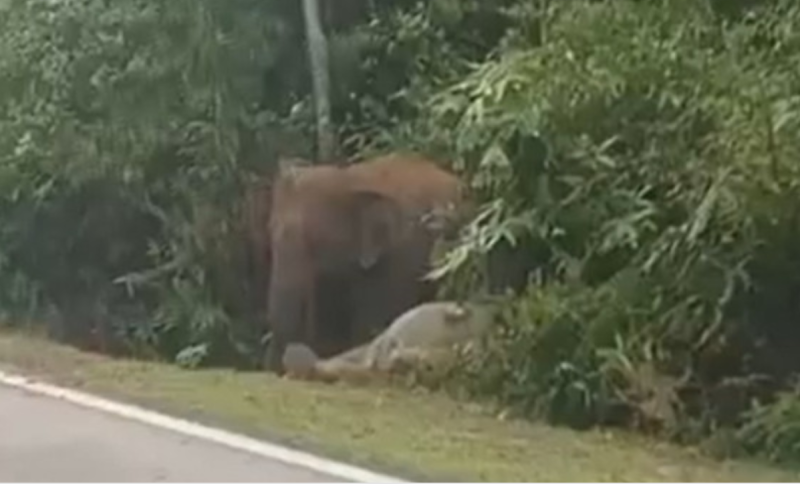
The appeal follows the death of a young female elephant, estimated to be around five years old, after it was struck by a Perodua Bezza at around 2.28am on the stretch in Mersing. The mother elephant reportedly remained beside the carcass for several hours following the incident.
The Department of Wildlife and National Parks Peninsular Malaysia (PERHILITAN) Johor confirmed the fatality and said the car driver sustained injuries after the vehicle lost control and plunged into a five-metre ravine.
WWF Malaysia said the incident also caused serious injuries to the driver and damage to property, and noted that it mirrored earlier cases, including a widely reported incident in which a young elephant was killed by a lorry on the Gerik-Jeli Highway.
It said the recurring nature of such incidents reflects a troubling pattern rather than isolated events, underscoring the need for long-term, coordinated solutions.
Following the previous tragedy, WWF Malaysia said it had worked with the Ministry of Natural Resources and Environmental Sustainability and PERHILITAN to establish a roundtable initiative on safer roads for both humans and wildlife in July 2025.
The platform aims to develop comprehensive measures to reduce wildlife roadkill incidents through multi-stakeholder collaboration.
WWF Malaysia stressed that protecting wildlife is a shared responsibility, adding that road users also play a crucial role by exercising caution in designated wildlife crossing areas, obeying speed limits and remaining alert to warning signs.
It said extra vigilance is especially important during dawn and dusk, when animal movement is highest, and warned that speeding in high-risk areas endangers both human lives and wildlife.
The group also called for stricter enforcement of speed limits, heavier penalties for violations, expanded installation of wildlife crossing signage, and the deployment of intelligent warning systems in vulnerable areas. - July 3, 2026
.jpeg)