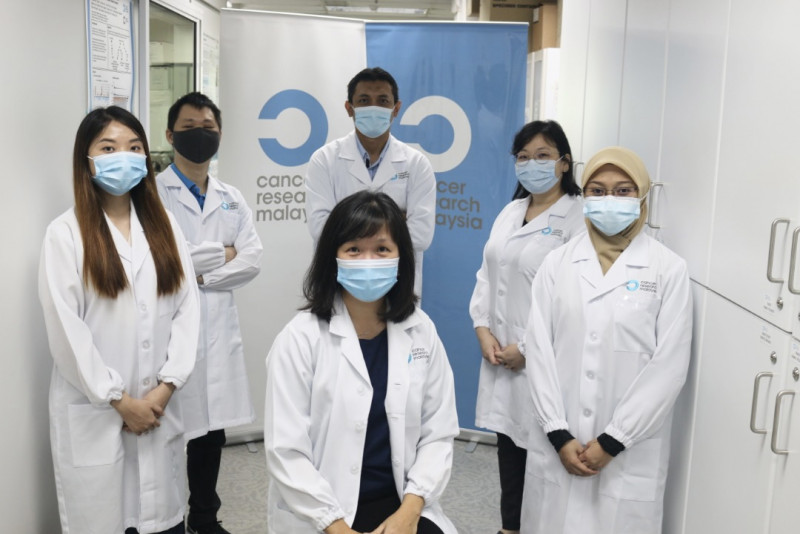
KUALA LUMPUR – Cancer Research Malaysia, with the help of University of Cambridge and Subang Jaya Medical Centre, has built the largest genetic and genomic database of Asian breast cancers to date.
Previously, the majority of characterised genomes (the sum total of an organism’s DNA) used in breast cancer research were from Caucasian women – less than 5% came from Asians, even though Asians make up more than half of the world’s population.
“Genomic information enables us to be more precise in diagnosis, as well as choosing the right treatment for the right patient,” said Professor Datin Paduka Dr Teo Soo Hwang, OBE, chief scientific officer at Cancer Research Malaysia, who led the study.
“It is critical for us to close the gap in Asian genomic research, otherwise we may miss important genetic information that may be rare in Caucasians, but common in Asians.
“Through our study, we discovered that Asians are at higher risk of an aggressive type of breast cancer, are more likely to have a mutated TP53 gene, and have an enriched immune tumour profile,” she added.
The study published in the prestigious ‘Nature Communications’ science journal, was a collaboration between Cancer Research Malaysia, Professor Carlos Caldas and Dr Suet-Feung Chin from the Cancer Research UK Cambridge Institute, University of Cambridge, Professor Pathmanathan Rajadurai and Professor Emeritus Dato' Dr Yip Cheng Har from Subang Jaya Medical Centre.
The genomic sequences of 560 breast cancer tumour samples were analysed and it was discovered that the aggressive subtype that expresses the HER2 protein is more common in Asian women compared to Caucasians.
“Our study highlights that Asians have a higher risk of this type of aggressive disease and underscores the need to do more research in Asians so that we can save more lives,” said Professor Emeritus Dato' Dr Yip Cheng Har, consultant breast surgeon at Subang Jaya Medical Centre, Ramsay Sime Darby Healthcare.
The research also showed that the TP53 gene – often called the “guardian of the genome” because it protects normal cells from becoming cancer cells – is more commonly altered in Asian breast cancers compared to that of Caucasians.
“TP53 is frequently mutated in the more aggressive hormone negative breast cancers in Caucasian women. In Asian breast cancer patients, we observe an increase in TP53 mutations in hormone receptor-positive cases and is associated with poorer survival,” said Dr Suet-Feung Chin, senior research associate at the University of Cambridge, who co-led the study.
"We've also observed that Asian breast cancers are more likely to have immune cells present, and this suggests that if we can find some way to lift the invisibility cloak that cancers have to evade detection by the immune system, we may be able to improve survival for Asian breast cancer patients," said Dr Pan Jia Wern, the study's first author and the deputy head of Bioinformatics at Cancer Research Malaysia.
The team at Cambridge was led by Dr Suet-Feung Chin and Professor Carlos Caldas, where excellent core facilities enabled the extensive genomic profiling done.
Professor Caldas said, “We were delighted to participate in this important study, which I called the Asian Metabric, since it parallels our efforts to extensively characterise breast cancer and stratify tumours into one of the 11 Integrative Clusters.”
The study was supported by research grants and charitable funding from the UK Medical Research Council via the Newton-Ungku Omar Fund, Scientex Foundation, Yayasan Sime Darby, Yayasan Petronas Cancer Research UK and Estee Lauder Group of Companies. Read the study here. – The Vibes, January 13, 2021

_JASON_SANTOS_20230202.jpg)