IN 2018, 2 million women were diagnosed with breast cancer. The number of Asian women who will be diagnosed with breast cancer in the next 30 years will nearly double that of everyone else. (Cancer Research Malaysia).
Overall, there were 48,639 new cancer cases recorded in Malaysia last year, according to the World Health Organisation. And the cancer incidence in Malaysia is expected to double by 2040.
There was an 11% increase in new cancer cases and nearly 30% more deaths from cancer reported in the 2012–2016 Malaysia National Cancer Registry Report compared to the 2007–2011 report.
The rising number of cancer cases will become a major health issue as the growing cancer burden continues to put tremendous physical, emotional, and financial strain on people with cancer, communities, and the country’s health care system.
The most common cancers in Malaysia are breast cancer, followed by colorectal cancer, lung cancer, nasopharyngeal cancer, and liver cancer, according to the WHO.
Breast, colorectal, and lung cancers make up about half of the total cancer cases reported by the Malaysia National Cancer Registry. Both breast cancer and cervical cancer are among the leading causes of death for Malaysian women with cancer.
Screening for breast, cervical, colorectal, and prostate cancers is available in Malaysia, although few people regularly get screened.
A lack of knowledge about the various cancer screening methods, cultural attitudes, and a lack of encouragement from family members and family doctors are among the major reasons for the poor response to cancer screening.
Furthermore, cancer is a disease that many Malaysians fear, but the general public’s awareness and knowledge about the signs and symptoms of common cancers are still poor.
Some Malaysians still view a cancer diagnosis as “receiving the death penalty,” despite the disease being treatable.
There are also many traditional healers and health practitioners in Malaysia offering alternative therapies to standard-of-care medicine for people with cancer.
The internet and uncontrolled social media advertisements have allowed some unapproved practices to flourish, which has contributed to a delay in people seeking standard cancer treatment.
Overall, avoiding diagnosis and treatment or seeking alternative therapies are common practices in Malaysia, which further contributes to poor survival outcomes.
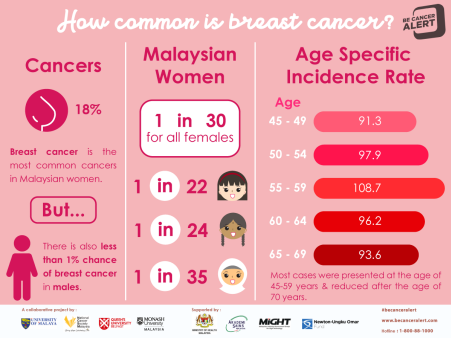
Malaysian women have poor survival from breast cancer and it is estimated that half of the deaths due to breast cancer could be prevented.
Five-year survival in Malaysia was low and varies among different institutions even within the same disease stage, suggesting an inequity of access to optimal treatment or a lack of compliance to optimal treatment.
Malaysian women have poor knowledge of the risk factors, symptoms and methods for early detection of breast cancer. This will in turn lead to late presentation.
Moreover, Malaysian women experience cancer fatalism, belief in alternative medicine, and lack of autonomy in decision-making. This results in delays in seeking or avoidance of evidence-based medicine.
Notably, survivorship studies show self-management programmes and exercise improve quality of life, highlighting the need to evaluate the psychosocial impact of breast cancer on Malaysian women, and to design culturally-, religiously- and linguistically appropriate psycho-education programmes to help women cope with the disease and improve their quality of life.
1) Sleep is not as important as diet and exercise
Researchers have looked at long sleep duration, usually defined as sleeping more than nine hours per night, and found potential links to cancer risk.
This amount of sleep was found in one study to elevate the risk of colorectal cancer in older adults, especially those who were overweight or snored frequently.
Long sleep duration has been associated with an increase in the risk of primary liver cancer and breast cancer, in particular, the subtype in which growth is driven by estrogen.
In women with breast cancer, one study found that sleeping more than nine hours a night was correlated with a higher risk of death from breast cancer and all other causes.
In the Sleep duration and risk of breast cancer: The JACC Study (2018), Jinhong Cao et al concluded that short sleep duration (≤ 6 h/day of sleep) was associated with increased risk of incident breast cancer, especially among postmenopausal women.
2) Drinking fruit juices is easier than eating fresh fruits
Higher fruit juice consumption, but not orange juice, was associated with poorer breast cancer-specific and all-cause survival. Total fresh fruit consumption was not related to breast cancer-specific or all-cause mortality.
Greater intake of green leafy and cruciferous vegetables was associated with lower all-cause mortality.
The consumption of sugary drinks (such as sugar-sweetened beverages and 100% fruit juices, artificially sweetened beverages) was positively associated with the risk of overall cancer and breast cancer.
100% fruit juices were also positively associated with the risk of overall cancer. They suggest that sugary drinks, which are widely consumed in Western countries, might represent a modifiable risk factor for cancer prevention.
3) Superfoods or anti-cancer foods
The word ‘superfood’ is used to talk about foods that are supposed to improve health and prevent diseases like cancer, but this is not backed up by science or research.
It is evidenced based that a healthy, balanced diet can help to reduce the risk of cancer, but it is unlikely that any single food will make much of a difference on its own.
No single food or diet can prevent or cause breast cancer, but a person’s dietary choices can make a difference to their risk of developing breast cancer or their overall well-being while living with the condition.
4) Eating eggs can cause breast cancer/cancer risk
No, eating eggs does not cause cancer.
Studies have looked at the relationship between eggs and different types of cancer, but there is no good evidence that eggs affect cancer risk.
Eggs can provide a source of protein as part of a healthy balanced diet. (Cancer Research UK).
5) Antioxidant supplements can reduce risk
Antioxidant use during chemotherapy or radiation therapy was associated with worsened breast cancer prognosis in postmenopausal women. There was no overall association between postdiagnosis supplement use and breast cancer prognosis.
Studies suggest that people who eat more vegetables and fruits, which are rich sources of antioxidants, may have a lower risk for some types of cancer.
Because cancer survivors may be at increased risk for second cancers, they should eat a variety of antioxidant-rich foods each day. (Second cancers are new, different cancers, not the same cancer coming back.)
So far, studies of antioxidant vitamin or mineral supplements have not found that they reduce cancer risk. The best advice at this time is to get antioxidants through foods rather than supplements.
6) Eating a plant-based diet and avoiding red meat reduces risk
Not all plant-based diets are equally healthy.
Last year, there was the first prospective study investigating the relationship between healthful and unhealthful plant-based dietary indices and risk of total and subtype-specific breast cancer.
The study provides evidence that adherence to a healthful plant-based diet may reduce the risk of breast cancer, especially those that are more likely to be aggressive tumors.
The study, based on data from over 65,000 postmenopausal women who were tracked for more than two decades, found that a healthy plant-based diet was linked with a 14% lower risk of breast cancer while an unhealthy plant-based diet was linked with a 20% higher risk of breast cancer.
The findings were consistent across all breast cancer subtypes. These findings highlight that increasing the consumption of healthy plant foods and decreasing the consumption of less healthy plant foods and animal foods might help prevent all types of breast cancer.
Which plant-based foods did the researchers consider healthy and high quality? Whole grains, nuts, legumes, fruits, vegetables, vegetable oils, tea or coffee, even if red meat and poultry occasionally figured into the equation.
Those considered less healthy included fruit juices, potatoes, sugar-sweetened drinks, refined grains and desserts. Unhealthy foods that are high in sodium, unhealthy fat and sugar and low in fiber and micronutrients have been linked to cancer development.
7) Foods labelled as organic are recommended for breast cancer survivors
Although there is no conclusive evidence that organic food offers protection against breast cancer, some studies suggest it may. Organic food contains less pesticide residue and therefore it is less likely to contain endocrine-disrupting chemicals which may be linked to breast cancer. (Breast Cancer UK).
The American Institute of Cancer Research (AICR)’s Third Expert Report, Diet, Nutrition, Physical Activity and Cancer: A Global Perspective (2019), assessed the past decade of cancer prevention research and the links between diet, nutrition, physical activity, and cancer.
Whereas little scientific evidence indicates that eating organic foods lowers cancer risk, an abundance of evidence points to other diet and lifestyle factors that can reduce risk, such as maintaining a healthy weight, keeping active, and eating a diet that includes plenty of fruits and vegetables – whether they are organically or conventionally produced.
8) Does eating soy or soya affect breast cancer risk?
Soy is a protein found naturally in legumes such as soybeans and edamame. You can also find soy in tofu, soy milk, soy sauce, miso, tempeh and other foods.
Soy contains estrogen-like chemicals called isoflavones. They are called phytoestrogens because they come from plants. This similarity to estrogen is why people mistakenly believe eating soy is related to breast cancer risk. As humans, our bodies have different types of estrogen.
Estrogen is a hormone that impacts several functions within the body, such as sexual development, pregnancy, childbirth, and menopause. Females, in particular, have higher levels of estrogen to help regulate their reproductive system and other systems within the body.
Some types of cancer, such as hormone receptor-positive breast cancer, use human estrogen to grow and spread. Because of this, some people may worry that eating the phytoestrogens found in soy could increase estrogen in their bodies and encourage breast cancer growth.
Yet, no studies in people have shown a link between eating soy and having breast cancer.
It is best to eat soy in moderation as part of healthful meals that include plenty of vegetables, fruits, and whole grains. You can find natural sources of soy in foods like edamame, soy milk and tofu.
The US Food and Drug Administration (FDA) says that eating 25 grams of soy per day offers health benefits, such as reducing the risk of heart disease.
9) Burnt food (acrylamide) can cause breast cancer or cancer
Acrylamide can form naturally from chemical reactions in certain types of starchy foods, after cooking at high temperatures.
Some foods with higher levels of acrylamide include French fries, potato chips, and foods made from grains (such as breakfast cereals, biscuits/cookies, and toast). (American Cancer Society)
Dietary acrylamide intake was not associated with the risk of breast cancer in this population-based prospective cohort study of Japanese women.
It is not yet clear if the levels of acrylamide in foods raise cancer risk, but if you are concerned, there are some things you can do to lower your exposure.
In general, acrylamide levels rise when cooking is done for longer periods or at higher temperatures, and when certain types of cooking methods are used (such as frying or roasting).
Here are some ways to reduce exposure to acrylamide in foods, according to the FDA:
- Limit foods that might be high in acrylamide, such as potato products (especially French fries and potato chips) and foods made from grains (such as breakfast cereals, biscuits/ cookies and overburnt toast).
- Limit certain cooking methods, such as deep frying and roasting, and limit the time certain foods are cooked. Boiling and steaming do not produce acrylamide.
- Soak raw potato slices in water for 15 to 30 minutes before frying or roasting to reduce acrylamide formation during cooking. (Soaked potatoes should be drained and blotted dry before cooking to prevent splattering or fires.)
- If frying potatoes or toasting bread, cook them to a lighter color (as opposed to dark brown), which produces less acrylamide.
- Avoid storing potatoes in the refrigerator, which can result in increased acrylamide levels during cooking.
10) Dairy products (milk, yoghurt, cheese) can cause breast cancer
The effect of dairy product intake on breast cancer (BC) is highly controversial. The meta-analysis comprised 36 articles with 1,019,232 participants.
Total dairy products have a protective effect on female population, especially estrogen receptor-positive and progesterone receptor-positive.
Fermented dairy products can reduce BC risk in the postmenopausal population, but have no protective effect on the premenopausal population Non-fermented dairy products have no significant effect on BC occurrence.
High-fat dairy products are harmful to women, without statistical difference. But, low-fat dairy products can protect the premenopausal population.
Yet the results of all milk models and the available epidemiologic evidence do not support a strong association between the consumption of milk or milk products and breast cancer risk.
Dairy products do contain some hormones. But the amount is very small compared to what the body makes naturally. There is no strong evidence to show that hormones in milk could go on to cause cancer.
In addition to this, there is no good, consistent evidence that milk and dairy products can cause breast cancer. Some studies have found that dairy might increase the risk of breast cancer.
Whilst others have found it may decrease breast cancer risk. We need more high-quality studies to understand whether there is a link. The best thing you can do is to eat a healthy and balanced diet. (Cancer Research UK).
Milk and dairy are good sources of calcium, vitamin D, and protein. Choosing reduced fat, no added sugar dairy and high calcium/vitamin D fortified dairy will help you to get to and keep a healthy weight, which will reduce your risk of cancer.
The amount of fat (particularly saturated fat), salt and sugar in dairy products can vary. Where possible choose no added sugar, plain and reduced-fat products as they are healthier dairy options. – The Vibes, October 21, 2022
Rozanna M Rosly is a clinical dietitian at Global Doctors Hospital