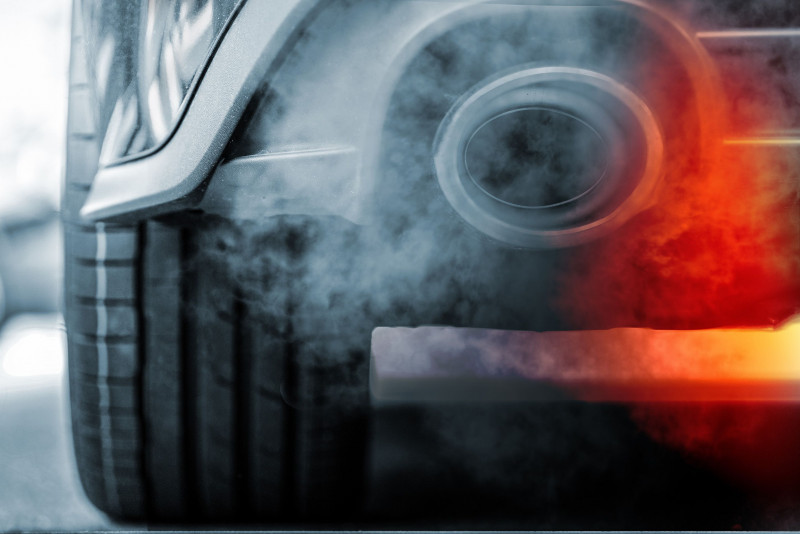
THE European Union approved on Monday a deal that will lead to the phaseout of sales of new fossil fuel cars by 2035, with a final green light by energy ministers due on Tuesday.
The 27-nation bloc joins more than a dozen other nations which have set deadlines for ending sales of new cars with internal combustion engines (ICE) which emit toxic gasses that are a major driver of climate change.
2025 in Norway
Norway is the trailblazer in ending the reign of ICE vehicles, with only zero-emission new vehicles – either battery electric or hydrogen – to be sold from 2025.
Norway is both Western Europe's largest producer of fossil fuels and the leading adopter of electric vehicles: just under 80% of new cars sold in 2022 were electric.
2030 in Britain, Israel and Singapore
Britain, Israel and Singapore plan to ban the sale of new vehicles with internal combustion engines in 2030.
In Britain, the measure is part of an effort to create a "green industrial revolution" that aims to create thousands of jobs.
China drives forward
China has taken a lead in the manufacturing of battery electric vehicles, with hundreds of companies making cars and generous public subsidies available.
Chinese firms also dominate the production of the raw materials used in electric batteries and their manufacture.
The world's top polluter with the world's largest auto market, China has set waypoints towards eliminating new fossil fuel cars.
It aims for battery electric, hybrid and fuel cell vehicles to account for 20% of sales in 2025. It aims for them to account for a majority by 2035.
Local initiatives have also sprung up: several cities now ban the sale of fossil fuel scooters, subside zero-emission vehicles or have put low-emission zones into place.
2030 for US to get halfway
According to President Joe Biden's climate plan, half of new cars sold in the United States should be zero-emissions in 2030. Large subsidies are being used to protect local manufacturers and attract battery production.
Plug-in hybrids are included in that goal, however. While these vehicles have fossil fuel motors, they can run several dozen kilometres on their batteries.
Despite being the home of Tesla, the United States has a long way to go. Sales of purely electric vehicles represented only 5.8% of the market in 2022.
The states of California and New York plan to ban the sale of new fossil fuel cars, except for plug-in hybrids, from 2035. Canada has fixed the same objective.
2035 for the EU
The Monday deal ends three weeks of drama following a last-minute roadblock put up by Germany and maintains an end of the sale of new fossil fuel vehicles from 2035, a key element of the bloc's climate plans.
With vehicles required to be zero emission, even hybrids will fail to make the cut. Only new battery electric or hydrogen fuel cell vehicles will be able to be sold in the bloc, unless they are designed to use carbon-neutral synthetic fuels.
In order to satisfy Germany's liberals, a carve-out was made for synthetic fuels, which are still in development but which are hoped can be made from CO2 using green energy, thus making their use neutral for emissions purposes.
Low-emission zones which limit access by older vehicles to city centres have also multiplied across Europe.
Fully-electric vehicles represented 12.1% of new car sales in the EU in 2022.
Within the EU, Ireland, the Netherlands and Sweden have set a more ambitious target of shifting to zero-emission vehicles in 2030.
Japan
Also a major car manufacturer, Japan plans to take its time to shift to electric vehicles and is favouring hybrids, of which Toyota is the world champion. Electric vehicles accounted for just 1.7% of new car sales in 2022.
The government plans to ban the sale of fossil fuel vehicles except for hybrids in the 2030s.
Other pioneers
India, which expects car ownership to boom but is already suffering from severe air pollution, has targeted electric vehicles accounting 30% of sales in 2030.
Chile, a major producer of lithium used in batteries, aims for 2035. – AFP, March 29, 2023