
PREVENTION and early detection are now essential if Penang wants to reduce its non-communicable disease (NCD) rates, which are among the highest in the country.
State executive councillor Daniel Gooi Zi Sen said there is a need to put in place prevention, early detection and timely medical intervention measures to safeguard public health.
Also, there is a need to improve the quality of life as Penang is among the states with a high ageing population status, said Gooi, who oversees the public health portfolio.
The Padang Lalang assemblyman said residents here need to take better responsibility for their respective health.
Penang ranks above the national average and stands as one of the states with the highest non-communicable diseases (NCDs) in Malaysia.
According to data from the National Health and Morbidity Survey (NHMS), Penang's prevalence of major NCDs and their risk factors significantly outpaces the rest of the country.
Among the NCD diseases afflicting the state are obesity, high blood pressure, high cholesterol and diabetes.
Penang is also the third highest state for strokes, while a significant concern for the state health department is that a large portion of the population remains unaware of their status; for example, 7.7% of adults have undiagnosed diabetes.
Gooi said statistics serve as a stark reminder of the importance of community health education and the need for people to take greater responsibility for their well-being.
According to the National Health and Morbidity Survey 2023, 54.4% of Malaysian adults were overweight or obese, while 15.6% had diabetes, 29.2% had hypertension, and 33.3% had high cholesterol.
“These figures are more than numbers on a report. They represent people at risk of heart disease, stroke and other complications that can affect their families, livelihoods and quality of life,” said Gooi.
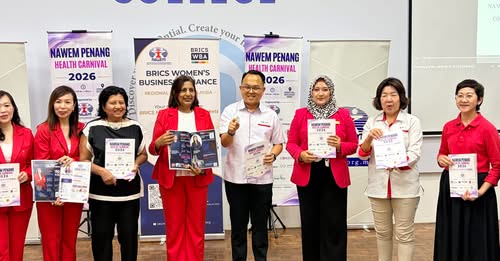
He was speaking during the closing ceremony of the National Association of Women Entrepreneurs Penang Health Carnival 2026 at Disted College Penang.
Gooi stressed that the message was clear: people should not wait until they fall ill before taking their health seriously.
“Regular health checks, appropriate physical activity, healthier eating habits and timely medical advice must become part of our everyday lives,” he said.
He also emphasised the importance of prioritising women’s health, particularly through preventive measures and early detection of diseases such as cervical cancer.
He added that health awareness should not be confined to specific age groups or genders, as its benefits extend across families and the wider community.
“These are not issues that affect only older people or only women. They concern our entire community, because every one of us has parents, relatives, colleagues or friends who may one day need this knowledge and support,” he said.
Urging the public to translate health awareness into action, he encouraged people to take practical steps towards healthy lifestyles, including scheduling screenings they had been putting off and encouraging their loved ones to adopt healthier habits. - October 18, 2026.