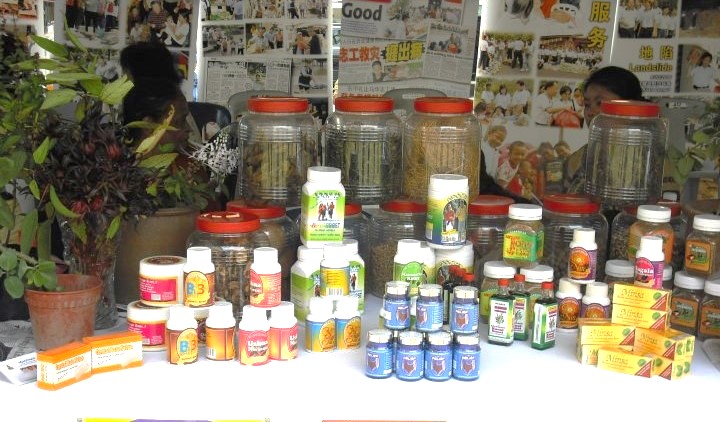
PUTRAJAYA has been urged to reconsider its decision to tax traditional and complementary medicine (TCM) as it would only worsen the financial strain on patients, especially those from vulnerable communities.
According to the MCA, the latest tax raises questions on the rationale behind an “apparent shift” by the Madani Government to target patients as it enters the second year of its administration.
This is because TCM services were exempted from taxation even when the Goods and Services Tax (GST) was implemented by the former Barisan Nasional (BN) government.
While acknowledging the need for revenue, MCA vice-president Datuk Tan Teik Cheng said the decision to raise proceeds from Sales and Service Tax (SST) from 6% to 8% in 2024 has already increased the burden on the lives of ordinary citizens.
He said that extending the taxation to cover TCM services unfairly disadvantages patients who rely on it for affordable healthcare, especially those with limited means.
“The MCA has repeatedly proposed that the government reinstate the GST system and reduce the rate from 6% to 4%,” he said.
“This would reduce the burden on the people and still increase government revenue.”
He stressed that consumption-based taxation is a proven method to increase government revenue, as evidenced by the fact that it is used in over 170 countries around the world.
“However, the Unity Government would apparently rather be known as a tax-hungry government than adopt the MCA's proposal,” he commented in a statement.
The GST was first implemented in Malaysia by the BN government on April 1, 2015, at a 6% rate. However, after Pakatan Harapan (PH) wrested Putrajaya following the general election of May 2018, it suspended the tax the next month, and ultimately abolished and replaced it with the SST system from September 1 onwards.
Treat all forms of healthcare equally
Tan said that the MCA “implores” the government to swiftly reverse this decision.
“In the aftermath of the pandemic, people are still doing their best to rebuild their lives and the government has yet to solve macro issues such as rising prices and supply shortages,” he said.
“So, at the very least, the government should show some compassion for the sickly, and treat all forms of healthcare equally, whether they are traditional or Western.”
Using the 10% sales tax on imported low-value goods set to be implemented this coming January as a reference, Tan said it is generally estimated that only RM200 million would be generated in annual revenue for the government.
“The amount of revenue collected from the 8% SST on TCM is believed to be considerably less than RM200 million,” Tan said.
“What logic does this decision, which is both burdensome and ineffective in increasing government revenue, ultimately rest upon?”
“According to my understanding, Western medicine and modern medicine are not subject to any taxation, so why are TCM services subject to taxes? This is clearly unfair and unreasonable to TCM practitioners and patients.”
The China Press had reported on Thursday that the Customs Department has written to traditional Chinese medicine practitioners to pay SST on TCM services dating back to 2018 by May 2024.
The newspaper quoted the Malaysian Chinese Medical Association as saying that the department’s letter was received in the middle of this month.
Its president Dr Heng Aik Teng was quoted as saying that industry players had not been directed to pay SST previously when their auditors submitted taxes.
He added that the relevant service tax provisions were unclear and did not clearly state that TCM services were taxable under SST.
TCM practised in govt hospitals
Meanwhile, MCA president Datuk Seri Dr Wee Ka Siong called on the government to continue giving SST exemption for TCM, just as the exemption given for modern medicine.
He pointed to section 37 of the Customs Department’s professional services guidelines dated September 21, 2021, which exempts SST on medical and surgical services performed on humans and animals by medical practitioners in private clinics and specialist clinics, including consultation services by medical practitioners.
He said there are quarters making narratives or propaganda that 8% SST should be paid even for treatment, massage, and physiotherapy.
“This will certainly tarnish the image of the Unity Government,” he said on Facebook.
“As we all know, the current trend is to integrate or combine TCM services with modern medicine. It is certified internationally.”
Wee also stressed that the Traditional and Complementary Medicine Act 1976 has been amended and enforced.
He noted that TCM includes traditional Malay, Chinese and Indian Ayurveda medicine.
Many universities have introduced and run TCM courses in Malaysia and around the world, he added.
He cited the example of Tunku Abdul Rahman University Hospital (UTAR) in Kampar which is equipped with 250 beds for modern medicine and another 100 beds for TCM.
“In short, TCM is one of the branches of services that have been accepted by the Malaysian Ministry of Health,” Wee said.
“In fact, there are TCM services in several government hospitals. Many patients are still being treated by TCM practitioners in Malaysia at this point.”
He questioned the government for asking TCM practitioners to repay "SST arrears" since 2018 through the voluntary disclosure program (VDP).
“Is it practical? The question is: if TCM practitioners have never collected 6% SST before, can they claim it back from their clients ‘retrospectively’ for services that have been provided from 2018 to 2023?” he added. – The Vibes, December 30, 2023