THE NATION needs to focus on efforts to improve the competitiveness of local companies on the global stage, instead of deepening competition between the Bumiputera and non-Bumiputera communities.
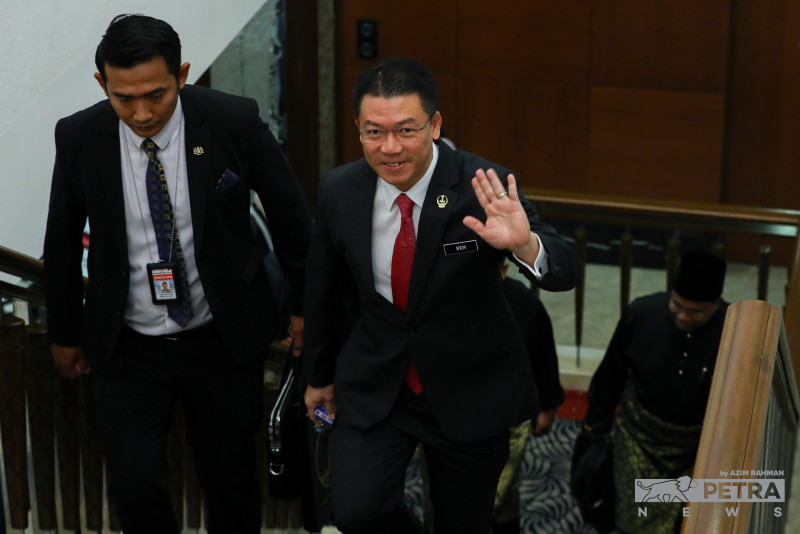
Housing and Local Government Minister Nga Kor Ming said this in expressing agreement with his cabinet colleague Rafizi Ramli, who is the economy minister, that the current era of globalisation demands Malaysian firms to rise up strongly to face foreign entities, especially international conglomerates.
"Therefore, Malaysians need to work together and not compete with each other,” said Nga after attending the Bumiputera Economic Congress 2024 at the Putrajaya International Convention Centre today.
"Let's not get caught up in outdated thinking that is bogged down with a 'zero sum game' mentality," he said, referring to a situation where profits are only enjoyed by one side.
Nga, who is also the DAP's parliamentary whip, was quoted by Berita Harian as saying that strategic cooperation between Bumiputeras and non-Bumiputeras is an important element in our society, thus potentially creating more success for the country.
He called on Malaysians to heighten their efforts in seeking cooperation opportunities in line with the principles of Malaysia Madani.
"With the spirit of lifting the same burdens, carrying the same torch, Malaysia will surely rise again to become a recognised and respected country on the world stage and achieve the target of becoming the 30th largest economy and occupying the 12th position in the World Competitiveness Index by the year 2030," he said.
Equity focus ‘self-defeating’, says Rafizi
Earlier, Rafizi had said at the congress that the success of the Bumiputera development programme should not be gauged solely on the effort to attain the target of 30% equity ownership.
He expressed worry that if the focus is only on the community's equity holdings, the government would make missteps in developing policies to help Bumiputeras.
"If you look at it from a broader perspective, it (Bumiputera development) is something to be proud of and we need that confidence,” he said. “We don't need it if we continuously feel like we've never reached the target.
"So if we keep on debating whether we are successful or not, the Bumiputeras will only look at 30% ownership (as a target). It can be 'self-defeating'," he said at a press conference at the PICC.
Rafizi stressed that the trend of equity ownership has also changed since the target was set more than five decades ago.
"So, we also have to take into account that the trend of ownership or the method of buying equity has changed compared to 20 or 30 years ago.”
Rafizi also suggested that Bumiputeras who have been successful in their respective businesses become financiers for Bumiputera-owned startup companies.
"The Bumiputera middle class and professionals in the country are very many. They can open up and adjust their function to also serve as capitalists for startup companies," he said.
From a broader perspective, the achievements of Bumiputeras are already quite impressive, he stressed.
"However, this is not shown in the equity section because government-linked companies are run by Bumiputeras but they are not listed," he said.
Last September, Prime Minister Datuk Seri Anwar Ibrahim had said that equity ownership by Bumiputeras in this country had not yet reached the 30 percent target after fifty years.
In this regard, Anwar said the government will re-evaluate the approach to measure the group's level of participation and economic control. – The Vibes, March 2, 2024