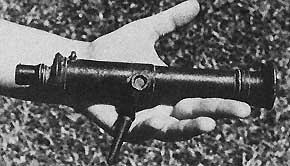
MEASURING between 10cm and 60cm in length, the miniature cannons of Borneo and the Malay Archipelago, which were highly prized before the Japanese conquest of the region during World War II, were never intended for warfare.
These miniature cannons, known locally as “lela” or “rentaka”, are a fascinating part of the region’s history and culture. They were widely used across the Malay Peninsula, Borneo, Sumatra, and other parts of the archipelago from the 16th century onwards.
According to local history enthusiast Alex Teoh, the cannons are functional, but their small size meant they could hardly injure, let alone kill, anyone unless fired at extremely close range. The slightly larger versions, however, could be lethal.
The larger miniature cannons were developed as portable firearms that could be easily mounted on ships or carried by land forces. Despite their limited use as weapons, these “toy” cannons, cast in bronze, brass, or iron, were highly valued and often used as currency in barter trade.
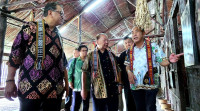
Teoh shared this knowledge during the recent “The Might of the Miniature Cannon” talk at the Borneo Cultures Museum in Kuching. He noted that these cannons were so desirable that they could be used to buy a bride. They were also treasured as heirlooms and status symbols among the elite and wealthy during the Brooke family’s rule in Sarawak.
In Malay culture, these cannons were symbols of authority and were often presented as royal gifts or used in ceremonies. During the Brooke era, they were accepted as payment for criminal and civil fines, as well as penalties for breaching certain customs.
The intricacy of a cannon’s design determined its value. Teoh explained that the value of an “ordinary cannon” at that time was between RM116 and RM133 per picul. A picul, an old weight measurement, is approximately 60.48kg and was historically used across Southeast Asia, China, and other regions for trading commodities such as rice, tea, and spices.
Early miniature cannons were simple, largely copied from much larger cannons. Later, more elaborate designs emerged, influenced by the artistic, cultural, and religious exchanges through trade with China, India, the Middle East, and Europe. In Borneo, the cannons were often intricately decorated with inscriptions, floral patterns, or images of animals admired for their strength, such as the crocodile and buffalo.
The use of miniature cannons as currency declined during the Japanese occupation, as the Japanese sought to erase all vestiges of the Brooke rule. Many of these cannons were lost, with some believed to have been taken by the Japanese. Today, only a limited number remain.
Many surviving cannons are preserved as historical artefacts in museums throughout Malaysia, Indonesia, and Singapore. They can also be found in palaces, some hotels, official buildings, and private collections, and are still used in cultural ceremonies.
Teoh pointed out that Brunei is the only country in the Malay Archipelago that continues the tradition of casting these cannons.
Teoh is a conservator of rare manuscripts, collectible prints, antique maps, photo albums, and antiquarian books. He focuses on the material culture of written texts in Southeast Asia and has a keen interest in the material culture and documentary heritage of Borneo. – August 14, 2024.