_Meeting_Apr_10.jpg)
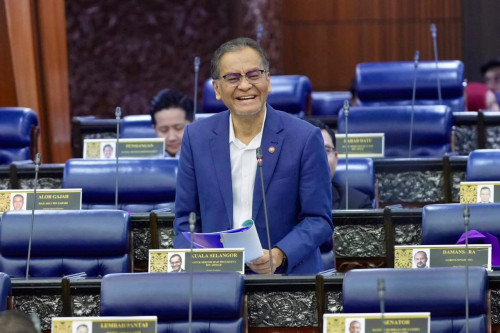
ECONOMIC ministers from ASEAN member states and Timor-Leste convened for a Special ASEAN Economic Ministers’ (AEM) Meeting on 10 April 2025 in response to the United States’ recent imposition of “Reciprocal Tariffs”, warning of the damaging consequences such measures could have on regional economic development.
The emergency session was prompted by Washington’s announcement on 2 April 2025 of steep tariff increases on a range of imported goods, with duties ranging from 10% to 49%, and followed by a 90-day pause period declared by former President Donald Trump on 9 April, during which a flat 10% tariff would apply.
ASEAN and Timor-Leste’s ministers unanimously criticised the basis used by the US to justify the tariffs, rejecting the calculations underpinning the policy as flawed and arbitrary.
They stressed that such protectionist measures could derail ASEAN’s decades-long pursuit of regional economic integration underpinned by a rules-based system.
Despite the rising tension, ASEAN ministers stood firmly against any retaliatory response.
“The ASEAN Member States were united in the opinion that retaliation is not an option,” the joint statement declared, underscoring the bloc’s preference for “constructive, non-retaliatory, and forward-looking engagements with the US”, the minister said in a statement issued by Ministry of Investment, Trade and Industry today.
Ministers expressed hope that the 90-day pause period could provide “a window of opportunity to find a pragmatic and mutually advantageous solution for ASEAN in a strategic and tactful manner”.
The Special AEM meeting also referenced recent remarks by the Director General of the World Trade Organization (WTO), who warned that the intensifying trade dispute between the US and China could significantly damage the global economy.
According to WTO analysis, such a rift between the two economic giants could result in a long-term reduction of global real GDP by nearly 7%.
ASEAN’s ministers echoed these concerns, reaffirming the region’s strong commitment to an “open and inclusive economic cooperation” framework, with the WTO at the heart of a predictable, transparent, and fair multilateral trading system.
They warned that the US tariffs—dubbed the “Liberation Day tariffs” following the announcement—undermined these principles, introducing new uncertainty and eroding trust in the global trade architecture.
“Such actions risk eroding the foundation of fair competition and mutual benefit that multilateralism is built upon,” the statement read.
“ASEAN believes that adherence to these principles remains critical to ensuring stability, fostering trust, and safeguarding long-term economic prosperity for ASEAN and its partners.”
In a significant move towards greater regional coordination, the ministers also agreed in principle to form an ASEAN Geoeconomics Task Force. The body, comprising regional experts, will develop forward-looking policy responses to global economic and geopolitical shifts. Its primary mandate will be to identify risks and opportunities, bolster ASEAN’s strategic positioning, and enhance its resilience in a rapidly evolving global landscape.
The conclusions of the Special AEM Meeting will feed directly into discussions at the upcoming Special ASEAN Leaders’ Meeting, which will assess the wider implications of the US tariffs on regional trade flows, supply chains, and cross-border investment.
The objective, ministers said, is to ensure that ASEAN remains “a stable, competitive, and attractive hub for global trade and investment”.
The Ministry of Investment, Trade and Industry (MITI) confirmed that it would continue engaging directly with US counterparts to pursue “an amicable and fair solution” to the dispute over reciprocal tariffs.
The statement marks a clear shift towards regional solidarity amid a more fragmented global economic environment, with ASEAN opting for diplomacy and coherence over confrontation. – April 10, 2025