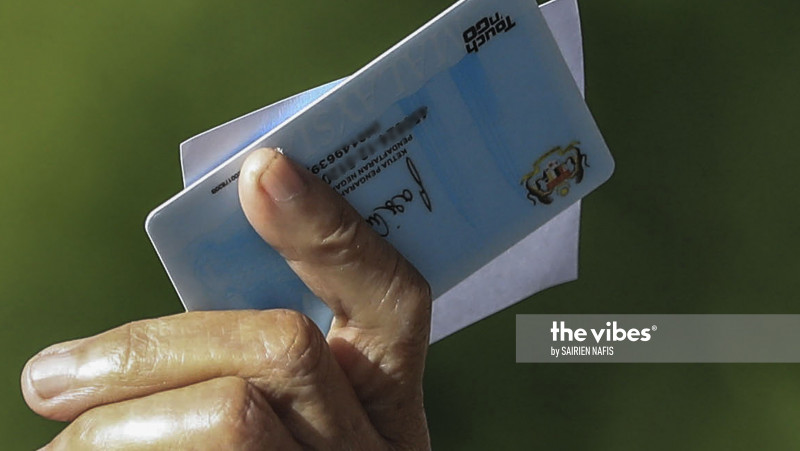
AS Malaysia moves forward with the launch of its targeted BUDI MADANI RON95 (BUDI95) fuel subsidy, cybersecurity experts have raised concerns over potential misuse unless robust MyKad verification is enforced at the point of purchase.
Fong Choong Fook, a cybersecurity specialist, told The Star that while the existing MyKad infrastructure is “relatively secure, but not without vulnerabilities”, it remains open to abuse if not properly protected.
“To prevent abuses like cloning, the misuse of lost or stolen cards or ‘gaming’ the quota, the government and petrol station operators should ensure every pump or payment point that offers subsidised RON95 has a certified MyKad reader, properly maintained,” he said.
He added that real-time or near real-time verification is essential.
“There should also be real-time or near real-time verification of MyKad and driving licence status, as well as quota usage. The use of cryptographic protections, digital signatures, revocation and secure authentication should also be considered,” he said.
Fong warned that behavioural anomalies should be monitored. “If a MyKad was used to purchase fuel in Puchong, and again 30 minutes later in Alor Setar, that would be abnormal and should be flagged.”
Malaysian Cyber Consumer Association president Siraj Jalil stressed the importance of educating consumers, particularly those who use mobile applications to make payments.
“Consumers need clear, detailed guidance. Some use apps to pay for petrol, so they must also be educated on securing their devices,” he said.
Cybersecurity professor Dr Husin Jazri advocated for biometric verification to simplify the process while improving security.
“It’s similar to current banking practices, and it’s easy to implement at self-service pumps. However, data collection must be limited to avoid privacy breaches,” he said, cautioning that only essential data should be stored.
In response, Finance Minister II Datuk Seri Amir Hamzah Azizan confirmed on Tuesday that several anti-fraud mechanisms are under consideration.
“One possible option is to prevent someone from refuelling every 10 minutes. This would prevent a person from staying at a petrol station and repeatedly scanning his identity card on behalf of others,” he said on Tuesday.
Another option, he noted, could be a daily limit on subsidised fuel purchases. However, he assured that “any restrictions would be practical and not burdensome.”
Once implemented, the BUDI95 system will require users to follow three simple steps to access the subsidised RON95 price: verify their MyKad, make payment, and pump fuel. A one-time activation will be needed to link the MyKad to the subsidy system. Verification will be available via MyKad terminals at pumps and station shops, as well as through e-wallet apps, including those offered by petrol companies.
The monthly individual cap is set at 300 litres.
“If we set the cut-off at, say, 140 litres a month, it means 90 per cent of Malaysians would qualify. But the government wants more people to benefit,” said Amir.
He noted that 99 per cent of the target group currently use less than 300 litres per month.
Treasury secretary-general Datuk Johan Mahmood Merican clarified that lost or stolen MyKads cannot be used. “Once reported lost and deactivated by the National Registration Department, that MyKad is removed from the system,” he said.
RM11 Billion To Bridge The Gap
The government has maintained the subsidised RON95 price at RM1.99 per litre, down from RM2.05, effective 30 September.
The MADANI government has allocated approximately RM11 billion to bridge the gap between the subsidised price and the unsubsidised market rate of around RM2.60 per litre.
According to the Ministry of Finance (MoF), the move away from blanket fuel subsidies under the BUDI95 scheme is expected to save between RM2.5 billion and RM4 billion annually.
“These savings will be redirected to expand targeted aid programmes, including Sumbangan Tunai Rahmah (STR) and Sumbangan Asas Rahmah (SARA),” said the MoF in a statement.
All Malaysian citizens aged 16 and above with a valid driving licence will automatically be eligible for up to 300 litres of RON95 per month.
The MoF said this ceiling was based on data from the Department of Statistics Malaysia (DOSM), which found that 99 per cent of private vehicle drivers consume less than this amount.
The monthly limit, it added, is also intended to act as a buffer against abuse by large-scale commercial entities or fuel smugglers.
The ministry emphasised that the BUDI95 system has been designed to be as user-friendly as possible while protecting the welfare of the rakyat.
A public portal at [www.budimadani.gov.my](http://www.budimadani.gov.my) will go live at 9am on 25 September, allowing users to check their eligibility and track monthly fuel usage.
E-hailing drivers may also apply for an increase in their quota via the same platform.
A dedicated helpline (1300-88-9595) will also be operational from Thursday morning to handle public enquiries about the programme.
Prime Minister Datuk Seri Anwar Ibrahim, who also serves as Finance Minister, announced that over 16 million Malaysians are estimated to qualify for the RON95 subsidy based on data from the Road Transport Department (JPJ) and the National Registration Department (JPN).
In a separate statement, the MoF dismissed reports that it intends to limit RON95 purchases to once daily.
“While the government is studying methods to prevent abuse, BUDI95 is meant to ensure the rakyat’s daily needs are met. A once-daily purchase limit would clearly run counter to that objective,” the ministry said. - September 24, 2025