KELANTAN’S intricate coastal and river networks present significant hurdles for maritime enforcement, yet the state’s waters remain under effective surveillance, officials say.
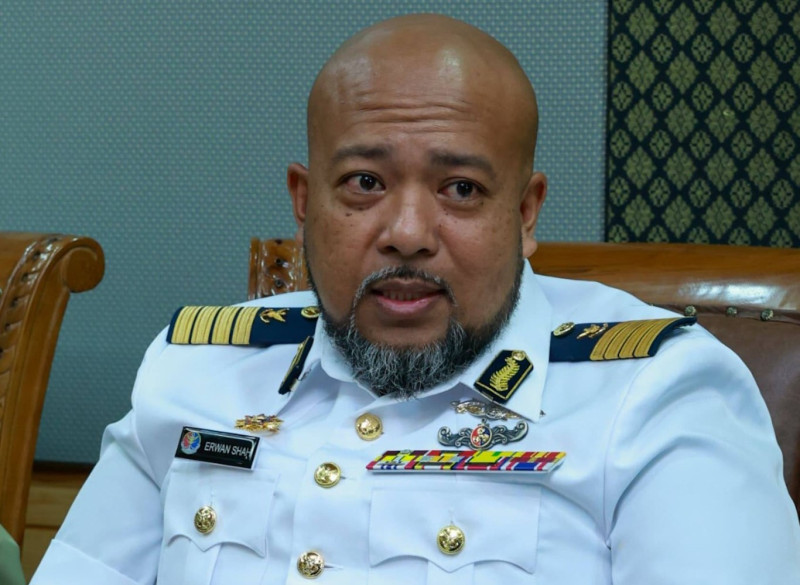
Kepten Maritim Erwan Shah Soahdi, director of the Kelantan branch of the Malaysian Maritime Enforcement Agency (MMEA), explained that the state’s geographical position along the international border, combined with shallow, interconnected rivers that penetrate inland, is frequently exploited by smuggling syndicates seeking to evade detection.
“Most of the cases we record involve fisheries and immigration offences, particularly incursions by foreign fishermen from Vietnam and cigarette smuggling,” he told Bernama.
He cited a major seizure earlier this year, where authorities confiscated approximately 2,100 cartons of contraband cigarettes valued at over RM13.3 million, alongside other cases involving cigarettes and undocumented migrants.
Erwan Shah described how syndicates typically use small, high-speed boats to enter Kelantanese waters before navigating shallow, branching rivers, complicating enforcement efforts and pursuit into inland areas.
“Given the capacity of our assets, it is challenging to chase vessels upstream. We rely heavily on monitoring and intelligence before executing any interception,” he said.
Weather conditions also present operational challenges, particularly during the monsoon season, when seas are rough and unpredictable.
He added that suspects often respond aggressively, employing provocation and dangerous manoeuvres to avoid apprehension.
Most foreign fishing intrusions involve Vietnamese crews, with mixed teams from Myanmar and Thailand typically working aboard local fishing vessels.
Erwan Shah emphasised that, to date, MMEA Kelantan has not documented any instances of local or foreign fishing boats transporting undocumented migrants, although some workers have been found without valid temporary work permits.
“As part of standard operating procedure, every vessel detected is inspected. Any suspicious activity prompts further investigation,” he said.
Each year, MMEA Kelantan carries out more than 2,500 maritime asset inspections, and no cases of migrant transport via fishing boats have been confirmed.
Community cooperation has proved invaluable, he added. “Information from local fishermen has led to successful interceptions. Even if not always precise, these reports guide our monitoring and operations in high-risk areas,” he said.
Kelantan’s territorial waters span approximately 22,000 square kilometres, with an 88-kilometre coastline and multiple branching rivers that converge at several estuaries.
The state currently deploys three patrol vessels measuring 40 to 45 metres and five smaller craft between 12 and 20 metres to conduct surveillance and enforcement.
“With the assets available, we will continue to safeguard the security and sovereignty of our maritime borders,” Erwan Shah affirmed.
Investigations have also revealed that undocumented migrants brought into Kelantan often learn basic Malay in their home countries before arrival, illustrating the organised nature of smuggling networks.
“They study Malay in Myanmar, showing that there is careful preparation before entering Malaysia. This reinforces the belief that syndicates manage their entry systematically,” he said.
Upon arrival, migrants typically hide in small rivers, bushes, or remote locations until collected.
Erwan Shah acknowledged that smuggling methods evolve continually, incorporating advanced technology to evade detection.
“Smugglers now use drones to survey areas and monitor enforcement movements, reflecting a sophistication that parallels our own use of night-vision and surveillance technology,” he said.
Tactics have grown increasingly complex, with staged approaches and reconnaissance before landing, particularly along the Kelantan-Terengganu border, a hotspot for foreign fishing boat incursions.
“Most incursions are near the border’s edge, allowing foreign vessels to retreat quickly if authorities approach,” he said.
Foreign boats typically travel at low speeds of around eight knots, whereas maritime assets can reach 15 to 18 knots, enabling effective pursuit if detected early.
Many operations and apprehensions occur at night when illegal vessels are most active. Suspects apprehended are investigated, detained, and, if ordered for deportation, handed over to the Immigration Department for repatriation. - February 1, 2026