FOR many Malaysians living and working in the Gulf, the unfolding conflict between Iran, the United States, and Israel has turned a routine day into a tense ordeal, as missile strikes and emergency alerts ripple across the region.
Zaina Ahmad, a Malaysian who recently moved to Abu Dhabi, described how her dream of working in the United Arab Emirates became a terrifying experience within just three weeks of arrival.
Temporarily residing in a hotel — typical for newcomers before securing permanent accommodation — Zaina recounted the moment she heard a loud explosion and felt the floor shake in her seventh-floor room early yesterday morning.
“Honestly, I thought it was construction work because in Malaysia we are not used to [military attacks], right?” Zaina told Bernama via a FaceTime call.
The sound, she later realised, was a missile launched by Iran targeting a nearby United States airbase, which was successfully intercepted.
The strikes were part of Iran’s retaliatory response to US-Israeli attacks on Iranian targets earlier on Saturday. In addition to Abu Dhabi, other locations in the UAE, as well as Doha, Qatar, Kuwait, Bahrain, Israel, and Jordan, were reportedly affected.
Despite the reported deaths of Iran’s Supreme Leader Ayatollah Ali Khamenei and other senior officials, the attacks showed no immediate signs of abating, with Iran vowing further retaliation as the US and Israel continued operations.
The attacks left Zaina confined to her hotel room, too frightened to leave even for meals during the breaking of fast.
She relied on her limited supplies of instant noodles while monitoring news updates, registering with the Malaysian Embassy, and reassuring her family of her safety.
“Initially, I planned to go out to buy groceries, but everyone panicked. The explosions were very loud,” she said.
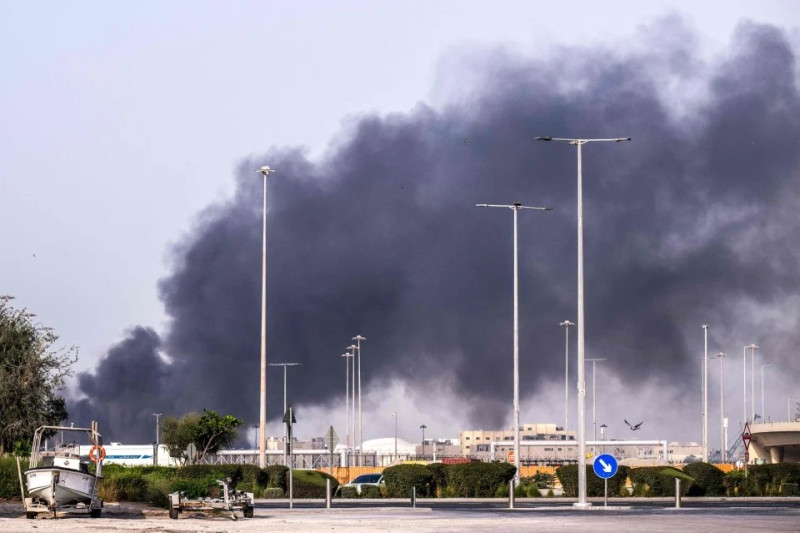
“The blast happened very close. There was smoke outside my window. I think it was a missile that was intercepted. It happened right outside my window, so it was frightening. The whole window kept shaking.”
Similarly, in Doha, Mohd Saufi Fadzli Mohsin, 50, who lives with his wife and child, reported that missile explosions shook windows and doors early yesterday, despite the targets being approximately 40 kilometres away.
The family, accustomed to following government directives, remained calm and observed safety protocols.
“The explosions were very loud, but the situation remains under control, although several strong blasts have been heard since early morning following the Iran-US-Israel conflict,” Mohd Saufi told Berita Harian.
He described receiving government alerts before each attack and observing smoke in the sky from intercepted missiles.
The Qatari government instructed residents to work from home and remain indoors unless attending to emergencies.
Key service sectors, including hospitals and security, continued operations, while approximately 33 major supermarkets were kept open 24 hours to prevent panic buying.
Citizens were also advised to stay away from windows due to the risk of debris from intercepted missiles.
The Malaysian Embassy in Doha maintained regular communications via WhatsApp groups, advising Malaysians to prepare emergency documents for possible evacuation.
Mohd Saufi noted that disruptions to flights could affect plans to return to Malaysia for Aidilfitri celebrations.
Meanwhile, in Abu Dhabi, another Malaysian, identified as Aleya, described the experience of being woken at 1 a.m. by government sirens, followed by the sounds of explosions outside her home.
She stayed with her four children and reported that local schools had transitioned to online learning from Monday to Wednesday due to security concerns.
“Fortunately, the explosions were brief. From our home, the sounds were faint, likely from missiles intercepted by the security forces,” Aleya told Berita Harian.
The experiences of Zaina, Aleya, and Mohd Saufi illustrate the heightened anxiety among foreign nationals in the Gulf amid escalating military confrontations.
Many are taking precautions, remaining indoors, and monitoring updates from local authorities and their respective embassies as the situation develops. - March 2, 2026





.jpg)