MALAYSIAN Chinese voters are facing a growing political dilemma in the aftermath of the ‘Ubah’ movement that once promised sweeping reforms to the country’s governance, Datuk Seri Ti Lian Ker said.
The former MCA vice president said the Chinese electorate had overwhelmingly shifted its political support over the past decade, with more than 90 per cent abandoning MCA in favour of DAP.
The shift was largely driven by the rallying cry of ‘Ubah’ — Malay for “change” — which generated strong expectations that a change in government would bring cleaner governance, fairer institutions, and a political culture less defined by race and patronage.
“The Chinese electorate embraced this message enthusiastically, especially in urban constituencies where support for change reached overwhelming levels,” Ti said.
However, he argued that the realities of governing have proven more complex than the slogans that once fueled the movement.
Expectations meet political reality
According to Ti, the excitement surrounding the reformist narrative began to fade as coalition politics, policy compromises, and political realignments became unavoidable within Malaysia’s multiethnic political system.
“Some voters now struggle to reconcile the ideals promoted during the 'Ubah' era with what they perceive as pragmatic political compromises,” he added.
Ti also pointed to gestures by some DAP leaders aimed at engaging the Malay electorate, noting that these efforts have sometimes been interpreted as attempts to appease concerns among segments of the Malay community who remain wary of the party’s stance on certain Malay- and Islam-centric policies.
Among the examples cited were DAP ministers adopting traditional Malay attire during official events — gestures Ti said were intended to signal inclusivity.
The rise of “Ah Q” rationalisations
Ti said the political dilemma has led to what he described as “Ah Q justifications,” borrowing from the fictional character created by Chinese writer Lu Xun in The True Story of Ah Q. The character is known for psychologically reframing defeats as victories.
In Ti’s view, similar rationalisations have appeared in public discourse when addressing issues affecting the Chinese community.
He cited concerns among pig farmers in Selangor who fear policy changes could threaten their industry.
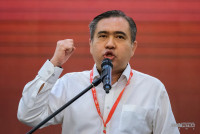
Ti said remarks by Transport Minister Anthony Loke — suggesting that people could still enjoy roast pork — appeared to shift attention away from the underlying economic concerns of farmers.
In another example, Ti referred to statements by Human Resources Minister Steven Sim emphasising that Penang remains open for the celebration of Chinese culture.
While such remarks may be intended to reassure, Ti argued they also raise questions about whether cultural expression is becoming more constrained elsewhere.
“If cultural space narrows in many places, saying it remains open in one state begins to sound less like reassurance and more like quiet resignation,” he said.
Call for political maturity
Despite his criticism, Ti said the aspirations that drove the ‘Ubah’ movement — including cleaner governance and stronger institutions — remain valid.
However, he argued that voters must move beyond slogans and confront the gap between expectations and political realities.
“The deeper question facing the Chinese electorate is not merely loyalty to any particular party,” he said.
“It is whether political maturity allows voters to reassess and make a change even after ‘Ubah’.” – March 14, 2026