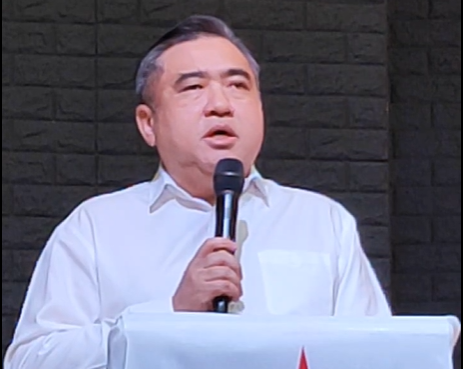
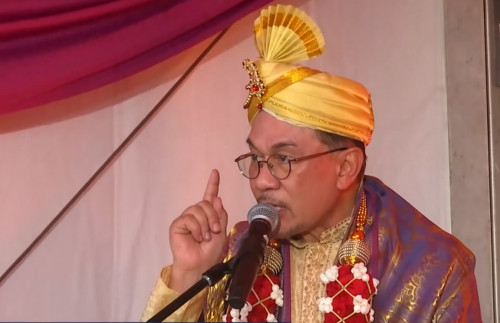
DEPUTY Finance Minister Liew Chin Tong has warned that the international system is entering a period of profound instability and strategic transformation, describing the current decade as a “once-in-80-years” realignment that could fundamentally reshape the balance of global power, economics and security.
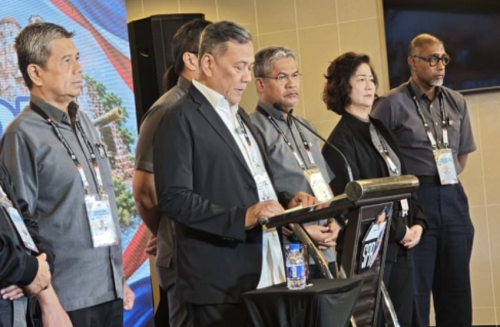
Speaking at the Asian Banker Summit 2026 at the Mandarin Oriental Kuala Lumpur on Wednesday, Liew said the assumptions underpinning the post-Second World War international order were increasingly being challenged amid rising geopolitical competition, technological disruption and intensifying global crises.
“I would like to give this presentation a title. I call this ‘The 2020s: Shaping the New Global Order From Asia’,” he said.
“We are now more than halfway past the current decade and this decade has shown to us that it is different from the preceding decades.
“We are potentially seeing a once-in-80-years realignment in the global order.”
Liew said the world order established after 1945, and strengthened following the collapse of the Soviet bloc in 1989, had long depended on the dominance of the United States dollar and America’s role as the world’s principal consumer economy.
He noted that many advanced industrial economies, including Germany and Japan, had structured their economic strategies around export-led growth sustained by continued access to the US market.
“These are the premises that are being challenged right now,” he said.
However, he cautioned against viewing current tensions purely through the lens of a simplistic US-China rivalry, arguing that the global landscape had become increasingly multipolar, with middle powers exerting greater influence than at any time in modern history.
“It is not US versus China or US versus China versus Russia,” he said.
“There are many other actors in the current order unlike back in 1945 when there were fewer middle-power countries. Each of these actors has its agency and that is the difference.”
Liew linked the changing geopolitical order to conflicts in Europe and West Asia, as well as rising strategic tensions across the Korean Peninsula, Taiwan Strait and South China Sea, warning that Asia was likely to become the principal arena shaping the future international balance.
He identified five major forces transforming the global financial and political landscape: geopolitical realignment, post-pandemic health and demographic pressures, energy insecurity, climate change and rapid advances in technology, particularly artificial intelligence.
“The theme of today’s summit is ‘Imagining the AI Bank’. We will have to deal with rapid changes and leapfrog in technology,” he said.
He said the emerging era required bankers, regulators and policymakers to move beyond conventional economic thinking and develop a deeper understanding of geopolitics, strategic industries, supply chains, logistics and critical minerals.
“We have been trained to think that geopolitics and economics are separated, when in actual fact they are not,” he said.
Liew also highlighted the growing importance of geoeconomics within ASEAN, referencing the ASEAN Geoeconomics Task Force, which he co-chaired with his Indonesian counterpart during Malaysia’s ASEAN chairmanship.
He said the region must strengthen its sense of strategic independence and collective agency in responding to global disruptions.
“The report has a very interesting title that says ‘This Time It Is Different: ASEAN’s Agency in Shaping the New Global Agenda’,” he said.
“While ASEAN is not the richest region in the world and Malaysia is not the richest country in the world, each of us has the potential of shaping the future.”
Liew described Asia as the world’s most consequential economic and strategic region in the coming decades, particularly because of its dominance in semiconductor manufacturing, advanced industrial production and artificial intelligence infrastructure.
“In the semiconductor industry, TSMC and its entire AI infrastructure, and AI chips manufacturing, is happening in this region,” he said.
Drawing from his experience as a former deputy defence minister, Liew warned that peace and stability in Asia could no longer be taken for granted, especially given mounting strategic tensions surrounding maritime trade routes and territorial disputes.
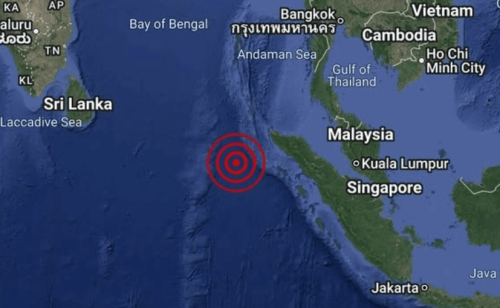
He revisited earlier geopolitical concerns surrounding the Strait of Malacca, once described by Chinese strategists as the “Malacca Dilemma” because of China’s heavy reliance on imported energy passing through the waterway.
“But today, you hardly hear it, except until the last two months,” he said, attributing the shift partly to China’s growing energy resilience and diversification efforts.
Liew said Malaysia was now regaining strategic prominence amid shifting global supply chains and intensifying competition between major powers, particularly due to its role within the international semiconductor ecosystem.
“We are the indispensable middle in the global semiconductor supply chain, occupying the geopolitical middle and being the middle ground for all other powers,” he said.
He also pointed to Malaysia’s petroleum and palm oil resources as contributing to the country’s comparatively stronger energy resilience during a period of global uncertainty.
Reflecting on Asia’s economic rise during the 1990s, Liew said the region’s industrial boom had been accelerated by the 1985 Plaza Accord, which prompted Japanese manufacturers to relocate operations across Southeast Asia.
“That period of time created Malaysia’s first economic take-off,” he said.
After decades in which Malaysia was overshadowed following China’s accession to the World Trade Organization in 2001, Liew said the country was once again attracting international attention because of changing geopolitical and economic realities.
“We are in a position of strength amidst this global chaos,” he said.
Liew urged bankers and corporate leaders to see themselves not merely as financial actors, but as participants in shaping the political and economic future of Asia and the wider world.
“I hope to see more bankers, not just as bankers, but as people and citizens who will shape the future of Asia and the world,” he said. - May 13, 2026