THE Government has reaffirmed its long-term commitment to reshape its power sector, confirming it will not approve new coal-fired power plants and will fully phase out coal-based electricity generation by 2044 under the National Energy Transition Roadmap (NETR).
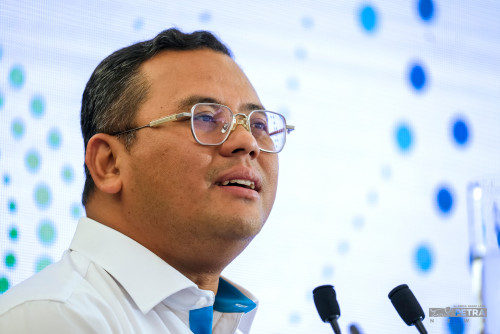
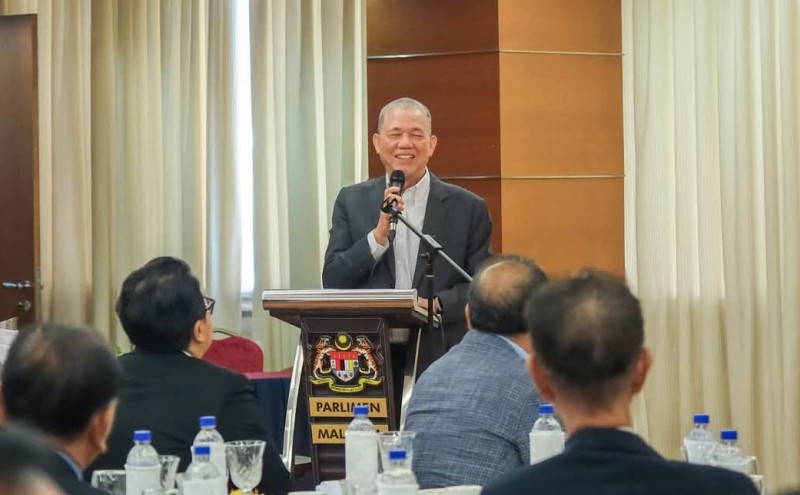
The commitment was underscored at the launch of the insight paper “Beyond Coal: Building a Flexible, Resilient and Clean Power System for Malaysia,” where Deputy Prime Minister II Datuk Seri Fadillah Yusof set out an expanded policy framework aimed at strengthening energy security while accelerating the shift towards cleaner sources.
The programme, developed in collaboration with the World Economic Forum, brought together policymakers, regulators, utilities, financial institutions and industry stakeholders through an eight-month dialogue process focused on Malaysia’s future electricity system.
Senior representatives from the Energy Transition and Water Transformation Ministry (PETRA), the Energy Commission, Tenaga Nasional Berhad, HSBC Bank Malaysia, Bursa Malaysia’s carbon market division, the World Economic Forum and KPMG Malaysia were among those present at the launch.
Fadillah, who also serves as PETRA Minister, said energy transition is rooted in the principle that humanity has been entrusted as caretakers of natural resources and, the transition is not limited to environmental objectives but extends to economic restructuring, industrial competitiveness, investment attraction and long-term nation-building.
Under the NETR framework, Malaysia is targeting 70 per cent renewable energy installed capacity by 2050, while maintaining a policy focus on protecting households and businesses from energy price volatility during the transition period.
Fadillah stressed that reliability and affordability remain central pillars of the strategy, warning that insufficient renewable deployment could heighten reliance on imported liquefied natural gas, exposing the country to external price shocks and geopolitical risks.
Key measures outlined include accelerated deployment of large-scale solar projects, expansion of corporate renewable procurement through the Corporate Renewable Energy Supply Scheme (CRESS), increased investment in battery energy storage systems, and comprehensive digitalisation of the national grid.
He also emphasised the need to reinforce transmission infrastructure and deepen regional cooperation through the ASEAN Power Grid to improve system resilience and cross-border energy balancing.
“Malaysia’s electricity system must evolve beyond generation capacity alone, incorporating storage technologies, smart grid systems, demand response mechanisms and real-time operational flexibility to manage higher renewable penetration,” Fadillah said, adding, the Energy Commission has introduced the Malaysia Battery Energy Storage System Framework (MyBeST), while Tenaga Nasional Berhad continues significant investment in grid upgrades to support system stability amid rising renewable integration.
A major recommendation in the newly launched insight paper is the structured repurposing of retiring coal plant assets into renewable energy hubs, battery storage facilities and new industrial development zones.
Fadillah added Malaysia’s existing coal infrastructure, including transmission links and industrial land, presents an opportunity to avoid stranded assets while unlocking new economic value through a proposed National Coal Site Repurposing Framework.
On financing, he acknowledged that the scale of investment required will be substantial, but said Malaysia is well positioned due to its deep capital markets and established Islamic finance ecosystem, highlighting blended finance structures, transition sukuk and broader private sector participation as key instruments to mobilise capital, stressing that investor confidence depends on policy clarity, regulatory consistency and long-term credibility.
He also reaffirmed a technology-neutral approach, including continued assessment of advanced nuclear technologies and small modular reactors, while emphasising that any deployment must be guided by strict safety standards, governance safeguards and public trust.
Malaysia’s energy strategy, he said, is anchored on the energy trilemma of security, affordability and sustainability, with all three objectives required to progress in balance to avoid either cost burdens or supply vulnerabilities.
Fadillah noted that recent geopolitical instability and global fuel market volatility have reinforced the urgency of strengthening domestic resilience through diversification, storage expansion and deeper regional interconnection.
He said Malaysia aims not only to participate in the global transition but to help shape its direction through long-term structural transformation of its power sector. - July 2, 2026
.jpeg)