BARISAN Nasional remains willing to negotiate seat allocations and potential seat swaps for the upcoming Melaka State Election, provided all discussions are carried out with sincerity and preserve each party's overall tally.
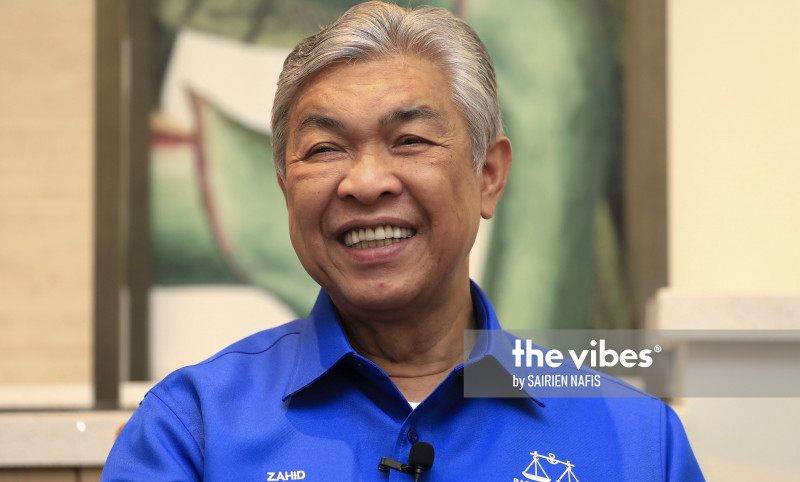
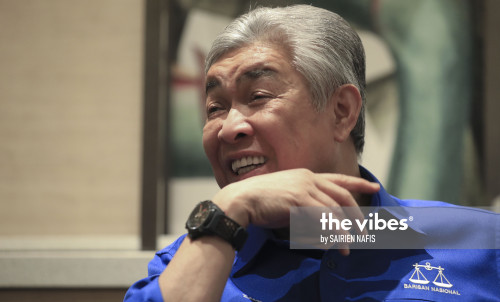
Deputy Prime Minister Datuk Seri Dr Ahmad Zahid Hamidi emphasised that the foundational rule of any electoral pact requires political partners to respect seats already held by incumbent parties rather than expecting outright concessions.
“As I mentioned, the Melaka Chief Minister, who is also the state BN Chairman, stated that fundamentally, in any negotiations, the position of seats won by any party must be respected,” Ahmad Zahid said.
“However, negotiations can be conducted for seat swaps, provided the total number of seats remains equal.”
Speaking to reporters after officiating the Rungus Cultural Festival in Kudat on Saturday, the Barisan Nasional Chairman observed that parties leading other state administrations across Peninsular Malaysia operate under identical expectations.
“In such a situation, I believe other parties controlling certain states in the Peninsula naturally share the same stance. They will not simply hand over seats they have won to their political partners,” he added.
His remarks were made in response to criticism from Angkatan Muda Keadilan chief Muhammad Kamil Abdul Munim, who questioned Barisan Nasional's sincerity following the UMNO President's announcement that the coalition intended to defend all 21 seats won during the last state poll.
Addressing those concerns, Zahid indicated that negotiations could extend beyond Melaka to encompass inter-state seat exchanges with coalition partners, provided the trades remain balanced.
“If they can do it with a promise of honesty and sincerity, I see no reason why the Melaka Chief Minister cannot do the same,” he noted.
Zahid stressed that while Barisan Nasional is not closing the door on dialogue, clear boundaries are necessary to safeguard established political mandates.
“First is a seat swap within the state, and second is a potential swap involving other states controlled by them. Our principle is that it is not impossible to keep the door open for negotiations, but we should neither throw it wide open nor shut it completely. This means there is still room for negotiation within those boundaries,” he said. - August 8, 2026
.JPG)

.jpeg)