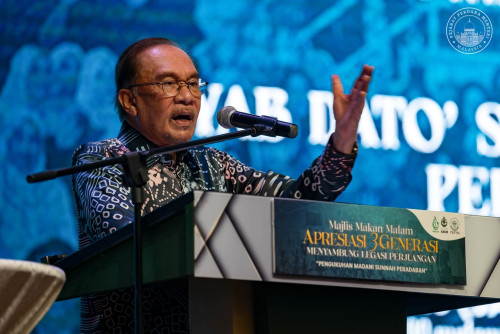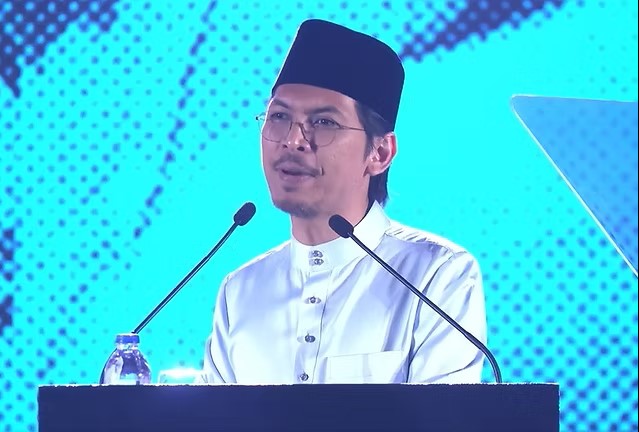
REFORMASI must not be reduced to the question of who holds power, but must be measured by whether political power delivers stronger institutions, transparent governance, greater economic fairness and tangible improvements to people's lives, Angkatan Muda Keadilan (AMK) chief Muhammad Kamil Abdul Munim said.
He said Malaysia was at a critical juncture as rapid technological change, global economic uncertainty and rising living costs placed mounting pressure on Malaysians, particularly young people.
At the same time, he said trust in institutions and politicians was weakening, while identity politics, racial and religious sentiments and fear-based narratives were increasingly being exploited to win political support.
"Today we gather in Melaka, a place that was once a crossroads of the world, to speak about another crossroads in history.
"We are living in an era of rapid change. Technology is changing the way we work and communicate. The global economy is moving amid uncertainty. Young people are facing increasingly challenging living costs," he said in his AMK chief's policy speech, titled "Mobilising Hope, Leading Change", at MITC, Air Keroh, in Melaka on Thursday.
Kamil said PKR's political journey had been built largely during its years in opposition, when many members joined despite the party facing pressure from various quarters.
With the party now part of the Federal Government, he said its purpose could not be reduced to securing positions or influence, but had to remain anchored in the values it sought to uphold through political power.
"Politics must return to its original purpose: managing the trust entrusted to us, improving people's lives, upholding justice and building a better society for future generations," he said.
He said Reformasi had evolved into something larger than a political movement, having created an understanding that national progress could not be judged solely through economic growth, towering buildings or major development projects.
Human dignity, justice and integrity, he said, must instead form the foundation of how power was exercised.
"That is why Reformasi cannot be narrowed down to one figure, one party or one election," he said, while acknowledging that the contributions of those involved in the Reformasi movement since 1998 remained part of the country's history of change.
Kamil said the Reformasi agenda must now be reflected in stronger institutions, more transparent administration, a fairer economy, education that expands opportunities, protection for vulnerable groups and greater freedom for people to express their views without fear.
Kamil said PKR must also address shortcomings in communicating government policies and achievements, ensuring that economic figures and policy announcements were translated into outcomes people could understand and experience.
"Performance politics must be accompanied by effective communication, figures must be accompanied by people's stories, policies must be accompanied by confidence, and achievements must be translated into language that the people understand."
He said fear-based politics could not simply be blamed on political opponents because it was also fuelled by real concerns over livelihoods, education, economic security and the country's future.
"Young people are worried about jobs. Families are worried about the cost of living. Parents are worried about the future of their children's education.
"Some Malays are worried about economic ownership and their position amid the country's transformation. Communities in Sabah and Sarawak have their own concerns and demands. All of these must be listened to seriously," he said.
Kamil, who is also the Political Secretary to the Finance Minister, said the Malay community should build confidence through education, religion, economic strength and technological capability rather than through a constant sense of victimhood or fear of other communities.
"We want Malays who know their history, understand their religion, master knowledge, possess economic capabilities, master technology and have the courage to compete at the global level.
"Malays with this kind of confidence do not need to insult other races to prove their superiority," he said, adding that the Malay and Bumiputera agenda must likewise move beyond the size of government allocations and assistance, with greater emphasis placed on economic ownership, income growth, skills, education and competitiveness.
"Good protection is protection that builds capability; good assistance is assistance that opens the way to self-reliance; and good policy is policy that ensures the next generation needs less protection because they have developed the strength to stand on their own," he said.
Kamil added young people from low-income families needed genuine opportunities to improve their circumstances through education, skills and dignified employment. He also argued that politics must return to values rather than rely excessively on popularity or identity-based sentiment.
"This is the difference between values-based politics and identity politics. Identity politics is easy because it gives people a category to hold on to and a group to blame.
"Values-based politics is more difficult because it requires us to assess things based on principles, evidence and their impact on society," he said.
Political organisations, Kamil said, must also restore their role as institutions that serve people, particularly at grassroots level. - August 14, 2026
.jpeg)