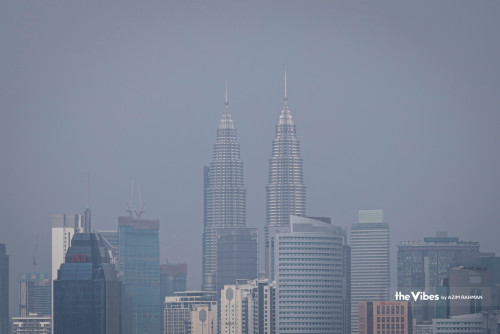
MALAYSIA is facing the prospect of hotter weather, prolonged dry spells and worsening haze risks as El Niño strengthens across the region, with the phenomenon expected to persist into early next year.
The Malaysian Meteorological Department (MetMalaysia) said there was an 81 per cent chance of El Nino reaching strong to extremely strong levels from October, while the probability of it continuing into early next year stood at 97 per cent, reported The Star.
Its long-term weather outlook from August to January indicates below-average rainfall in several parts of the country, particularly along the west coast, eastern and southern parts of the peninsula, central and western Sarawak and eastern Sabah.
MetMalaysia said rainfall deficits were expected to peak this month amid the ongoing southwest monsoon and the strengthening El Niño conditions.
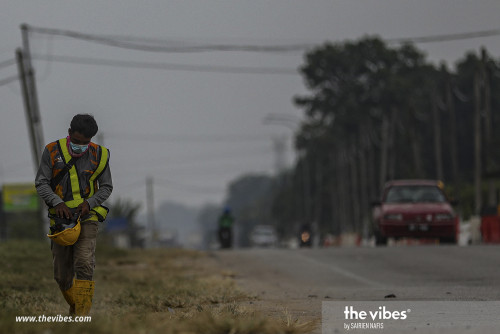
"The haze risk is also raised when compared to neutral years, due to drier atmospheric conditions and lesser rainfall.
"This dry spell increases the risk of both localised and transboundary haze, especially if there is uncontrolled open burning," it said in its long-term weather outlook for August to January next year.
The department's drought monitoring report showed that several areas could record rainfall deficits exceeding 35 per cent over three to six months as drier-than-usual conditions take hold.
The areas include Negeri Sembilan, Melaka, southern Pahang, Johor and much of central and western Sarawak.
"Southern Johor as well as western and southern Sarawak are also expected to experience dry conditions up till September, whereas eastern Sabah has the potential of similar conditions beginning October to December," it said.
MetMalaysia also warned of a heightened drought risk in parts of Sabah following prolonged periods of rainfall deficits.
The latest outlook follows an earlier warning that Malaysia could experience temperatures of up to 40°C early next year due to a "Super El Nino".
MetMalaysia has also compared the potential conditions with the extreme El Niño of 1997 to 1998, when South-East Asia experienced severe haze, water shortages and disruptions to airport operations.
Malaysia recorded its highest-ever temperature of 40.1°C during that episode, when Chuping, Perlis, reached the mark on 9 April 1998.
MetMalaysia director-general Dr Mohd Hisham Mohd Anip separately urged Malaysians to exercise caution over prolonged exposure to ultraviolet (UV) radiation, particularly when outdoors between 11 am and 4 pm.
He said Malaysia's tropical climate meant the country received sunlight throughout the day, while UV intensity varied according to factors including the position of the sun, ozone levels, cloud cover, rainfall and atmospheric conditions.
"Generally, all states have the potential of receiving a high concentration of UV rays depending on the season," The Star quoted him as saying.
Mohd Hisham said the developing El Niño could intensify the effects of the southwest monsoon, which traditionally brings hotter and drier conditions to Malaysia.
The southwest monsoon is expected to continue until next month.
He said Malaysia could also experience reduced cloud cover and more rain-free days towards the end of the northeast monsoon, which normally occurs between January and March.
"These conditions can turn more extreme in line with the forecasted strong El Niño early next year," he said. - August 17, 2026