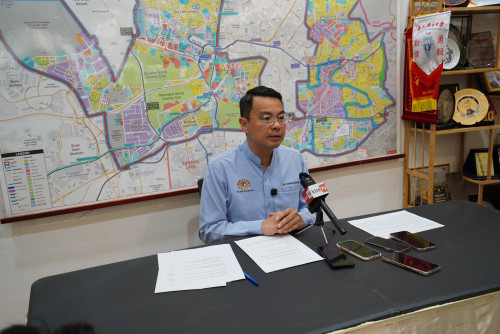
THE Government is stepping up efforts to build a homegrown semiconductor design ecosystem, with two local technology companies gaining access to Arm’s advanced computing technologies under a strategic partnership between the Government and Arm Limited.
Oppstar Technology Sdn Bhd and Alphaswift Industries Sdn Bhd received letters of offer today for access to Arm Compute Subsystem (CSS) technology and the Arm Flexible Access (AFA) programme, enabling them to accelerate integrated circuit design, research and development in Malaysia.
The technologies are expected to support applications ranging from drones to advanced microelectronics as Malaysia seeks to capture a greater share of the higher-value segments of the global semiconductor industry.
Economy Minister Akmal Nasrullah Mohd Nasir said eight Arm technology accesses — comprising four Arm CSS and four Arm Flexible Access tokens — had now been offered to five Malaysian companies.
“So far, eight Arm technology accesses, involving four Arm CSS and four Arm Flexible Access tokens, have been offered to five local companies. In talent development, 1,530 participants have taken part in the Arm On-Demand Training programme, against a target of 10,000 talents over four years,” he said in a statement released on Saturday.
The Government wants access to global chip technologies to serve as a springboard for the development of Malaysian-designed chips, intellectual property and high-value products capable of competing in international markets.
“We want access to global technology to be a catalyst for more chip designs, intellectual property and high-value products developed in Malaysia. This is the foundation for producing local companies and engineers capable of bringing Malaysian chip products to the global market,” he said.
The initiative reflects a broader push to reposition Malaysia in the semiconductor value chain, reducing its reliance on established strengths in assembly, packaging and testing while expanding into chip design and advanced research.
Talent development is another key component of the strategy, with the Government working with universities and industry to create a more structured pipeline of semiconductor specialists.
An agreement involving 12 universities, with support from ministries, agencies and industry players, has been reached to strengthen implementation of the Arm On-Demand Training programme.
“Synergy between universities and industry is important to ensure that the training provided truly matches the needs of companies. This includes coordinating academic calendars, integrating Arm modules into learning and recognising them as part of industrial training,” Akmal said.
He said Malaysia could no longer afford to wait for talent shortages to emerge before responding, stressing the need to develop skilled workers ahead of industry demand.
“We need to shift from chasing talent shortages to building a structured talent pipeline. Talent must be developed before industry demand becomes critical. The Ministry of Economy, MITI and MOHE will work together to ensure that implementation is properly followed through so that the targets set can be achieved,” he said.
The effort is aligned with the 13th Malaysia Plan, National Semiconductor Strategy and New Industrial Master Plan 2030, all of which seek to strengthen Malaysia’s position in the global semiconductor value chain and develop a more competitive domestic technology ecosystem.
The Government is also encouraging more qualified Malaysian technology companies with capabilities in product development and chip design to participate in the strategic partnership.
Wider participation by local industry, it said, would help accelerate the development of “Made by Malaysia” technology and intellectual property while strengthening the country’s position in the global semiconductor ecosystem. - August 21, 2026