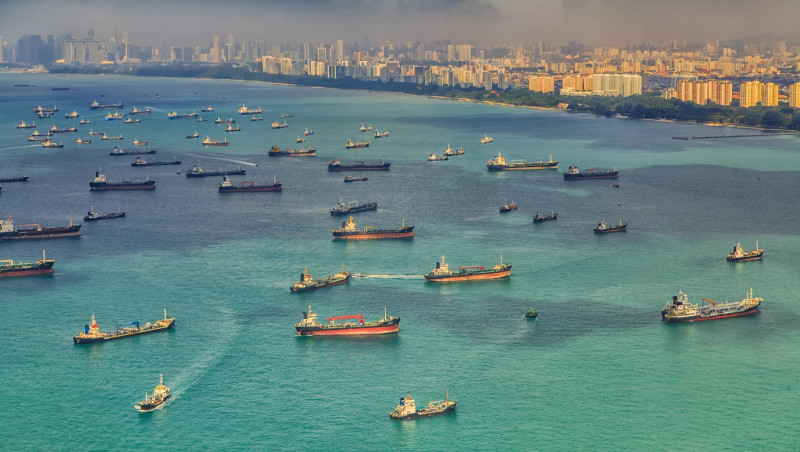
MALAYSIA, Indonesia and Singapore have reaffirmed their joint commitment to securing the Straits of Melaka and Singapore, warning that the stability of the strategic waterways is increasingly vital amid a more uncertain regional and global security environment.
The three littoral states stressed that both straits must remain free, open and safe for international shipping, with any disruption potentially affecting global trade, supply chains and energy security.
The commitment was reaffirmed by the Marine Department of Malaysia, Indonesia’s Directorate General of Sea Transportation and Singapore’s Maritime and Port Authority (MPA) in a joint statement issued in conjunction with the 17th Cooperation Forum held in Singapore today.
The three countries also stressed the need to uphold the rights and freedoms of navigation, reaffirming that the Straits of Melaka and Singapore are waterways used for international navigation and therefore subject to the right of transit passage under the 1982 United Nations Convention on the Law of the Sea (UNCLOS) and customary international law.
Singapore’s Transport Minister Jeffrey Siow said the Straits of Melaka and Singapore (SOMS) remained among the world’s most strategically important maritime corridors, with more than 100,000 vessels transiting the waterways each year.
He said the straits carried almost a quarter of global seaborne trade and nearly one-third of the world’s oil and gas supplies, making their security a concern well beyond the three countries.
“Events in West Asia this year have reminded the world that open sea lanes cannot be taken for granted.
“In our region, we will work to ensure that the Straits of Malacca and Singapore remain free, open and safe for international shipping,” he said when opening the forum.
Siow said the Cooperation Mechanism, formally established in 2007, represented the first and remains the only implementation of Article 43 of UNCLOS, which calls for cooperation among states bordering straits used for international navigation on navigational safety and pollution prevention.
He said the mechanism had enabled the three countries to turn shared security interests into coordinated action in three key areas.
“These include anticipating risks early, regularly upgrading infrastructure and responding collectively to incidents,” he said.
Siow said sustained cooperation was becoming increasingly important as new and emerging threats could challenge the safety and uninterrupted flow of maritime traffic through the two straits.
He said maintaining stability in the waterways was not merely a matter of protecting the interests of the three littoral states, but was also critical to safeguarding global supply chains and international trade. - August 25, 2026