
THE reform agenda pursued by the Madani government is already taking effect in several areas, from public spending and parliamentary administration to the delivery of government services, although some of the more ambitious changes will take longer to complete.
Under Prime Minister Datuk Seri Anwar Ibrahim, the government has maintained that institutional reform cannot happen overnight, particularly when some proposals require amendments to existing laws or the Federal Constitution.
Several measures have nevertheless moved from proposals into implementation.
Among them is the strengthening of the National Audit Department (JAN) through amendments to the Audit Act 1957, which broadened the scope of its auditing powers.
The changes enable JAN to audit a wider range of entities, including government-linked companies, as part of efforts to strengthen oversight of public funds.
The department has also adopted a “follow the public money” approach, allowing audits to trace how public funds are used and identify areas where there may be risks of financial irregularities or fraud.
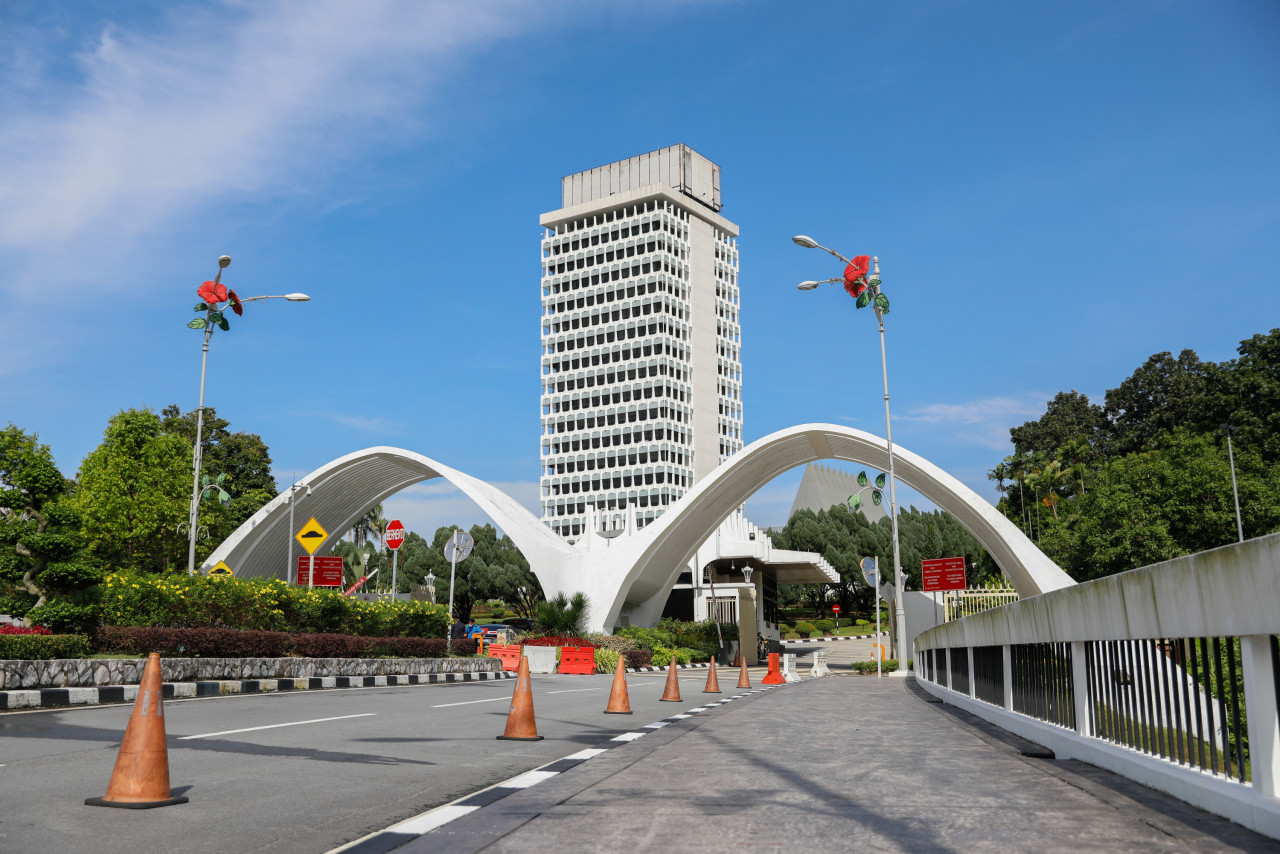
Parliament has also seen a major institutional change with the passing of the Parliamentary Service Act 2025.
The legislation provides for greater autonomy in determining the administration and governance of Parliament, reviving a parliamentary service that was abolished in 1992.
The reform is intended to strengthen Parliament as an independent institution and allow its administration to operate with greater autonomy.
On the financial front, the Public Finance and Fiscal Responsibility Act 2023 provides a framework for greater accountability and transparency in the management of public finances.
It covers government revenue and expenditure, borrowing, debt and fiscal risks, while also setting out requirements for budget-related reporting and other financial documents.
The government has also sought to tackle weaknesses in public-sector delivery through the Special Task Force on Agency Reform, or STAR.
The task force works across ministries and agencies to identify unnecessary procedures, outdated regulations and bureaucratic hurdles that can be removed or simplified.
Its work includes the Ikhtiar Reformasi Kerenah Birokrasi initiative, which has been expanded across government agencies, with cooperation from organisations such as the Malaysia Productivity Corporation to improve efficiency and productivity.
But some reforms require a longer legislative process.
The proposed 10-year limit on the tenure of a prime minister is among them. The proposal seeks to cap a prime minister’s total time in office at 10 years, whether served consecutively or otherwise, and requires amendments to the Federal Constitution.
The Bill is expected to proceed through further debate and decision-making in the Dewan Rakyat after the proposed amendments were presented to the Conference of Rulers.
Another constitutional reform being pursued is the separation of the functions of the Attorney-General and the Public Prosecutor.
The move is aimed at creating a clearer distinction between the government’s legal adviser and the authority responsible for criminal prosecutions, although the proposed changes still have to go through the necessary constitutional and parliamentary processes.
In higher education, the government has announced plans to repeal the Universities and University Colleges Act 1971 (AUKU), with the aim of giving students greater room to express their views, develop their thinking and participate in society.
A broader review is also being undertaken as part of plans for a One Higher Education Act, which would provide a new legal framework for the country’s higher education system.
The establishment of the Malaysian Media Council (MMM) represents another reform that took decades to materialise.
The idea had been raised with the government as far back as 1973, but remained unrealised for years.
That changed when the Malaysian Media Council Bill 2024 was passed by the Dewan Rakyat on Feb 26, 2025. The law was gazetted on June 13 and came into force the following day.
Its establishment is intended to strengthen the media profession and provide a framework for greater self-regulation and independence among media practitioners.
The reform agenda also extends to the government’s management of subsidies.
Since 2022, the government under Anwar’s leadership has been working towards a more targeted subsidy system to ensure government assistance reaches Malaysians who are eligible, while preventing foreigners from continuing to benefit from subsidies meant for citizens.

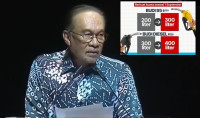
Under BUDI MADANI RON95 (BUDI95), the government has maintained the subsidised RON95 price at RM1.99 a litre.
The government has also responded to concerns from the public over the quota imposed under the targeted fuel subsidy programme, with the quota now being restored following calls from Malaysians for it to be brought back.
The decision reflects the government’s assessment of its current financial position while also taking into account the need to ensure Malaysians, particularly those most affected by rising living costs, continue to receive protection through subsidies.
The restoration of the quota, however, does not change the broader objective of BUDI95.
The programme remains aimed at ensuring subsidies are distributed more fairly and at curbing leakages caused by those who are not eligible, including foreign nationals and vehicles, while preventing higher-income groups from continuing to draw disproportionately from government subsidies.
As of July 31, more than 14.2 million of the more than 16.7 million eligible individuals had benefited from the subsidised fuel, with total consumption exceeding 13.4 billion litres.
Based on usage data from October 2025 to June 2026, fewer than 1% of users consistently consumed more than 200 litres of RON95 a month, while average monthly consumption was around 100 litres.
The initiative is estimated to reduce the government’s annual fiscal expenditure by between RM2.5 billion and RM4 billion, depending on global oil prices.
For the government, these measures form part of a wider reform programme that goes beyond individual policies or ministries.
While some changes have already been put in place, others will require time because of the legislative and constitutional hurdles involved.
The underlying argument from the administration is that sustained political will and commitment are needed to carry the reforms through — not only for the benefit of the public, but also to strengthen institutions, improve the civil service and put the country’s finances on a firmer footing. – September 3, 2026