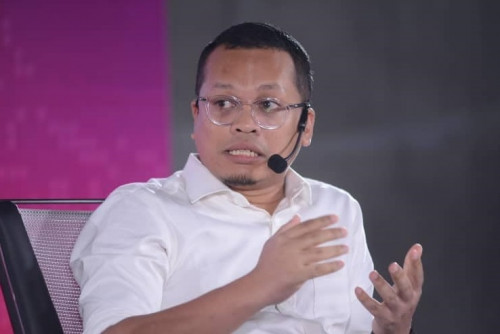
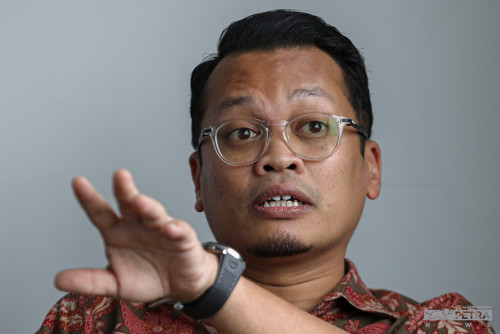
MALAYSIA must diversify its energy sources and strengthen its oil and gas services and equipment (OGSE) industry to reduce the country’s exposure to geopolitical shocks, volatile energy markets and growing global competition, Economy Minister Akmal Nasrullah Mohd Nasir said today.
He said disruptions around the Strait of Hormuz had demonstrated how quickly a crisis in one region could disrupt global supply chains and drive up energy prices, highlighting the need for Malaysia to build greater resilience into its energy system.
“Developments around the Strait of Hormuz this year have shown how quickly disruptions in one region can affect global supply chains and energy prices,” he said.
Speaking at Oil and Gas Asia (OGA) 2026 in Kuala Lumpur, Akmal said energy security could no longer be viewed simply as securing sufficient oil and gas supplies.
“Energy security is fundamentally about resilience. It is about our ability to absorb shocks, adapt when circumstances change and continue to serve the economy and our people when disruptions occur,” he said.
He said Malaysia’s energy policy therefore had to balance security, affordability and sustainability without allowing the pursuit of one objective to undermine the others.
“The challenge is therefore not to choose between energy security and energy transition. It is to manage both in a way that strengthens Malaysia’s long-term competitiveness,” he said.
Malaysia currently has a relatively diversified energy mix, with natural gas accounting for 42% of total primary energy supply in 2024, followed by crude oil and petroleum products at 33%, coal and coke at 22%, and hydropower and renewables at 4%.
Akmal said this diversification was an important strength but Malaysia needed to broaden its options further through more diverse suppliers, technologies, infrastructure and regional energy networks.
Natural gas would continue to play a major role in Malaysia’s energy security and economy, with demand expected to remain significant as the country expands renewable energy, he said.
At the same time, the Government was pursuing greater diversification through renewable energy, nuclear power, energy storage, hydrogen and bioenergy under the 13th Malaysia Plan, the National Energy Policy and the National Energy Transition Roadmap.
“The objective is not simply to replace one energy source with another. It is to give Malaysia more options, reduce exposure to external shocks and create new sources of economic value,” he said.
The issue is particularly significant for Malaysia’s economy, which remains highly exposed to developments in global trade, energy prices, technology and geopolitics.
Akmal said Malaysia nevertheless entered the current period of uncertainty from a position of relative economic strength, with the economy growing 6% in the second quarter of 2026 and 5.7% in the first half.
Growth was supported by domestic demand, investment and robust exports, particularly electrical and electronics products, while inflation stood at 1.8% in July.
But he warned that strong economic performance should not lead to complacency.
“The real test of resilience is therefore not only how fast we grow when conditions are favourable, but whether we can sustain that growth when conditions become more difficult,” he said.
For the OGSE industry, Akmal said the changing energy landscape presented both a threat and an opportunity.
After more than four decades of oil and gas activity, Malaysian companies had developed substantial capabilities in engineering, fabrication, offshore services, maintenance, logistics and project management.
However, he said the industry could not continue relying primarily on traditional services and domestic opportunities.
“Our OGSE companies must therefore move from being service providers to technology partners, from delivering individual contracts to providing integrated solutions, and from competing mainly at home to expanding across regional and international players,” he said.
He said too much dependence on a single customer or market left companies vulnerable, making it essential for local OGSE players to diversify their capabilities and customer base.
Malaysian companies should strengthen their balance sheets, improve governance, invest in digitalisation and develop capabilities in areas such as automation, artificial intelligence, predictive maintenance, advanced materials and data analytics.
Strategic partnerships, joint ventures and, where appropriate, consolidation should also be pursued to give local companies the scale and capability to compete for larger and more complex projects.
The Government has already supported the industry’s transition through the Malaysia Petroleum Resources Corporation (MPRC), with RM21 million under the OGSE Development Grant awarded to 97 projects.
Akmal said 25 projects commercialised between 2023 and 2025 had generated RM77.5 million in sales and contract value.
About 600 companies had also been facilitated for export growth and technology development, generating more than RM2 billion in OGSE export sales through programmes organised by the Malaysia External Trade Development Corporation (MATRADE).
He said Malaysian OGSE companies had therefore demonstrated that they could compete beyond the domestic market, but needed to move further into higher-value segments.
“The next step is to deepen those capabilities and move into higher-value segments of the regional and global energy value chain,” he said.
He said Malaysia’s ability to navigate the energy transition would ultimately depend on whether it could turn its existing industrial strengths into new competitive advantages.
“Our responsibility is therefore not only to secure the energy Malaysia needs today, but to build an energy system and an industrial ecosystem that remain resilient and competitive for the future,” he said.
“For our OGSE companies, my message is clear.
“We should not prepare merely to survive the energy transition. We should build the capability to lead it,” he said. - September 3, 2026