Murray Hunter
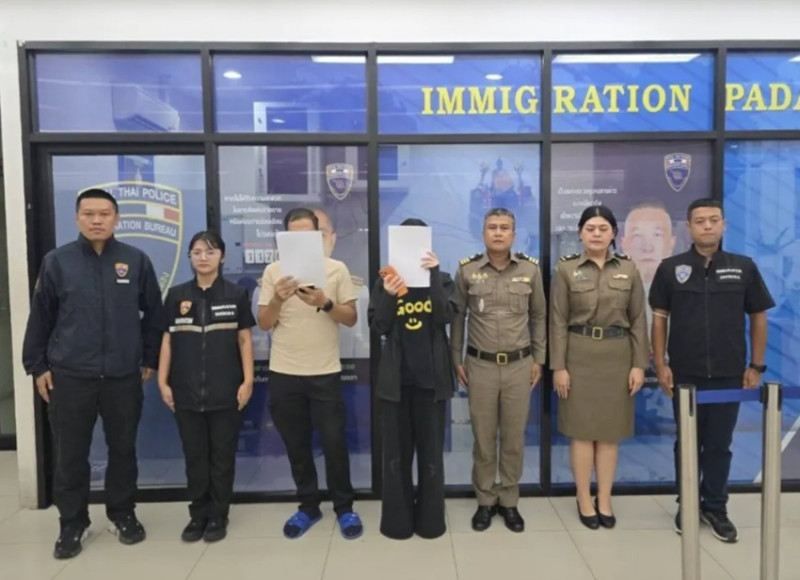
THAI immigration police dismantled a people-smuggling cell this week, arresting a Chinese former flight attendant and four others accused of moving nationals illegally across the Thailand-Malaysia border, underscoring that such crossings are driven by structured criminal networks rather than isolated acts.
Recent cases involving the Thailand-Malaysia frontier confirm this clearly.
On 15 October 2026, Thai immigration police in Hat Yai arrested a 34-year-old Chinese former flight attendant, identified by the pseudonym Pan Yudong, along with four others.
She was detained while collecting two Chinese men who had entered Thailand illegally from Malaysia via informal routes in Narathiwat.
Investigators said she was arranging onward travel and documents.
In a linked incident the same day, a Chinese woman carrying a Vanuatu passport was intercepted at the Padang Besar checkpoint, hidden in a vehicle driven by a Thai national. Police are examining possible ties to the sale of citizenship documents after discovering additional foreign passports.
These are not isolated events.
In early October 2026, Thai officers pursued vehicles for 40 kilometres in Songkhla before arresting Thai facilitators transporting a Chinese man who had entered from Cambodia and was heading toward Malaysia.
Similar operations earlier in the year uncovered networks charging tens of thousands of baht per person to move Chinese nationals southward through Thailand for illegal entry into Malaysia.
Some of these groups appear linked to the relocation of online scam operations after crackdowns in neighbouring countries.
New reports indicate that Forest City in Johor is attracting many scam centre operators that were forcibly closed down in Cambodia earlier this year.
These networks operate with clear roles: overseas coordinators, local Thai drivers and safe-house operators, and brokers who arrange informal border crossings and false or alternative nationality documents.
Chinese nationals form a significant portion of those moved, often seeking work or involvement in illicit activities once inside Malaysia.
Thai and Malaysian authorities have repeatedly dismantled cells, yet the activity continues because the financial incentives remain high and the southern border terrain offers multiple informal routes.
For ordinary Malaysians, the implications are concerning.
Organised smuggling is facilitating the entry of individuals involved in scams, labour exploitation or other crimes.
These activities are also straining border security resources and undermining legal immigration channels.
Authorities on both sides of the border continue to investigate and prosecute. Organised people smuggling is a structured criminal enterprise, not a series of one-off acts. – October 17, 2026